America’s Interventionist Middle East Policy Started 66 Years Ago – Antiwar.com Original

M. C.'s avatarMCViewPoint

The collapse of our towers on September 11th was one large entry in a long running history of western interference in the lands of Islam, and if any more oil tankers get attacked in the Strait of Hormuz, it’s worth remembering that it was not Persia who cast the first stone.

https://original.antiwar.com/andrew_corbley/2019/08/20/americas-interventionist-middle-east-policy-started-66-years-ago/

As the late-summer date of August 20th passes stateside, very few Americans will recognize the significance of it in our nation’s history. It marks the 66th anniversary of a sinister turn in the history of American foreign policy, and while neocons and hawks of all sorts will tell you history started on September 12th 2001, a quick visit to the Tehran Times will remind you this is not the case.

In 1953 following a request for assistance by Great Britain, and enthusiastic support from Ike Eisenhower, the United States overthrew the democratically-elected leader of Iran…

View original post 906 more words

Posted in earth | Leave a comment

Third house of Indian Parliament

Vikramjit Singh Rooprai's avatarOur Heritage

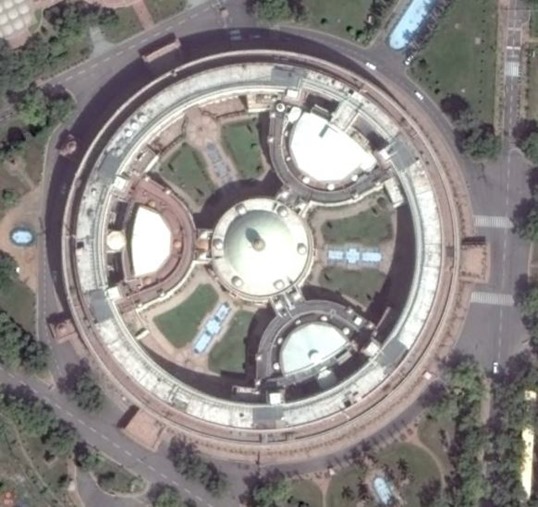
We are all aware of the two houses, Rajya Sabha and Lok Sabha, of the Indian Parliament. However, if you look at the design of Parliament, it has Four halls instead of two. Three halls on sides for the houses of Parliament and the fourth one in centre, for the joint session. Originally, Indian Parliament, or the Council House as it was termed then, was comprising of 3 houses. The State Council, Central Legislative Assembly and the Chamber of Princes.

clip_image001

Council of State originally had 60 members when it started in 1919. The Viceroy or the Governor General of India was its ex officio president. In 1937, its size was increased to 260 members and in 1947, it was dissolved, to be later taken over by Constituent Assemblies of India and Pakistan respectively. Today, this upper house in India is known as the Rajya Sabha.

The Central Legislative Assembly, or…

View original post 870 more words

Posted in earth | Leave a comment

City States Preceded Nation States

City-state, a political system consisting of an independent city having sovereignty over contiguous territory and serving as a centre and leader of political, economic, and cultural life. The term originated in England in the late 19th century and has been applied especially to the cities of ancient Greece, Phoenicia, and Italy and to the cities of medieval Italy.

It is common perception that Nation is more important than cities, that the cities exists in Nation but the fact of the matter is that the Nation State is extension of city states.

The name was initially given to the political form that crystallized during the classical period of Greek civilization. The city-state’s ancient Greek name, polis, was derived from the citadel (acropolis), which marked its administrative centre; and the territory of the polis was usually fairly limited. City-states differed from tribal or national systems in size, exclusiveness, patriotism, and passion for independence. The origin of city-states is disputed. It is probable that earlier tribal systems broke up during a period of economic decline and the splintered groups established themselves between 1000 and 800 BCE as independent nuclei of city-states that covered peninsular Greece, the Aegean islands, and western Asia Minor. As they grew in population and commercial activity, they sent out bands of emigrants who created similar city-states on the coasts of the Mediterranean Sea and the Black Sea, mainly between 750 and 550 BCE.

The importance of fortified centres during the Hungarian and Arab incursions contributed to the development of towns. Town walls were rebuilt or repaired, providing security both to citizens and to people from the country; and the latter found further places of refuge in the many fortified castelli with which the countryside began to be covered.

Links and Source(s):

Britannica

Posted in Cities, earth, urban morphology, Urban Studies | Leave a comment

Long Live Democracy: Happy Independence Day, India

Democracy is a system of processing conflicts in which outcomes depend on what participants do, but no single force controls what occurs and its outcomes. The uncertainty of outcomes is inherent in democracy. Democracy makes all forces struggle repeatedly to realize their interests and devolves power from groups of people to sets of rules.

The term is derived from the Greek dēmokratiā, which was coined from dēmos (“people”) and kratos(“rule”) in the middle of the 5th century BCE to denote the political systems then existing in some Greek city-states, notably Athens.

Democracy gives space to nation and citizen-to grow, to evolve, to nurture , to prosper and to care fellow citizens and Nation/s. Long Live Democracy in India as we are fortunate to celebrate it.Let the spirit of Democracy live in our country and in our Hearts.May our Flag held high.

Long Live Democracy.

Posted in earth | Leave a comment