Christopher Browning’s pessimistic take on America’s future

whyevolutionistrue's avatarWhy Evolution Is True

Christopher Browning is an American historian whose expertise is mainly on the Holocaust. His new article in the New York Review of Books is on a related topic: comparing the debilitated state of American politics with what happened during the rise of Nazi Germany. Browning was apparently inspired by the frequent claim that the U.S. is becoming like Hitler’s Germany. Click on the screenshot below to read the free article.
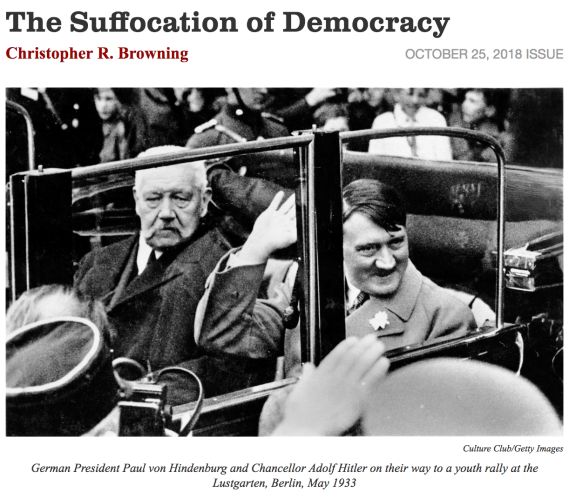

It’s a very good piece that, while drawing some parallels between what happened in the two countries, also doesn’t buy the “Nazi” analogy. A few quotes to tease you:

If the US has someone whom historians will look back on as the gravedigger of American democracy, it is Mitch McConnell. He stoked the hyperpolarization of American politics to make the Obama presidency as dysfunctional and paralyzed as he possibly could. As with parliamentary gridlock in Weimar, congressional gridlock in the…

View original post 511 more words

Posted in earth | Leave a comment

Contours: An Overview

  • Contour –  Contour is an imaginary line on ground joining points of equal or constant elevations. contours are important to draw the topographical maps in which vertical distances are also shown using the contour lines.
  • Contour interval: Vertical distance between any two consecutive contours is known as the contour interval. It depends upon the scale of the map, nature of the ground and availability of the fund  and time.
  • Horizontal equivalent/ horizontal interval:  It is the shortest horizontal distance between the two consecutive contours.
  • Contour Gradient: Imaginary line on the surface of the earth, maintains a constant angle to the horizontal.
Characteristics of the contours:


  1. When contours are drawn closer to each other, it shows a steep slope on the ground and when they are far apart it shows the gentle slope on the ground.
  2.  When they are parallel straight and equivalent they represent a plane surface.
  3. A contour is perpendicular to a line of the steepest slope.
  4. A contour must close itself in the map or must go out of the boundaries of the map.
  5. A set of ring contours with higher values of contour inside and lower values outside represents a hill and if the higher values are outside and lower values inside then it represents a depression like a pond.
  6. When contours cross a ridge they form a V- shape across them. While if they cross a valley they form a u-shape or may a V shape also difference being, the concavity of the contour lines lies towards the lower contours in case of valley while it is convexity lying towards the another lower value in case of contours of a ridge.
  7. Contour lines must close, not necessarily in the limits of the plan.
  8. The horizontal distance between any two contour lines indicates the amount of slope and varies inversely on the amount of slope.
  9. Widely spaced contour indicates flat surface.
  10. Closely situated contour indicates steep slope ground.
    contour showing steep slope terrain
    contour showing steep slope terrain
  11. Equally spaced contour indicates uniform slope.
    contour showing uniform slope terrain
    contour showing uniform slope terrain
  12. Irregular contours indicate uneven surface.
  13. Approximately concentric closed contours with decreasing values towards centre indicate a pond.
    Pond and its contour
    Pond and its contour
  14. Approximately concentric closed contours with increasing values towards centre indicate hills.
    Hill and its contour
    Hill and its contour
  15. Contour lines with U-shape with convexity towards lower ground indicate ridge.
  16. Contour lines with V-shaped with convexity towards higher ground indicate valley.
    contour showing ridge line and valley line
    contour showing ridge line and valley line
  17. Contour lines generally do not meet or intersect each other. If contour lines are meeting in some portion, it shows existence of a vertical  cliff.
    Vertical cliff and its contour
    Vertical cliff and its contour
  18. Contours of different elevations cannot cross each other. If contour lines cross each other, it shows existence of overhanging cliffs or a cave.
    overhanging cliff and its contour
    overhanging cliff and its contour
  19. The steepest slope of terrain at any point on a contour is represented along the normal of the contour at that point.
  20. Contours do not pass through permanent structures such as buildings.
    contour across a permanent structure
    contour across a permanent structure
Uses of Contours:
  1. To study the general character of the tract of the country without visiting the ground. With the knowledge of characteristics of contours, it is easy to visualize whether country is flat, undulating or mountainous.
  2. To decide the sites for engineering works such as reservoirs, canals, roads and railways etc. on the basis of the economy.
  3. To determine the catchment area of the drainage basin and hence capacity of the proposed reservoir.
  4. To compute the earth work required for filling or cutting along the linear alignment of the projects such as canals, roads, etc.
  5. To find out the inter-visibility of the points.
  6. To trace out a contour gradient for road alignments.
  7. To draw longitudinal and cross- sections to ascertain nature of  the ground.

A Helpful Video

Link(s)  and Source(s):
Surveying Vol-I  by Dr. B. C. Punmia
Posted in Class Notes, earth, Geography Practicals/Lab and Statistical Techniques | 1 Comment

China in Crisis? Climate Change, Water Contamination Looming Threats

Guest essay by Eric Worrall China’s environmental and food logistics problems may be far worse than they are letting on. China’s hunger for soybeans is a window into an encroaching environmental crisis 09.25.18 BY JEFF NESBIT How China’s desperate efforts to source soybeans from all over the world is explained by the country’s fear of…

via China in Crisis? Climate Change, Water Contamination Looming Threats — Watts Up With That?

Posted in earth | Leave a comment

Mumbai: A City of Class Divide

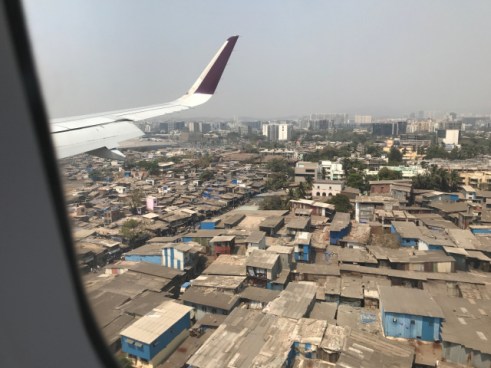
Mumbai is a city laden with class divide. An American photographer, through drone photography, has brought into clear focus the stark divide between the rich and poor in India’s financial capital.

An Urban Jungle

image_542656283772026

Image Clicked by Me

On his official website, Miller describes Mumbai as “an urban jungle, a vertical aerie for the superrich, and a fragile marine ecosystem” where “informal recyclers (Rag Pickers often works as India’s Informal Waste Disposal System)  in Dharavi exist within sight of the National Stock Exchange, traditional fishermen moor their boats in the shadows of skyscrapers in Worli, and leopards prowl the Sanjay Ghandi National Park on the city’s northern flank”.

The images are part of Miller’s ‘Unequal Scenes’ project which he describes as a means to

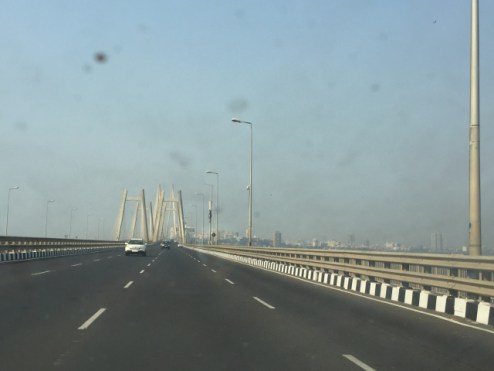
worli

Worli Sea Link Clicked by Me

“provoke a dialogue to address the issues of inequality and disenfranchisement in a constructive and peaceful way”. As part of the project, Miller, has also captured the class divide in Kenya, South Africa, Tanzania, the US and Mexico, over a span of past two years.

A strange mix

Miller’s website describes the area surrounding the Bandra Kurla complex as a mixture of extreme wealth and extreme poverty that houses the consulate generals of several countries, corporate headquarters, and the National Stock Exchange.

Sources:

Economic Times (Mnillers Image Can be Seen here)

Posted in Development, earth, Glimpses of Our Cities, opinions, Population, urban morphology, Urban Studies | Leave a comment