Guest Post by Preity Smith
- Silent Springby Rachel Carson: Introduce students to the core tenets of environmentalism and ecology with this undeniable classic. Rachel Carson heavily influenced the green movement by exposing the myriad abuses different companies heap upon the planet.
- Flowers for Algernon by Daniel Keyes: Although science-fiction, Flowers for Algernon still packs a heavy punch in its depiction of more terrestrial themes — specifically, ethics. The story of a mentally handicapped man receiving a controversial intelligence implant will certainly spark engaging classroom discussions about human experimentation.
- The Botany of Desire by Michel Pollan: Watch human history and society ebb and flow thanks to the influence of four different featured plants — potatoes, marijuana, apples and tulips. Journalist Michael Pollan also peers into the way in which society’s intervention has come to impact the botanicals in turn.
- Mendel’s Dwarf by Simon Mawer: The eponymous scientist, a descendant of Gregor Mendel himself, absorbs himself in discovering the genetics behind his condition. As the author actually holds a degree in zoology and worked as a biology teacher, his background pours into the fictitious narrative accessibly, informatively and provocatively.
- E=MC2: A Biography of the World’s Most Famous Equation by David Bodanis: Introduce physics students to Albert Einstein’s highly influential formula through this easy-to-understand popular science novel. Not only does it open up knowledge of the relationship between energy and mass, but also how the equation has come to impact humanity for good and for ill.
- Rocket Boys by Homer Hickam: Homer Hickam’s lauded memoir takes readers to a depressed West Virginia coal town and introduces them to his teenage self. With Werner von Braun as his inspiration, the young man took to making and launching homemade rockets with the hope of building a life for himself outside the dying city.
- The Double Helix by James D. Watson: Learn all about the politics and peoples leading to the discovery of DNA’s structure through the eyes of one Nobel Prize winner behind it. As a memoir, history and popular science novel, The Double Helix has plenty to offer biology students both novice and seasoned.
- As She Climbed Across the Table by Jonathan Lethem: Another science-fiction masterpiece that remains largely grounded and explores philosophical and personal issues as they relate to physics. Here, a professor who studies other professors slowly loses the love of his life to a mysterious, bizarre phenomenon known as “Lack.”
- The Call of the Wild by Jack London: Appropriate for younger and older students alike, Jack London’s fictional tale of a kidnapped dog and his struggle between domestication and pure instinct. The author strove to reflect canine behavior and resilience as well as he possibly could, also reflecting some intriguing overlaps with more human tropes.
- Carbon Dreams by Susan M. Gaines: Spice up lessons in ecology, environmental science, geology or climatology with the story of a geochemist’s quest for scientific truth — and love. Global warming and its impact on agriculture and humanity take center stage, however, so the book does have a place in science class.
- The Island of Dr. Moreau by H.G. Wells: In this haunting science-fiction classic, horrifically vivisected creatures challenge anyone perusing their narrative to think about experimental ethics. While H.G. Wells’ fantastical creations don’t have much footing in reality (yet), their creator certainly dredges up some moral and philosophical questions all science students should explore.
- Cryptonomicon by Neal Stephenson: Cyberpunk master Neal Stephenson tries his hand at the high-tech espionage thriller genre, packing his kinetic read with his signature blend of math and computer science. History and cryptography come crashing into the mix as well, resulting in an excellent, informative mashup with plenty to discuss.
- The Right Stuff by Tom Wolfe: Read the compelling true story behind test pilots, astronauts, mission control specialists and their family members through one of the most notable New Journalism novels. The author hoped this read would challenge anyone picking it up to deeply contemplate the nature of heroism and the willingness to sacrifice oneself in the name of science.
- Gut Symmetries by Jeanette Winterson: Love, metaphysics and physics overlap in Jeanette Winterson’s lush narrative about the growing relationship between two scientists — one of whom happens to be married. Using physics as a metaphor for deep romantic emotions renders this read helpful to both literature and science students.
- A Wrinkle in Time by Madeline L’Engle: Undoubtedly the “hardest” piece of science-fiction listed here, A Wrinkle in Time frequently serves as a gateway drug for imaginative young readers. Madeline L’Engle packed her beloved young adult novel with plenty of very real math and physics concepts.
- Wonderful Life by Stephen Jay Gould: Read the biography of an absolutely incredible natural marvel, one with some amazing connections to today’s living organisms. The Burgess Shale, nestled in a British Columbian mountainside, serves as sort of genetic Rosetta Stone helping scientists unlock evolutionary mysteries.
- Dirt by David R. Montgomery: David R. Montgomery works as a geomorphologist and pulls from his training and experience to dish the dirt on…well…dirt. This humble substance perhaps unsurprisingly played a major role in shaping human history and culture, which the author compellingly discusses here.
- A Hole in Texas by Herman Wouk: Satire meets science in this parody of the Superconducting Supercollider, shut down thanks to a lack of funding. A physicist finds himself in an absurdist race against time to discover the legendary Higgs Boson before his Chinese rivals.
- Gold Bug Variations by Richard Powers: Richard Powers provides an incredibly complex, multilayered read tossing subjects as diverse as art history and genetics into the twisty narrative. Despite the simple love story at the core, the intertwining themes and educational concepts give readers plenty to talk about.
- Prodigal Summer by Barbara Kingsolver: Mix things up in environmental science class by introducing a fictional portrayal of very real ecological issues. Tobacco, herbicides and subsistence farming comprise some of the core themes The Poisonwood Bible author Barbara Kingsolver explores.
- Starlight Nights by Leslie Peltier: Introduce astronomy and physics students to the romance and wonder of stargazing through this beautiful memoir. Leslie Peltier made a name for himself as the discoverer of 6 novae and 12 comets, pulling from his observational experience to pen a love letter to all things astronomical.
- Isaac’s Storm by Erik Larson: Galveston, Texas felt the ravages of one of the deadliest hurricanes ever recorded in 1900, and this lauded work of creative nonfiction explores both the human cost and scientific phenomena behind the tragedy. Eponymous Weather Bureau climatologist Isaac Cline, stationed in the doomed city, serves as the story’s central figure.
- Einstein’s Dreams by Alan Lightman: Thirty little vignettes reflect hypothetical dreams by the acclaimed scientist, relayed with provocative whimsy by an MIT professor. As both a physicist and a writer, Alan Lightman hopes to blur lines between fiction and nonfiction, science and the humanities.
- Galileo’s Daughter by Dava Sobel: Surprisingly enough, Galileo Galilei’s eldest daughter, Sister Maria Celeste, is not the central figure of this historical work. Rather, Dava Sobel focuses a little bit on their relationship and frequently delves into the famed scientist’s struggles between the faithful and natural realms.
- Guns, Germs and Steel by Jared Diamond: History and a plethora of “hard” and “soft” sciences converge into an incredibly popular narrative about human evolution and experience. Its multidisciplinary nature makes Guns, Germs and Steel a compelling read in many different classroom settings, perfectly illustrating how science often converges with other fields.

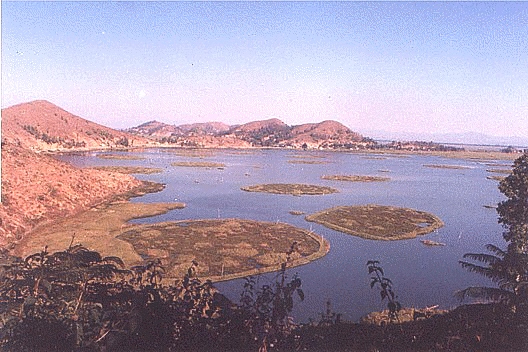
 Loktak Lake, the largest freshwater lake in India, also called the only Floating lake in the world due to the floating