Guest Post by Holli Dowson
Dear Readers
Holli Dowson sent emailed me some time back. Found it useful and thought of sharing it with you all.
Rashid


Guest Post by Holli Dowson
Dear Readers
Holli Dowson sent emailed me some time back. Found it useful and thought of sharing it with you all.
Rashid
 Given that the geological structures found beneath the ground are the result of dynamic processes and not of intentional design, they are not always as stable as they could possibly be. In some cases, the disturbance caused by the injection of high pressure water jets designed to fracture rock could cause them to collapse. This is apparently what happened at a fracking site near Blackpool, in England. This is not simply the pet theory of some fringe environmental group trying to pin the blame for a natural phenomenon on a company performing operations that they vigorously object to. In fact, it was the fracking company itself, Cuadrilla Resources, who announced after an investigation that, “It is highly probable that the hydraulic fracturing of Cuadrilla’s Preese Hall-1 well did trigger a number of minor seismic events.”
The company went on to say that it was “due to an unusual combination of geology at the well site coupled with the pressure exerted by water injection as part of operations,” and that “this combination of geological factors was extremely rare and would be unlikely to occur together again at future well sites.”
But despite this last claim, the US Geological Survey recently announced findings indicating that fracking operations may have been responsible for as many as 50 earthquakes in Oklahoma last January.
read at source
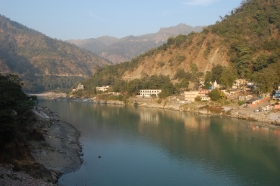 The soils and sediments at the bottom of rivers are rich in organic material. They can store carbon for thousands of years according to a study from the Woods Hole Oceanographic Institution (WHOI). Despite often high rates of erosion and sediment transport, the riverbed can hold organic carbon for 500 to 17,000 years. The researchers focused their studies on the Ganges-Brahmaputra basin in India, which feeds off waters from the Himalaya Mountains. The fact that riverbeds store much carbon is a cause for concern. In a changing climate, the soils could be destabilized, releasing the carbon back to the atmosphere.The WHOI researchers used radiocarbon dating to determine the age of carbon stored in the riverbed. Upstream in the Ganges watershed, carbon was stored up to 17,000 years. However, downstream in the floodplain, the longest residence times were only 3,500 years.
read more here
 Light pollution is not something to be terribly happy about. Researchers from Princeton and Harvard universities now suggest a seemingly more straightforward method to see who is out there by seeing who’s left the light on. Edwin Turner, a professor in Princeton’s Department of Astrophysical Sciences, and Avi Loeb, professor and chair of Harvard’s Department of Astronomy, have reported a technique that could detect alien civilizations by the artificial light that would emanate from their cities. Turner and Loeb’s work, which presents a mathematical algorithm to detect and observe this artificial light from Earth, has been submitted to the journal Astrobiology.
read here


 Rashid's Blog: A Place for Inquisitive Souls