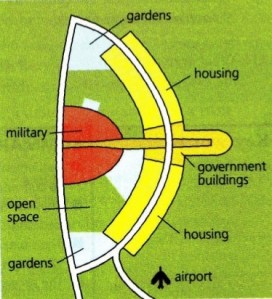
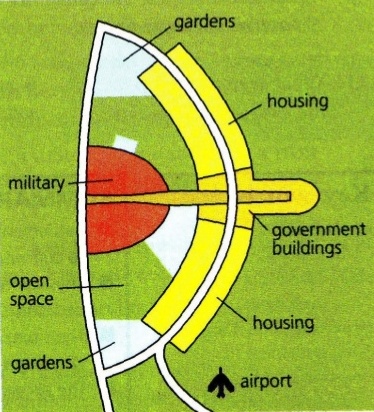
 There are many interesting settlements in the world but Brasilia is unique.Brasília is the federal capital of Brazil and the seat of government of the Federal District.As a metropolitan area, it ranks lower at sixth in population.besides its shape it has many noteworthy features.
- Brasília is the largest city in the world that did not exist at the beginning of the 20th century.
- As the national capital, Brasília is the seat of all three branches of the federal government of Brazil.
- The city also hosts the headquarters of many Brazilian companies. Planning policies such as the location of residential buildings around expansive urban areas, as well as building the city around large avenues and dividing it into sectors, have sparked a debate and reflection on life in big cities in the 20th century.
- The city’s design divides it into numbered blocks as well as sectors for specified activities, such as the Hotel Sector, the Banking Sector or the Embassy Sector.
- Brasília hosts 124 foreign embassies.
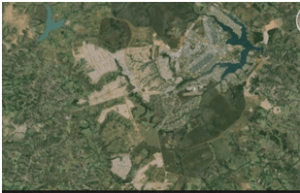
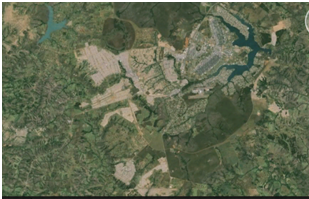
Google Earth Snapshot
The city was planned and developed in 1956 with Lúcio Costa as the principal urban planner, Oscar Niemeyer as the principal architect and Roberto Burle Marx as the landscape designer. Brasília is in the Unesco’s World Heritage List due to its architecture.On April 22, 1960, it formally became Brazil’s national capital. Viewed from above, the main portion of the city resembles an aircraft or a butterfly. The city is commonly referred to as Capital Federal, or simply BSB. Residents of Brasília are known as brasilienses or candangos (the latter referring to those not born in the city but who migrated there after it was established).
Brasília International Airport is the main airport in Brasília, connecting the capital to all major Brazilian cities and many international destinations. It is the third most important airport in Brazil, in terms of passengers and aircraft movements.
Links,Sources and Inspirations:
Wikipedia Slide Share
- Brasilia (kelliemlocke.wordpress.com)
- Tourist Town (dalokalvaro.wordpress.com)
- Brasilia: A Modernist Tourist’s Guide, Part 3 (midmodmusings.typepad.com)




 Rashid's Blog: A Place for Inquisitive Souls