Consider this View Point…..

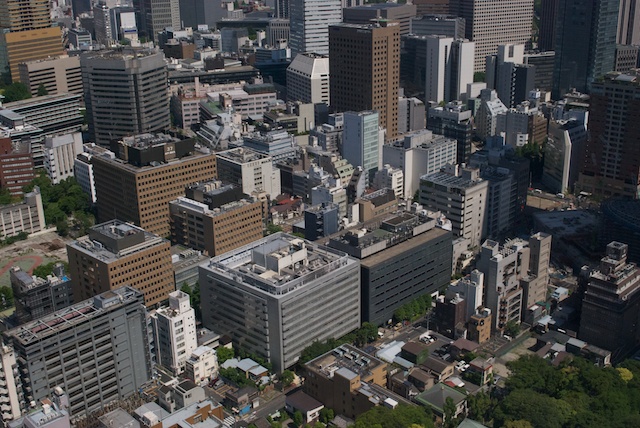
Living in cities reduces environmental impacts — but not by as much as you might think.

Consider this View Point…..
Living in cities reduces environmental impacts — but not by as much as you might think.

Do you own an android smart phone or tablet?
I was amazed recently when I did a quick search on the Google Play Store for the keyword “GIS”. Over 250 apps area listed, some generic apps and some very specific apps. So I thought it would make a great article to highlight some of these more popular apps free apps that you can download to your device.
2GIS: maps & business listings
2GIS provides 3D-maps of 180+ cities, contacts of 1.5 million companies, car routing and public transport routes and and more! 2GIS is a complete and up-to-date directory of organizations with detailed cities’ maps. 2GIS provides verified information only.
ArcGIS is a great way to discover and use maps. Maps come to life in ArcGIS. Tap on the map or use your current location and discover information about what…
View original post 672 more words
A sea is part of the ocean partially enclosed by land.

Seas are found on the margins of the ocean and are partially enclosed by land. Here, you can see that the Bering Sea is part of the Pacific Ocean, while the Chuckchi and Beaufort seas form part of the Arctic Ocean.
We use the terms “ocean” and “sea” interchangeably when speaking about the ocean, but there is a difference between the two terms when speaking of geography .
Seas are smaller than oceans and are usually located where the land and ocean meet. Typically, seas are partially enclosed by land.
Source:NOAA
Any geography student person must understand the varying forms of human settlements in terms of their size, composition, location, arrangement, organization, function, and history. Nobody lives in isolation. Instead, people live in clusters ranging from small villages with hundreds of people to megacities with tens of millions of people. The organized groupings of human habitation are the intense focus of most aspects of human life: economic activities, transportation systems, communications media, political and administrative systems, education, culture, and entertainment.
To understand human spatial organization it is important to look into relationship between settlements: their spacing, arrangement, functional connections, and economic specialties. Relationships between settlements are shaped by trade and the movements of raw materials, finished products, people, capital, and ideas. Patterns of settlement across Earth’s surface differ markedly from region to region and place to place. Settlement patterns change through time.
Cities, the largest and densest human settlements, are the major nodes of human society. Throughout the world, cities are growing rapidly, but none so rapidly as those in developing regions. Urbanization is changing the current patterns of both rural and urban landscapes around the world.
Settlements and the patterns they etch on Earth’s surface provide not only information on current economic, political, and social conditions, but also a historical record of past conditions. Today’s settlement patterns provide information about past settlement processes and land-use patterns.
Students must understand the processes underlying the patterns of human settlement over space and time. Understanding these themes enables students to see settlements as a record of human history and as the fulcrum of many of the human processes that are changing Earth’s surface.
A settlement is a collection of shelter where people live. The study of settlements is largely a product of twentieth century. Human geography is the study of relationship between man and earth of which settlement geography is a part and parcel. A settlement is man’s first step towards adaptation to his environment. Settlement designates an organized colony of human beings, together with their residences and other buildings (shops, hotels, banks etc.), the roads, streets which are used for travel. Settlements are situated as advantageously as possible with respect to natural features such as water, fuel, food, protection and drainage and last but not the least as access to transportation and communication.
According to Brock and Webb settlement pattern denotes the shape or arrangement of settlements in relation to natural or man made features or design such as streams, ridges, canals and roads. The pattern of settlement is determined on the basis of location of houses and the highways. The pattern of settlement exhibits the relationship between one dwelling and the other. Similarly the site may have no bearing on pattern in some cases.
According to Wikipedia , Settlement, locality or populated place are general terms used in statistics, archaeology, geography, landscape history and other subjects for a permanent or temporary community in which people live or have lived, without being specific as to size, population or importance. A settlement can therefore range in size from a small number of dwellings grouped together to the largest of cities with surrounding urbanized areas. The term may include hamlets, villages, towns and cities.
The term is used internationally in the field of geospatial modeling, and in that context is defined as “a city, town, village, or other agglomeration of buildings where people live and work”.
A settlement conventionally includes its constructed facilities such as roads, enclosures, field systems, boundary banks and ditches, ponds, parks and woods, wind and water mills, manor houses, moats and churches.
Links and Sources:
Wikipedia





 Rashid's Blog: A Place for Inquisitive Souls