Tides: Types and Causes

What Causes Tides-Moon?

7-10Gravity of moon and sun pulls up the water in ocean but the Moon influences the tides most.When moon pulls up the water it creates two bulges. One  bulge is directly under the moon and one on opposite side of earth,because earth turns these bulges move around the earth. When there is no bulge it is low tide and when there is a bulge it is high tide.All over earth there is a high tide and low tide on earth twice a day.

The shape of the sea bottom also influences the pattern .In the pacific ocean there is no land ,the difference is only a few centimeters. In between France and England all the water is forced through a narrow channel. This causes a huge difference between Calais and Dover.

The rotation of earth also has a direct impact on tides. The rotation of earth causes whirlpool around certain points of the ocean

Patterns of Tides

The shape of the sea bottom and the whirlpool current alters the simple pattern.

There are three different patterns of tides

There are semi diurnal tides: Two high tides and Two low tides , both equal in height

There are diurnal tides: one high tide and one low tide

There are mixed tides ,two high and Two low tides-,unequal in height.

Effect of Sun

The Sun also creates two bulges on either side of earth but the bulges are smaller.At certain time of the month the bulges of the moon and sun line up

Types of Tides
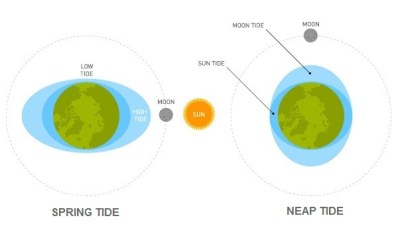
tide_graphic

This happens at full moon and new moon. At full and new moon high tides are extra high and low tides are extra low, we call it a spring tide.

When the sun and moon works against each other tides are smallest,we call this a neap tide

When there is a big difference between low and high tide there is a lot of water movement. There will be strong ocean currents.


Posted in Class Notes, earth | Leave a comment

Blushing Petals – Pink Pines

amras888's avatarAmras888

12345678910111213141516

Greetings, I have managed to spend a few minutes surrounded by the glory of nature. Whilst there, I took these pics for sharing. I hope you enjoy them – and that there will be many more to come. My health issues have been quite severe since last I posted, but the sights and sounds of the garden are amongst the best medicines I know.

The young butterfly stretched his wings, and allowed me to guard him from the beak of the watchful robin. And then, when ready, he made his maiden flight; and I wished him well.

And, I wish you dear readers, peace, for all time. Amras.

May my thoughts be ever pure,

From true love my actions spring,

May my ways be strong, and sure,

And my heart, life’s praises sing.

Photography ©Francis Moloney.

View original post

Posted in earth | 1 Comment

Four Pillars of City Sustainability

Nowadays,there are two buzzwords-Resilience and Sustainable.David Bello, Associate Editor over at Scientific American, in an interesting post looking at the supposed tensions between “resilience” and “sustainability”. His argument shows that precisely the characteristics that make many urban systems resilient can also make them deeply unsustainable from an environmental point of view.

A resilient system bounces back from challenges, unharmed, and a big part of building in resilience includes building in ways to fail safely. Sustainability, on the other hand, means efficiency, at least in part, as designers strive to strike a balance between human needs and environmental impacts.

The sustainability of a smart city is based on four main aspects:

Economic: The ability of the city to generate income and employment for the livelihood of all its inhabitants.

Social: The ability of the city to ensure that the well-being (safety, health, education) of the citizens can be equally delivered despite differences in class, race or gender.

Environmental: The ability of a city to protect future quality and reproducibility of its natural resources.

Governance: The ability of the city to maintain social conditions of stability, democracy, participation, and justice.

Source(s) , Link(s) and Inspiration(s):

ITU

Scientific American

resilience and sustainability

Smart City

Posted in earth, Urban Studies | 4 Comments

Exploring a relational approach to water management

RGS-IBG Managing Editor: Academic Publications's avatarGeography Directions

By Liz Charpleix, University of New England, Australia

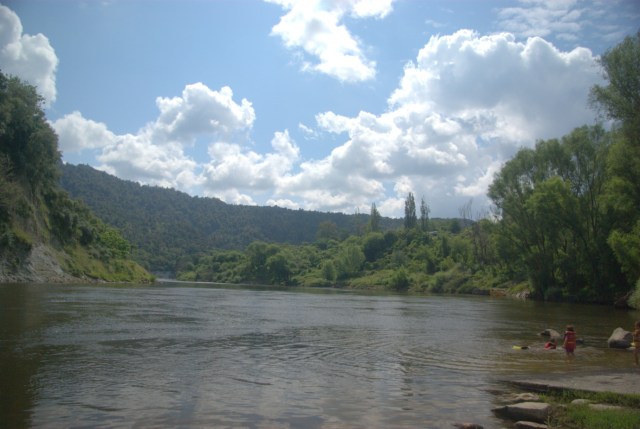
charpleix Whanganui River at Pipiriki, December 2014 © Liz Charpleix

The recent election of Labour politician Jacinda Ardern as Aotearoa/New Zealand’s youngest Prime Minister since 1856 has caught the world’s attention, for reasons ranging from the personal to the political. One of the planks in her party’s policy platform is ‘Clean rivers for future generations’, an appropriate goal for a nation that markets itself as ‘100% Pure’ and ‘the home of Middle Earth’. In pursuing this policy, the party has declared that they intend to ‘work with iwi [people who share a common ancestor] to resolve [Waitangi] Treaty water claims in a manner that respects iwi’s mana [authority], and restores the mauri [life force] of our rivers and lakes’ (Labour, nd).

Given that Aotearoa/New Zealand was colonised on the basis of a treaty signed by Māori chiefs and the English Lieutenant-Governor…

View original post 732 more words

Posted in earth | Leave a comment