Urban Wetlands in India

Through the ages, urban wetlands have been the lifeline of most cities in India. They were preserved and looked after by the people as their main source of water supply for drinking and irrigation. These wetlands are found all over the country and are either natural or built by people. Over the years, they have gradually depleted, leading to a number of problems in urban areas such as flooding, water scarcity, and water logging.

Tanks were constructed in the catchment areas of cities that were not located near a river or a large lake. Rainwater or run-off would collect during the monsoons and be stored for the rest of the year in these tanks and lakes. The city would get its water supply from these.

In southern India, the towns were built around a temple, which always had a tank at the centre. Wells were located in the tank, which served as a link with the aquifers. There were innumerable tanks dug by the rulers, most of which have been destroyed. In fact, in some areas tank building by the ruler was considered a noble deed.

In Karnataka, the Hoysalas built tanks all over the state. Some of these still exist. Festivals were organized around tanks; cleaning and de-silting the tanks were a part of the rituals. But over the years, human activity steadily destroyed these wetlands. In Bangalore, the city bus terminus has been built on the Dharmambudhi tank. A part of the Sampangi tank has given way to the Kanteerva stadium and the remaining to a housing colony. Another lake was filled up to house the city market.

Pollution levels in the Hussain Sagar Lake in Hyderabad has been going up over the years. There are more than a thousand polluting industries located around the lake, a large number of them pharmaceutical industries. Untreated effluents from the industries and domestic sewage have deteriorated the water quality in the lake. The lake gets little chance to rejuvenate itself as a run-off happens only once a year during the monsoons, whereas pollutants flow in throughout the year.

The Cholas were well known for the construction of tanks in the state of Tamil Nadu. But today, despite heavy rains, Chennai reels under severe water crisis along with flooding. A number of housing colonies have been built on tanks and over the years the numbers are increasing. This is the case in most large cities in the country.

In Calcutta wetlands, both artificial and natural, have been a part of the city system. The main drainage for the city has been the Hooghly River; but the incline of the city is eastwards and this has led to the creation of the East Calcutta Wetlands. The Salt Lake is one of the largest wetlands in the city and serves as a flood cushion for the city. Calcutta has no sewage treatment plant. The sewage is treated in the sewage-fed fisheries; the process is cost-effective and lasting. A number of the fisheries purify this water through a series of sedimentation tanks and use the water for fish cultivation and agriculture.

Indore’s water needs were met by a large numbers of wells and tanks located all around the city. But over the last few years, the tanks have gradually dried up, including the largest of them, the Yashwant Sagar Lake. Vegetable and fruit cultivation along the banks of the lake has caused pollution due to run-offs from the fields. This has caused eutrophication and contamination.

There are no rivers in the vicinity of Bhopal and the city depends entirely on lakes to meet the water needs of the city.Over the years, these lakes have become polluted due to the dumping of sewage into them. The government recently announced the Bhuj Wetland Project, a scheme to prevent the flow of liquid and solid waste into the lakes and also to de-silt them. More than 2000 ha of land around the upper lakes, which feed water to the lower ones, is to come under plantation.

Once upon a time, these urban wetlands maintained a steady supply of water for the city, recharged the groundwater, cooled the city, and prevented flood as they were a natural drainage system. Over the years, these very tanks and wetlands have been neglected, encroached upon either to accommodate more houses or to dump waste. Our wetland are under threat now.This has caused large-scale water crisis and monsoon flooding and water logging, leading to misery and disease. These wetlands that have been protected for centuries are now being ravaged and destroyed in the name of development.

People in the urban areas must learn to live in harmony with nature in their own habitat. The wetlands, the green belts, and the flora and fauna of these areas have to be preserved for urban areas to survive and remain healthy.

In earlier times, we in India,practiced water harvesting systems. Perhaps it is high time to revive at least some of them,if not all.
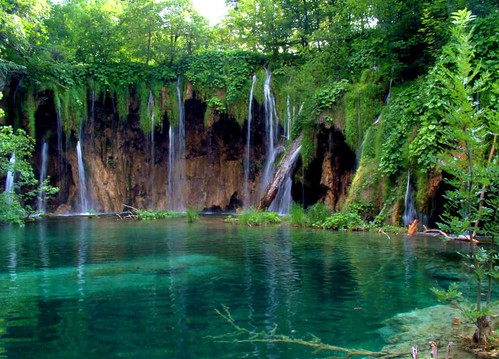
source

Posted in Urban Studies | 3 Comments

Rainiest Places

Cherrapunji, India

Cherrapunji receives an annual rainfall of 1,270 cms. Here it rains so much for two reasons – Elevation: because of the elevation, air that blows over the plains below is cooled as it rises to the higher elevation. This cooling of the air causes moisture trapped in the air to condense, forming clouds, which then release rain. Monsoons: the prevailing winds are very heavily laden with moisture. The constant supply of moist air for six months straight results in almost continual rainfall.

Mawsynram, India

Records indicate more annual rainfall in the town of Mawsynram, located in the Kashi hills in Meghalya, than Cherrapunji – although disputes about data accuracy have been rife as both regions fight for rainfall supremacy. A quick drive from Cherrapunji, Mawsynram appears to have a more favorable position in terms of proximity to the Bay of Bengal and steep incline of the Kashi Hills, which allows humid, moist air to ascend and in turn, blanket the area with rain.

Crkvica, Bosnia and Herzegovina

Although the country of Bosnia and Herzegovina is devoid of coastline, save for a scant shore of the Adriatic, it nonetheless receives a fair amount of rainfall each year, most notably in Crkvica. The town in Bosnia, just northwest of Sarajevo, consistently receives what is considered to be the highest annual average precipitation in Europe.

Debundscha, Cameroon

Cameroon has a reputation for being one of the most exotic and beautiful nations in Africa. It encompasses the principal features of the continent on a small scale. As a result, parts of Cameroon receive super heavy rainfall. Ocean coastline, tropical forests, grasslands, deserts and mountains within close proximity to each other dominates its landscape. At the base of Mount Cameroon and within plain view of the Bight of Biafra, the city of Debundscha receives over 400 inches of rain a year.

Mount Waialeale, Kauai, Hawaii, USA

Although not exactly a residential area, the region around Mount Waialeale and indeed the summit, receives a ton of precipitation on a habitual basis. Tourism officials in Hawaii love to boast that this is the wettest place on the planet. The rainfall in Kauai is notable for the fact that it occurs with such daily regularity. Mount Waialeale bears the brunt of the precipitation because of a conical shape and pure geographical position relative to the ocean and trade winds.

Source

Posted in rain | 1 Comment

Scientists Find New Method for Curving ‘Airy’ Light Beams

We  all learned in science class that light beams travel in straight lines and spread through a process known as diffraction — and they can’t go around corners. But now researchers at Tel Aviv University are investigating new applications for their recent discovery that small beams of light can indeed be bent in a laboratory setting, diffracting much less than a “regular” beam.hese rays, called “Airy beams,” were named after English astronomer Sir George Biddell Airy, who studied the parabolic trajectories of light in rainbows, and were first created at the University of Central Florida. Now, the fortuitously-named Prof. Ady Arie and his graduate students Tal Ellenbogen, Noa Voloch-Bloch, Ayelet Ganany-Padowicz and Ido Dolev of Tel Aviv University’s Faculty of Engineering have demonstrated new ways to generate and control Airy beams.

read on

Posted in Uncategorized | Leave a comment

Water and Ice are Odd

Water (H2O) is the most abundant compound on Earth’s surface, constituting about 70% of the planet’s surface. In nature it exists in liquid, solid, and gaseous states. It is in dynamic equilibrium between the liquid and gas states at standard temperature and pressure. At room temperature, it is a nearly colorless with a hint of blue, tasteless, and odorless liquid. Many substances dissolve in water and it is commonly referred to as the universal solvent. Because of this, water in nature and in use is rarely pure and some of its properties may vary slightly from those of the pure substance. However, there are many compounds that are essentially, if not completely, insoluble in water. Water is the only common substance found naturally in all three common states of matter and it is essential for life on Earth.Water usually makes up 55% to 78% of the human body.

Water is vital for life and how it freezes is very important. For years water (ice) has been known to exist in 15 phases. Subjected to higher pressures and varying temperatures, ice can form in fifteen separate known phases. With care all these types can be recovered at ambient pressure. The types are differentiated by their crystalline structure, ordering and density. There are also two metastable phases of ice under pressure, both fully hydrogen-disordered; these are IV and XII. Ice XII was discovered in 1996. In 2006, XIII and XIV were discovered. Ices XI, XIII, and XIV are hydrogen-ordered forms of ices Ih, V, and XII respectively. In 2009 ice XV was found at extremely high pressures and −143 degrees celsius. Now there is another variation.

Most liquids freeze at a higher temperature under pressure, because the pressure helps to hold the molecules together. However, the strong hydrogen bonds in water make it different: water freezes at a temperature below 0 °C under a pressure higher than 1 atmosphere. Consequently, water also remains frozen at a temperature above 0 °C under a pressure lower than 1 atmosphere. The melting of ice under high pressures is thought to contribute to the movement of glaciers.

As well as crystalline forms, solid water can exist in amorphous (non-crystalline)states as amorphous solid water, low-density amorphous ice, high density amorphous ice , very high density amorphous ice and hyperquenched glassy water.

The form most common on Earth is a hexagonal ice crystal. Some of the other variants are:

Ice Ic – A metastable cubic crystalline variant of ice. The oxygen atoms are arranged in a diamond structure. It is produced at temperatures between 130 and 220 K, and can exist up to 240 K when it transforms into ice Ih. It may occasionally be present in the upper atmosphere.

Ice II – A rhombohedral crystalline form with highly ordered structure. Formed from ice Ih by compressing it at temperature of 190—210 K. When heated, it undergoes transformation to ice III.

Ice III – A tetragonal crystalline ice, formed by cooling water down to 250 K at 300 MPa (about 30 atmospheres).

Ice IV – A metastable rhombohedral phase. It can be formed by heating high density amorphous ice slowly at a pressure of 810 MPa (about 80 atmospheres).

Ice V – A monoclinic crystalline phase. Formed by cooling water to 253 K at 500 MPa (about 50 atmospheres).

Now, University of Utah chemists have confirmed the coexistence of ice and liquid after water crystallizes at a new very low temperatures. They describe their work in the June 21 issue of the Journal of Chemical Physics, which is published by the American Institute of Physics.

The new ice forms at a temperature of 180 K, which is typical of the upper atmosphere where water blurs between ice and liquid.

“This blurring is what’s interesting,” says Valeria Molinero, who led the research. “Our findings show that what goes on there is important to the behavior of water and to the formation of clouds.”

By targeting this critical temperature zone, the new work might be important for understanding cloud formations that regulate global radiation and hence climate change.

source(s)

ENN

Properties of Water

Links

Water

Posted in water | Leave a comment