Polar Regions

The polar regions are the areas that surround Earth’s geographic North and South Poles. The area surrounding the North Pole is called the Arctic and includes almost the entire Arctic Ocean and northern areas of Europe, Asia and North America. The area surrounding the South Pole is called the Antarctic and includes the continent of Antarctica and parts of the surrounding Southern Ocean. Earth’s geographic poles are in a slightly different location than the magnetic poles.

Polar Day

Right at the Poles, the Sun shines for half the year and it is dark for the other half of the year. This makes a year like one long day. The Sun rises in spring, reaches its highest point in the sky in summer, and sets in autumn. So the Sun is visible only during the warmer months of the year. When the Sun is visible during summer at the South Pole, it is the dark winter months at the North Pole. The time when the Sun is continuously in the sky is called Polar Day.

Polar atmosphere

There are some unique phenomenon that happen in the atmosphere. Noctilucent Clouds: In the mesosphere layer of Earth’s atmosphere, noctilucent clouds form in the polar regions. The word noctilucent means to glow, and these clouds do glow blue in color when they are lit from below by the setting Sun. Less Ozone: Most of the ozone destruction has happened in the part of the stratosphere that is over Earth’s polar regions. There are now a number of ozone holes, including a very large hole over Antarctica.

Polar life

All sorts of living things call Earth’s polar regions home – from tiny lichens encrusting the rocky landscapes of the Arctic tundra to huge blue whales swimming through the frigid waters of the Southern Ocean. Some animals are only part-time residents, migrating to warmer, lower latitudes during the winter months. Others live in polar locales year-round. Most have special adaptations that allow them to survive the extreme cold of the Earth’s polar regions.

Polar culture

There are people who live in the Arctic region. Inuit – The Inuit are the native cultures that continue to live on coastal areas of Arctic tundra in Canada, Alaska, Siberia, Greenland. Inuit hunt for seals, whales, polar bears and other animals from the ocean. Norse: Norse were originally from Scandinavian countries. During the Middle Ages Norse explorers and warriors called Vikings raided regions within and near the Arctic. Today, many people living in these countries are descendants of the Nors
Source

Posted in earth | Leave a comment

Biggest Submarine Canyon

In many continental shelves submarine canyons have been found carving deep fissures that stretch from near shore out to the deep sea edge of the shelf. There are a number of theories as to what carved these giant cracks into the shelves, but the most prominent one states that sediment transport carved these canyons. Sediment transport in the sea occurs primarily as underwater landslides of enormous masses of rock and sediment, usually triggered by turbulent waters during a storm, or ground movement from an earthquake. The depth at which the submarine canyons have been cut depends on the make up of the underlying rock – how susceptible it is to being carved – and how much, how often and how heavy the materials are that are transported downslope during an underwater landslide. It is also believed that some canyons were carved above ground, at a time when sea level was a mile or more lower than it is today. Those canyons that are now submerged may have once held rivers and waterfalls that carved the canyon walls, carrying the sediment and debris down into shallower sea.

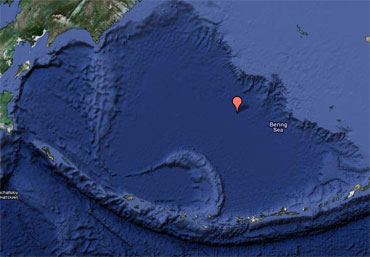
The largest and deepest submarine canyon ever discovered is in the middle of the Bering Sea called the Zhemchug Canyon. It is deeper than the Grand Canyon (1.83 km deep) at 2.6km deep. i, based on drainage area (11,350 km2) and volume (5800 km3). Deep, cold, oxygen-rich waters well up from the deeps into the canyon, providing sustenance to an enormous array and variety of life forms.

source

Posted in oceans | Leave a comment

India to launch five Remote Sensing Satellites

India plans to put five remote- sensing satellites into orbit in the first half of next month after fixing a rocket “anomaly” that forced it to delay launches in May.The Polar Satellite Launch Vehicle will carry India’s Cartosat-2B, Algeria’s ALSAT-2A and two small satellites from the University of Toronto, P.S. Veeraraghavan, director of Vikram Sarabhai Space Centre.

read here

Posted in Remote Sensing 101, Satellites, Space | 2 Comments

Oil and the Arctic’s Dangerous Future

Would you risk a Gulf of Mexico-type oil spill in the pristine U.S. Arctic Ocean?

Beginning July 1, we’ll all take that gamble.

That’s when the Shell Oil Company plans to drill exploration wells in the Chukchi and Beaufort Seas — home to polar bears, bowhead whales and a host of other iconic wildlife.

A spill in the Arctic could be catastrophic and nearly impossible to clean. Burning the spilled oil, a tactic used in the Gulf, won’t work in sea ice. Eight-foot high Gulf of Mexico seas temporarily halted BP’s clean-up; the Arctic is home to high winds, extreme storms, waves up to 20 feet at times, heavy fog and sub-zero temperatures.

The Gulf spill is close to land, where cleanup resources are easily accessible; Shell will be drilling in remote locations, hundreds of miles from help. In the Gulf, BP had access to more than 400,000 feet of containment boom and was prepared to skim more than 170,000 barrels of oil a day from the water in the first 24 hours; in the Arctic, Shell says it would have only 6,000 feet of boom available in the immediate aftermath of a spill and be able to skim just 24,000 barrels.

Drilling should be halted until federal investigations can determine what went wrong in the Gulf and what’s needed to drill safely in the Arctic.

As the Gulf tragedy grows worse by the day, it’s clear there is no room to gamble in the Arctic.

For more information, visit http://www.oceansnorth.org

Source

Posted in Ecosystem, Environment, oceans, water | 1 Comment