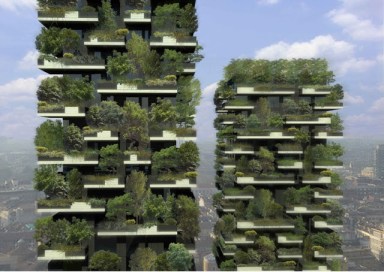
Vertical Urban Forest
Cities are fast becoming our natural habitat.
As of 2005, more people live in urban than in rural areas for the first time in Earth’s history. Urban nature is critical for connecting half of the world’s people with the natural environment. Connecting city dwellers with their local nature and watersheds is critical not only for building support for the conservation and ecological restoration and stewardship of biodiversity at home.
Though cities occupy just 2 percent of the Earth’s surface; their inhabitants consume 75% of the planet’s natural resources. Cities draw on their surrounding ecosystems for goods and services, and their products and emissions can affect regional and even global ecosystems. Healthy ecosystems and biological diversity are necessary for our cities to function properly. Ecosystems provide three main kinds of services to the city: provisioning of food, fibre and fuels; regulating through purification, detoxification and mitigation of droughts and floods; and enriching the spiritual, aesthetic and social life of urban dwellers.
Cities abound with wild nature. A large percentage of Earth’s biodiversity exists in urban or urbanizing areas, which are often adjacent to larger wild areas. It is more accurate to say that cities are in nature! Cities are embedded in the natural environment – the geology, watershed, climate and biodiversity – of whichever place on Earth where they develop.
More people means more continued destruction of our local natural environment. But if we change how we interact with nature, then we can turn people into a positive restoration force . Conservation of local urban biodiversity, is as essential and paramount to global ecosystem conservation, sustainability, and human survival on the planet as is conservation of the Amazon rainforest.
Having nature in the city is part of addressing urban environmental justice. Many urban people cannot afford to go out of town to experience nature and/or they have grown up without the benefit of experiencing wild nature. Our challenge is to tell people about local nature and help them obtain resources to experience it. Given the chance and the tools, many of the City’s communities could connect with their nature.
Urban areas are the diverse, complex, intensely developed habitat in which we are confronted with the global challenge of how to interact more harmoniously, locally, with the rest of the natural world.
Human Well-Being and Urban Biodiversity
Human health can be improved by urban ecosystem services such as reduction in air pollution. Exposure to natural environments can promote emotional well-being through mechanisms such as making problems feel more manageable. Psychological benefits of exposure to urban green space increases with greater biodiversity. Although there may be human health benefits from exposure to any urban green spaces the ability of the public to perceive—and benefit from—species richness suggests that the protection or creation of biologically diverse urban environments is important. When planning urban green space for human health benefits, access becomes important. There is a need to consider how people will travel to the site. Walking access is ideal, although the provision of green spaces within walking distance would require many small green spaces throughout the city instead of a smaller number of large spaces. Beyond the immediate benefits to human health, broader conservation goals can be served by creating or encouraging high-quality interactions between people and the natural world. Improving human well-being might be seen as a by-product of successful conservation in urban areas, but this effect can, in turn, catalyze people to be more supportive of other efforts at biodiversity conservation.
Inspiration(s),Link(s) and Source(s):
Nature in the City http://natureinthecity.org/urbanbiodiversity.php
UNEP http://www.unep.org/urban_environment/issues/biodiversity.asp