
Here is another collection of the doors at the temples and houses in Kathmandu, Nepal.


Here is another collection of the doors at the temples and houses in Kathmandu, Nepal.
Many men and women suffer over body image issues. We try to eat healthy, work out and yet we can never measure up. For most of us, we just wear black in mourning for our pre-baby figures. We live in yoga pants and the idea of bathing suit shopping requires three stiff drinks and a Xanax. For me? I haven’t worn shorts in fifteen years.
Is the pressure to be thin too much? The actresses and models get skinnier and skinnier by the year. When did ZERO become a SIZE?
I actually happen to be a size 6-8-10-12-14-16-22 depending on where I shop.
And then, when I DO finally get drunk enough the urge to shop, I am greeted with this:
And then THIS:
Whatever happened to wanting to look like Marilyn Monroe or Jane Mansfield? Women used to be soft and curvy and sexy. Now we aspire to look like…
View original post 527 more words

Mudpot in Hverir, Námafjall, Iceland
One of the most interesting looking features of a thermal area is mudpots. A mudpot or mud pool is an acidic hot spring, or fumarole, with limited water. It usually takes the form of a pool of bubbling mud. The acid and microorganisms action decomposes surrounding rock into clay and mud.
The mud of a mudpot takes the form of a viscous, often bubbling, slurry. As the boiling mud is often squirted over the brims of the mudpot, a sort of mini-volcano of mud starts to build up, sometimes reaching heights of 3–5 feet. Although mudpots are often called “mud volcanoes”, true mud volcanoes are very different in nature. The mud of a mudpot is generally of white to greyish color, but is sometimes stained with reddish or pink spots from iron compounds. When the slurry is particularly colorful, the feature may be referred to as a paint pot.
Geologic Origin
Mudpots form in high-temperature geothermal areas where water is in short supply. The little water that is available rises to the surface at a spot where the soil is rich in volcanic ash, clay and other fine particulates. The thickness of the mud usually changes along with seasonal changes in the water table.
Notable sites
Examples
The geothermal areas of Yellowstone National Park contain several notable examples of both mudpots and paint pots, as do some areas of Iceland and New Zealand.Iceland also have many.
How They Work
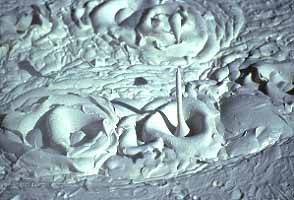 Mudpots are acidic features with a limited water supply. Some microorganisms use hydrogen sulfide, which rises from deep within the earth, as an energy source. They help convert the gas to sulfuric acid, which breaks down rock into clay. Various gases escape through the wet clay mud, causing it to bubble. Mudpot consistency and activity vary with the seasons and precipitation. The sights, sounds, and smells of areas like Artist and Fountain paint pots and Mud Volcano make these curious features some of the most memorable in the park.
Source(s),Links and Inspirations: Wikipedia , National park Service , geothermal features
see mudpot in action


 Rashid's Blog: A Place for Inquisitive Souls