Here is a reblog from Derek Gregory of Geographical Imaginations. In an essay he intends to write about Geography and war. A thought provoking post.
Source: Conflict Urbanism

Here is a reblog from Derek Gregory of Geographical Imaginations. In an essay he intends to write about Geography and war. A thought provoking post.
Source: Conflict Urbanism
In 2015 I shared about a new children’s books about dinosaurs, Ancient Earth Journal: The Early Cretaceous, which “combines two things I really love: learning about dinosaurs and natural history illustration.” As I noted, the depiction of dinosaurs is done by praised by paleontologists, is presented by Juan Carlos Alonso in a nature journal fashion, as if the artist is encountering them as wildlife on a nature trip. This helps to see these animals as actual, living entities.
Alonso has published his second book in this series:

Juan Carlos Alonso, Ancient Earth Journal: The Late Jurassic (Lake Forest, CA: Walter Foster Jr., 2016), 112 pp. Coauthored with paleoartist Gregory S. Paul.
• Order throughPowell’s City of Books • Order throughAmazon.com •
Publisher’s description What would it be like to see a living, breathing dinosaur? Following in the footsteps of Ancient Earth Journal: The Early Cretaceous, this next installment,
View original post 177 more words
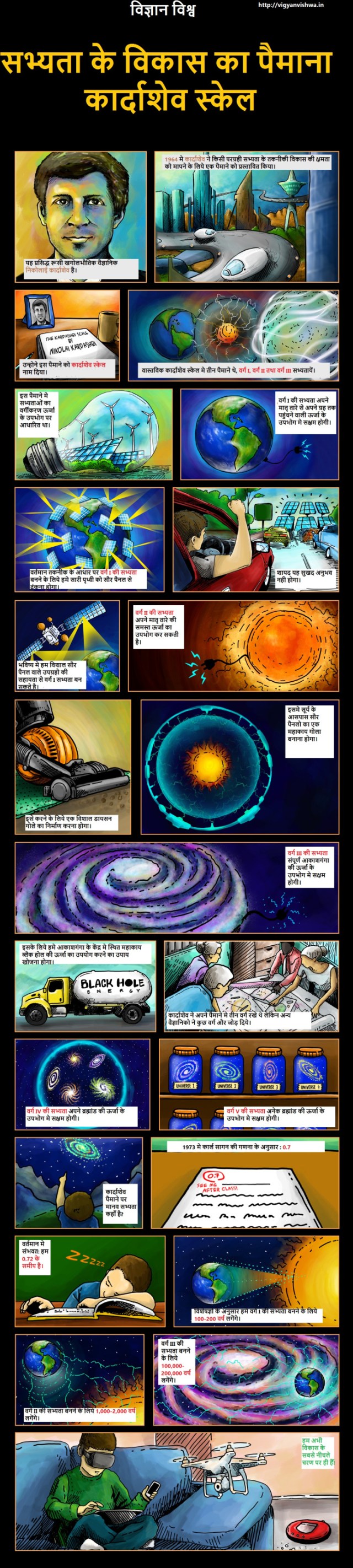
1964 मे कार्दाशेव ने किसी परग्रही सभ्यता के तकनीकी विकास की क्षमता को मापने के लिये एक पैमाने को प्रस्तावित किया।
रशियन खगोल विज्ञानी निकोलाइ कार्दाशेव के अनुसार सभ्यता के विकास के विभिन्न चरणो को ऊर्जा की खपत के अनुसार श्रेणीबद्ध लिया जा सकता है। इन चरणो के आधार पर परग्रही सभ्यताओं का वर्गीकरण किया जा सकता है। भौतिकी के नियमो के अनुसार उन्होने संभव सभ्यताओं को तीन प्रकार मे बांटा, वर्ग I, वर्ग II तथा वर्ग III सभ्यतायें।
प्रसिद्ध रूसी खगोलभौतिक वैज्ञानिक निकोलाई कार्दाशेव ने इस पैमाने को कार्दाशेव स्केल नाम दिया।
Source:
ग्राफिक्स स्रोत : https://futurism.com
मूल ग्राफिक्स कॉपी राइट : https://futurism.com
A new book pits one Darwin expert against another in their views on what had more influence on Darwin: the social context of Industrial Revolution England or the German romantics.

Robert J. Richards and Michael Ruse, Debating Darwin (Chicago: University of Chicago Press, 2016), 320 pp.
• Order throughPowell’s City of Books • Order throughAmazon.com •
Publisher’s description Charles Darwin is easily the most famous scientist of the modern age, and his theory of evolution is constantly referenced in many contexts by scientists and nonscientists alike. And yet, despite how frequently his ideas are evoked, there remains a surprising amount we don’t know about the father of modern evolutionary thinking, his intellectual roots, and the science he produced. Debating Darwin seeks to change that, bringing together two leading Darwin scholars—Robert J. Richards and Michael Ruse—to engage in a spirited and insightful dialogue, offering their interpretations of Darwin…
View original post 243 more words


