
The origin of petroleum (crude oil and natural gas) has been explained through two major groups of theories:
- Organic (Biogenic) Theory
- Inorganic (Abiogenic) Theory
1. Organic Theory (Biogenic Theory)
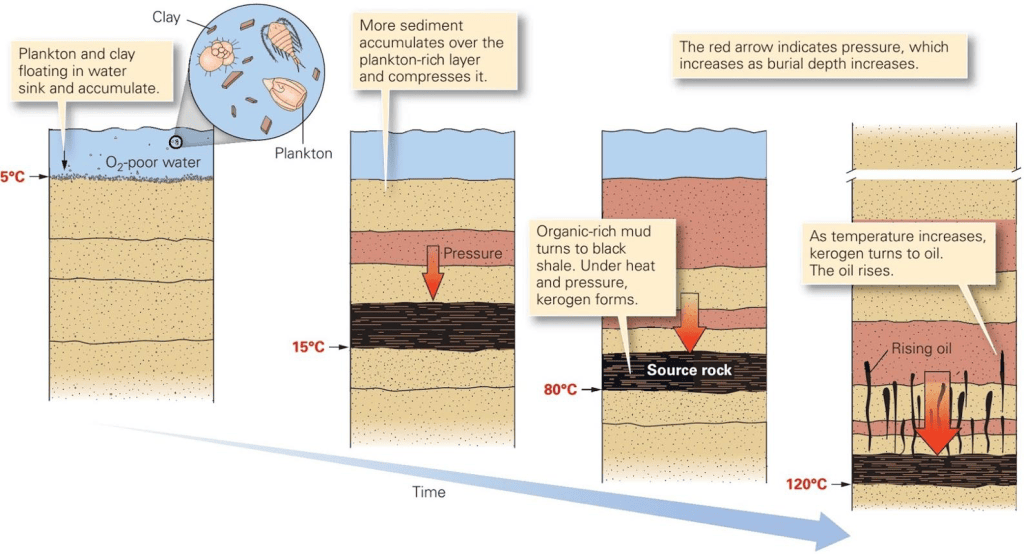
Image Source: Learning Geology: Petroleum Geology
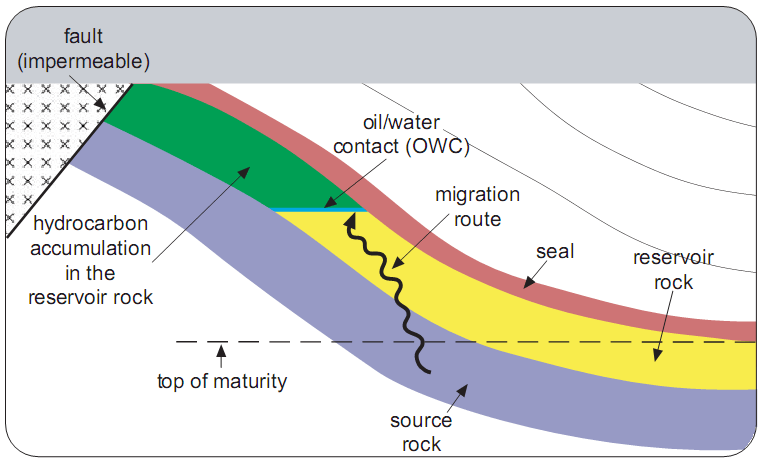
Image Source:geologylearn.blogspot.com
This is the most widely accepted scientific explanation for the formation of petroleum.
Main propositions:
- Petroleum originated from the remains of ancient marine organisms, particularly plankton, algae and microorganisms.
- Their remains accumulated on the seabed along with sediments.
- These organic materials were buried under successive layers of sediments.
- In oxygen-deficient conditions, organic matter was preserved and transformed into kerogen.
- Over millions of years, heat and pressure converted kerogen into liquid and gaseous hydrocarbons.
- Petroleum subsequently migrated into porous sedimentary rocks and accumulated in geological traps.
Supporting evidence:
- Petroleum is predominantly found in sedimentary basins.
- Many crude oils contain biological molecular markers (biomarkers).
- Petroleum contains characteristic carbon isotope signatures associated with biological organic matter.
2. Inorganic Theory (Abiogenic Theory)
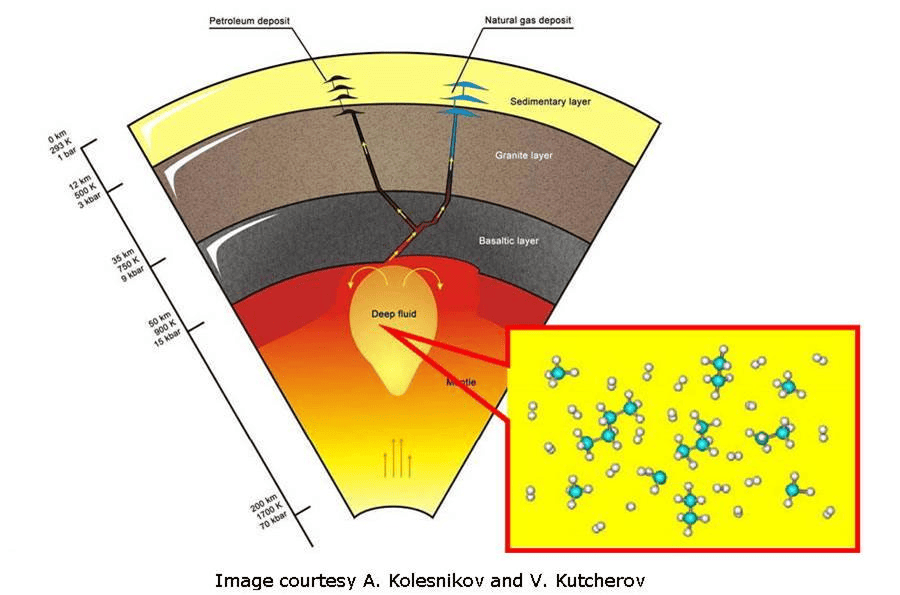
Image Source: HIDROCARBUROS ALIFATICOS: EL PETROLEO
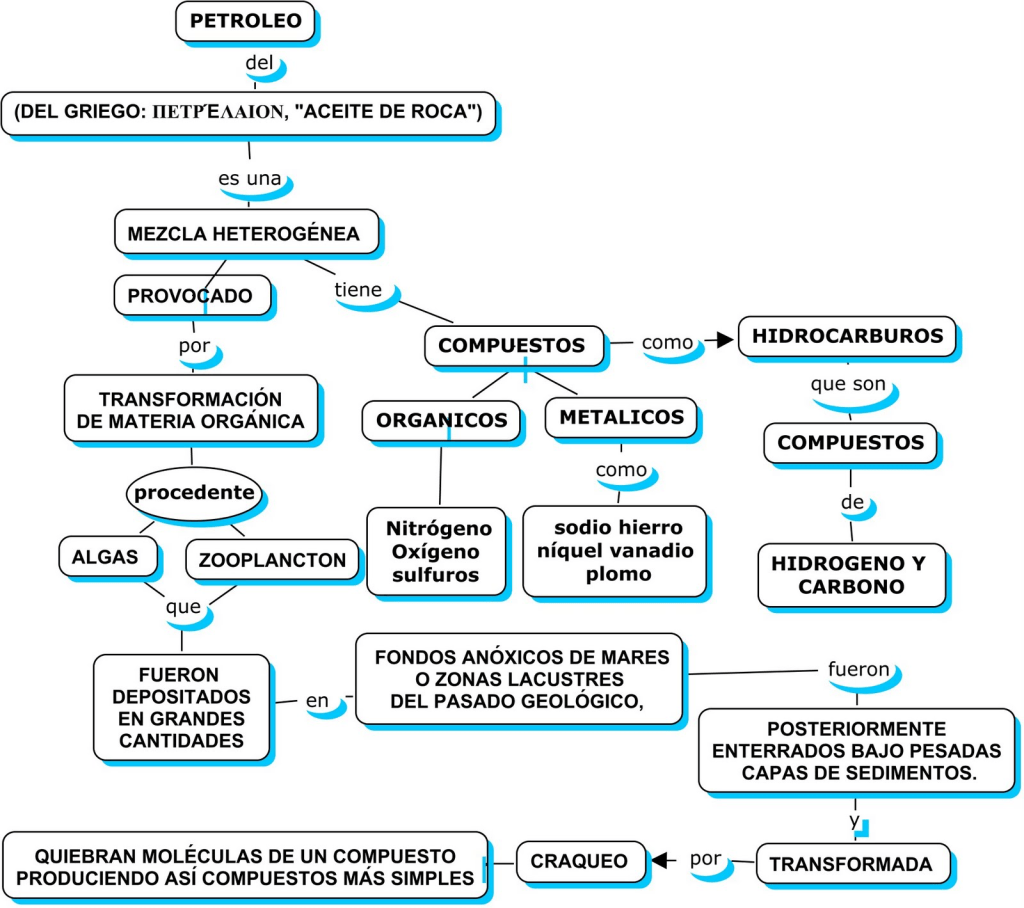
Source: hidro-c-alifaticos.blogspot.com
This theory suggests that petroleum can originate from chemical reactions involving inorganic substances deep within the Earth, rather than exclusively from biological remains.
Main propositions:
- Hydrocarbons may form deep inside the Earth’s crust or mantle.
- Carbon-bearing substances react with hydrogen under high temperature and pressure.
- These reactions may produce methane and other hydrocarbons.
- Hydrocarbons may migrate upwards through fractures and geological structures.
Important contributors:
- Dmitri Mendeleev (1877): Proposed an inorganic origin of petroleum through reactions involving metal carbides and water.
- Nikolai Kudryavtsev: Associated with the modern Russian-Ukrainian abiogenic petroleum hypothesis.
- Thomas Gold: Promoted the deep-Earth gas hypothesis.
3. Comparison between the Two Theories
| Basis | Organic theory | Inorganic theory |
|---|---|---|
| Origin | Ancient organisms | Chemical reactions |
| Source | Organic matter | Inorganic carbon |
| Environment | Sedimentary basins | Deep Earth’s crust/mantle |
| Formation | Biological material transformed by heat and pressure | Abiotic chemical synthesis |
| Scientific acceptance | Widely accepted | Limited evidence as a major source of commercial petroleum |
4. Which theory is scientifically accepted?
Widely accepted explanationOrganic Theory
Modern petroleum geology supports the organic origin of most commercially significant petroleum deposits. Abiotic hydrocarbons can form naturally in certain geological environments, but there is no convincing evidence that they account for a substantial proportion of the world’s commercial petroleum reserves.
Conclusion: Petroleum is primarily a fossil fuel formed from ancient organic matter over geological time through burial, heat, pressure and chemical transformation.
Readings:
Abiogenic petroleum origin
Petroleum-Bearing Geologic Formations
Oil Exploration Basics
Putting India on World Petroleum Map
Fossil Fuels:Overview and Impact


