If you have heard of places like,Vidharba, Telangana, Bhojpur, Mithila or Awadh, you know about SCR’s . The well you know a SCR it is easier to understand the people, agriculture, traditions Seasons, and buying selling periods. You can also plot them to your needs, say cooking medium: some SCR’s are mustard oil users and some may be groundnut oil users. You can also map hard and soft water. A social planner will have several maps. Maps by food and crop, map by religion, map by monsoon …more the merrier.
Socio cultural regions helps you understand the soul of the place. Often references like “paan belt” or “cow belt” may not sound politically right but they carry a lot of weight. Why Eastern UP is similar to north Bihar? When merging Bhojpur enters Chapra – Siwaan in Bihar and finally converges into Mithila the similarities are bound to happen. Mithila enters into Dwaar- Bang it converges into Bengal. Similarities in language ,food, dress , make up and structures of house are seen.
Imagine going into a government building to ask for assistance. You explain that you’re from New Mexico when the government clerk requests to see your passport because you must be from a foreign country. The government worker is a product of the US education system where she genuinely didn’t know that New Mexico is a US state, since 1912.
April 26, 2018, Gavin Clarkson of N.M., speaks at the Albuquerque bureau of The Associated Press. A District of Columbia clerk refused to accept Clarkson’s state driver’s license for a marriage license because she and her supervisory believed New Mexico was a foreign country. (AP Photo/Russell Contreras, File)
Here’s the rest of the story…
On November 30, 2018, AP published the following report, “DC clerk stalls marriage over ‘foreign’ New Mexico ID card”
Excerpt:
“A District of Columbia clerk and a supervisor refused to accept a New Mexico man’s state…
S.A. Stouffer, an American sociologist, introduced one such modification in the gravity model. Stouffer formulated his intervening opportunity model in 1940, and claimed that there is no necessary relationship between mobility and distance (Stouffer, 1940:846). Instead, the observed decline in the volume of migration is due to an increase in the number of intervening opportunities with increasing distance. Stouffer’s model suggests that the number of migrants from an origin to a destination is directly proportional to the number of opportunities at that destination, and inversely proportional to the number of intervening opportunities between the origin and the destination.
Stouffer’s formulation can be mathematically expressed as follows:
where Y is the expected number of migrants, ∆x is the number of opportunities at the destination, x is the number of intervening opportunities, and k is a constant. Stouffer modified his theory of migration and intervening opportunities in the mid-1950s and added the concept of competing migrants in his model. His modified theory of mobility was published in 1960. The revised model proposes that during a given time interval, the number of migrants from city 1 to city 2 is the direct function of the number of opportunities in city 2, and an inverse function of the number of opportunities intervening between city 1 and city 2, and the number of other migrants for the opportunities in city 2. Thus, the revised formulation would read as under (Galle and Taeuber, 1966:6):
where Y is the number of migrants moving from city 1 to city 2, Xi is the number of opportunities in city 2, X1 is the number of opportunities intervening between city 1 and city 2, Xc is the number of migrants competing for opportunities in city 2, and k is a constant.
It may be realized here that the volume of migration from one city to another is the function of as much the attraction of one city as the repulsion from the other. Hence, another component as a measure of disadvantages that push people from city 1 is introduced in the numerator. The final formulation may be expressed as under:
where Xo is the number of out-migrants from city 1; a, b and c are parameters to be determined empirically; and other notations are as before.
In Stouffer’s model the measure of ‘disadvantages’ or ‘push’ factors in city 1 (X0) is defined as the total out-migrants from the city. Likewise, the measure of number of opportunities in city 2 (X1) is defined as the total in-migrants in city 2, whereas the measure of intervening opportunities between city 1 and city 2 (X2) is defined as the total number of in-migrants in a circle centred mid-way between city 1 and city 2, and having a diameter equal to the distance between the two cities. And, finally, the measure of competing migrants (Xc) is defined as the total number of out-migrants from a circle centred on city 2 with the distance between the two cities as its radius.
Wired Scienceoutlined six ways in which humans are already geoengineering the Earth, arguing that the world has moved from the Holocene to Anthropocene era. “From diverting a third of Earth’s available fresh water to planting and grazing two-fifths of its land surface, humankind has fiddled with the knobs of the Holocene, that 10,000-year period of climate stability that birthed civilization. The consequences of our interventions into Earth’s geophysical processes are yet to be determined, but scientists say they’re so fundamental that the Holocene no longer exists. We now live in the Anthropocene, a geological age of mankind’s making.”
According to Wired Science, there are six forms of human-caused geoengineering already having an impact worldwide. We’ve further expanded their discussion of these impacts:
Carbon Dioxide Emissions
The human activity most widely viewed as changing the planet is the burning of fossil…


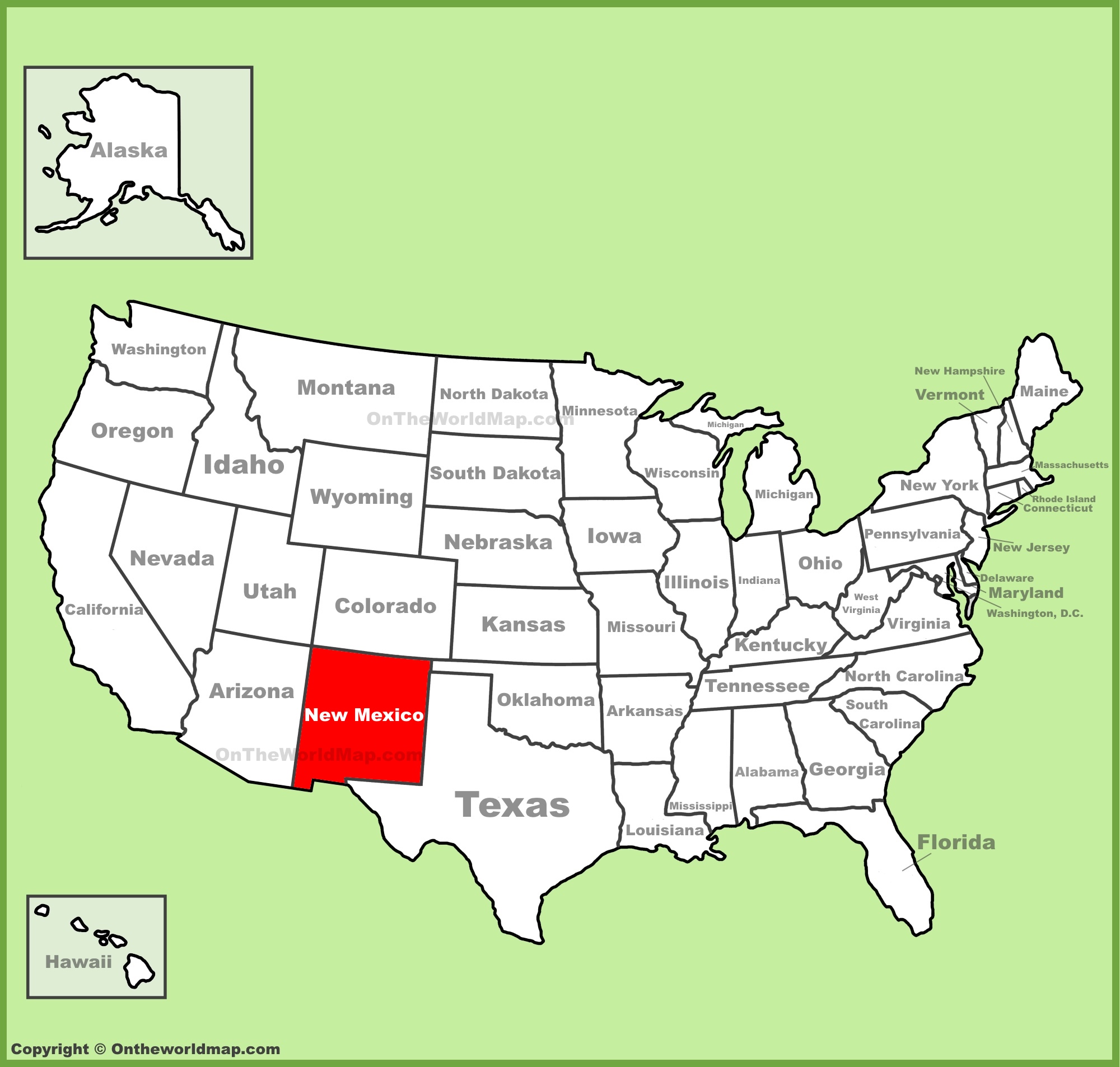
 April 26, 2018, Gavin Clarkson of N.M., speaks at the Albuquerque bureau of The Associated Press. A District of Columbia clerk refused to accept Clarkson’s state driver’s license for a marriage license because she and her supervisory believed New Mexico was a foreign country. (AP Photo/Russell Contreras, File)