Measuring Well Being

One possibility is to use large opinion surveys in which individuals answer simple questions on their degree of happiness or life satisfaction. These have revealed robust patterns, confirming that economic growth has a weaker than expected effect on satisfaction, and that other aspects of life, such as health and unemployment, are important.

These simple survey measures seem credible. But according to psychologists, happiness and life satisfaction do not coincide. Life satisfaction has a cognitive component – individuals have to step back to assess their lives – while happiness reflects positive and negative emotions that fluctuate.

A focus on positive and negative emotions can lead to understanding well-being in an “hedonic” way, based in pleasure and the absence of pain. Looking instead to individuals’ judgements about what is worth seeking suggests a preference-based approach (a possibility we discuss below). People judge all sorts of different things to be worth seeking.

In other words, happiness may be an element in evaluating one’s well-being, but it is not the only one.
Happiness and life satisfaction are two different things. Michael Kooren/Reuters

The capability approach

Nobel Prize winner Amartya Sen has pointed out that understanding well-being on the basis of feelings of satisfaction, pleasure, or happiness have two problems.

The first he calls “physical-condition neglect”. Human beings adapt at least partially to unfavourable situations, meaning the poor and the sick can still be relatively happy. One striking study by a team of Belgian and French physicians has shown that even in a cohort of patients with chronic locked-in syndrome, a majority reported being happy.

The second problem is “valuation neglect”. Valuing a life is a reflective activity that should not be reduced to feeling happy or unhappy. Of course, Sen admits, “it would be odd to claim that a person broken down by pain and misery is doing very well”.

We should therefore not fully neglect the importance of feeling well, but also acknowledge it is not the only thing people care about.

Together with Martha Nussbaum, Sen formulated an alternative: the capability approach, which stipulates that both personal characteristics and social circumstances affect what people can achieve with a given amount of resources.

Giving books to a person who cannot read does not increase their well-being (probably the opposite), just as providing them with a car does not increase mobility if there are no decent roads.

According to Sen, what the person manages to do or to be – such as being well-nourished or being able to appear in public without shame – are what really matter for well-being. Sen calls these achievements the “functionings” of the person. However, he further claims that defining well-being only in terms of functioning is insufficient, because well-being also includes freedom.

His classic example involves the comparison between two undernourished individuals. The first person is poor and cannot afford food; the second is wealthy but chooses to fast for religious reasons. While they achieve the same level of nourishment, they cannot be said to enjoy the same level of well-being.

Therefore, Sen suggests that well-being should be understood in terms of people’s real opportunities – that is, all possible combinations of functionings from which they can choose.

The capability approach is inherently multidimensional; but those seeking to guide policy often think that rationally dealing with trade-offs requires having one single ultimate measure. Adherents of the capability approach who succumb to this thought often mistrust individual preferences and apply instead a set of indicators that are common to all individuals.

So-called “composite indicators” – like the United Nations’ Human Development Index, which adds together consumption, life expectancy and educational performance at the country level – are a frequent outcome of this kind of thinking. They have become popular in policy circles, but they fall victim to simply adding up scores on different dimensions, all deemed equally important.

Life expectancy is often used as a component of well-being. Jitendra Prakash/Reuters

Taking individual convictions seriously

Beyond the subjective approach and the capability approach, a third perspective – the preference-based approach to well-being – takes into account that people disagree about the relative importance of different life dimensions.

Some people think that hard work is necessary to have a valuable life while others prefer to spend more time with family. Some think that going out with friends is key, while others prefer reading a book in a quiet place.

The “preference-based” perspective starts from the idea that people are better off when their reality matches better what they themselves consider to be important.

Preferences thus have a cognitive “valuational” component: they reflect people’s well-informed and well-considered ideas about what a good life is, not merely their market behaviour.

This does not coincide with subjective life satisfaction. Recall the example of patients with the locked-in syndrome reporting high levels of satisfaction because they have adapted to their situation. This does not mean that they would not prefer to have their health back – and it certainly does not mean that citizens without locked-in syndrome would not mind falling ill with it.

One example of a preference-based measure, advocated by the French economist Marc Fleurbaey, directs people to choose reference values for all non-income aspects of life (such as health or number of hours worked). These reference values will depend on the individual: everyone probably agrees that not being ill is the best possible state, but a workaholic lawyer is likely to place a very different value on work hours than someone with an arduous and hazardous factory job.

Fleurbaey then suggests that people define a salary that, combined with the non-income-based reference value, would satisfy the individual as much as their current situation.

The amount by which this “equivalent income” differs from the person’s actual work-based income can help answer the question: “How much income you would be willing to give up for better health or more free time?”

Some psychologists are sceptical about preference-based approaches because they assume that human beings have well-informed and well-considered ideas about what makes a good life. Even if such rational preferences exist, one struggles to measure them because these are aspects of life – family time, health – that are not traded on markets.

Does all this matter in practice?

The following table, compiled by the Belgian economists Koen Decancq and Erik Schokkaert, shows how differing approaches to well-being can have practical consequences.

It ranks 18 European countries in 2010 (just after the financial crisis) according to three possible measures: average income, average life satisfaction and average “equivalent income” (taking into account health, unemployment, safety and the quality of social interactions).

IncomeSubjective life satisfactionEquivalent income
1NorwayDenmarkNorway
2SwitzerlandSwitzerlandSwitzerland
3NetherlandsFinlandSweden
4SwedenNorwayDenmark
5Great BritainSwedenGreat Britain
6GermanyNetherlandsBelgium
7DenmarkBelgiumNetherlands
8BelgiumSpainFinland
9FinlandGermanyFrance
10FranceGreat BritainGermany
11SpainPolandSpain
12SloveniaSloveniaGreece
13GreeceEstoniaSlovenia
14Czech RepublicCzech RepublicCzech Republic
15PolandFrancePoland
16HungaryHungaryEstonia
17RussiaGreeceRussia
18EstoniaRussiaHungary

Some results are striking. Danes are much more satisfied than they are wealthy, while France is the opposite. These large divergences are not seen when comparing equivalent incomes, however, which suggests that satisfaction in these two countries is heavily influenced by cultural differences.

Germany and the Netherlands also do worse on satisfaction than on income, but their equivalent income rankings confirm that they do relatively worse on the non-income dimensions.

Greece has a remarkably low level of life satisfaction. Cultural factors may play a role here, but Greece is also characterised by high income inequality, which is not captured by the averages in the table.

These differences among various measures of well-being hint at the important issues involved in deciding which measure of well-being – if any – to select. If we want to use the measure to rank nations’ performance at providing well-being, then we will be pulled towards a single, simple measure, such as subjective happiness. If we seek to keep track, for policy purposes, of whether individuals are doing well in the respects that really matter, we will be pulled towards a more multi-dimensional assessment, such as that offered by the capability approach. And if we are most impressed by disagreement among individuals as to what matters, we will have reason to understand well-being along the lines suggested by the preference-based approach.

Source:

Conversations

Posted in Class Notes | Leave a comment

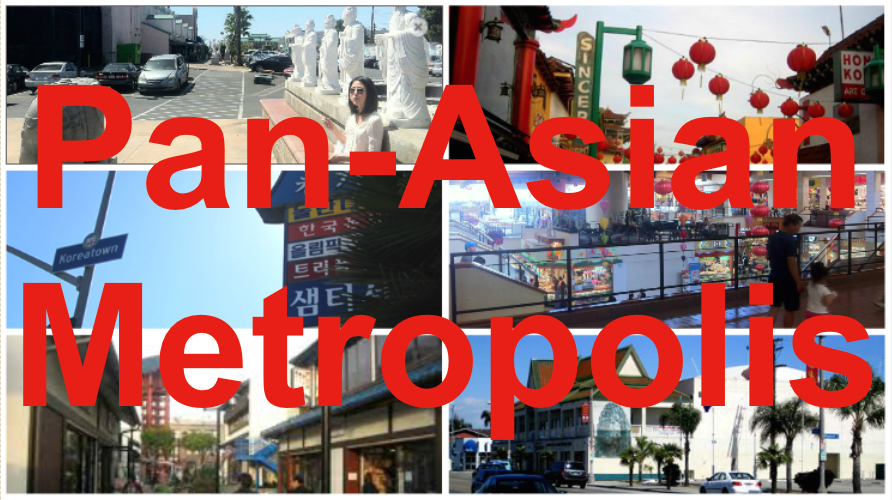
Pan-Asian Metropolis — 素食夜市小吃園遊會 Happy Lantern Green Night Market

Eric Brightwell's avatarEric Brightwell

Pan-Asian Metropolis

The other day, Una and I went to the 素食夜市小吃園遊會 Happy Lantern Green Night Market — a 100% vegetarian (and mostly vegan) Taiwanese street food festival which took place in Alhambra. If that sounds on the surface impossibly niche, consider the following.

  1. Taiwan is the cradle of the night market.
  2. Taiwan is, after India, likely the second most-vegetarian country in the world.
  3. Metro Los Angeles is home to the largest population of Taiwanese outside of Taiwan.

Once one is aware of those three facts, the event probably seems less strange and indeed, in the time it took for us to eat $50 worth of vegetarian Taiwanese street food, business was brisk and seating in short supply.

素食夜市小吃園遊會 Happy Lantern Green Night Market

The event took place on 16 February in the Green Menu Center. It marked the anniversary of that organization’s foundation… and additionally fell reasonably close to the Lunar…

View original post 680 more words

Posted in earth | Leave a comment

Wellbeing and Welfare: Concepts and Distinction

The words “welfare” and “wellbeing” have two very different meanings in economics.

The most familiar meaning to the general public is that Welfare refers to a collection of government programs such as food stamps and Medicare, usually intended to help the poor.

However, economists more often use the word “welfare” in a very different sense–as a synonym for wellbeing. Welfare or wellbeing refer to an overall condition emphasizing happiness and contentment, though also including one’s standard of living in financial or material ways. Welfare in this sense more commonly refers to the condition of an entire country or economy, which is sometimes emphasized by using the phrase “social welfare.” Welfare in the sense of wellbeing turns out to be an easier concept to imagine than to analyze carefully. It is even harder to measure.

Economists have always recognized that not all happiness derives from being financially well off. We all know that being wealthy is not the same as being happy. However, it is rather hard to quantify happiness, and even harder to aggregate happiness across people because people generally have a variety of tastes. Consequently, over the years economists have invented some specialized technical names for happiness, including utility, satisfaction, preferences, tastes, indifference curves, wellbeing, and welfare.

The concept of social welfare sometimes leads to discussions of distribution of income and income inequality.

Well-beingwellbeing, or wellness is the condition of an individual or group. A high level of well-being means that in some sense the individual’s or group’s condition is positive.

Wellness refers to diverse and interconnected dimensions of physical, mental, and social well-being that extend beyond the traditional definition of health. It includes choices and activities aimed at achieving physical vitality, mental alacrity, social satisfaction, a sense of accomplishment, and personal fulfillment.

Well-being is a positive outcome that is meaningful for people and for many sectors of society, because it tells us that people perceive that their lives are going well. Good living conditions (e.g., housing, employment) are fundamental to well-being. Tracking these conditions is important for public policy. However, many indicators that measure living conditions fail to measure what people think and feel about their lives, such as the quality of their relationships, their positive emotions and resilience, the realization of their potential, or their overall satisfaction with life—i.e., their “well-being.”1 Well-being generally includes global judgments of life satisfaction and feelings ranging from depression to joy.

More Types

Occupational Wellness is the ability to achieve a balance between work and leisure time, addressing workplace stress and building relationships with co-workers. It focuses on our search for a calling and involves exploring various career options and finding where you fit.

Because what we do for a living encompasses so much of our time, it’s important for our overall well-being to do what we love and love what we do. When people are doing what they were meant to do, they deepen their sense of meaning and purpose. 

The Path to Occupational Wellness

The occupational dimension of wellness recognizes personal satisfaction and enrichment in one’s life through work. At the center of occupational wellness is the premise that occupational development is related to one’s attitude about one’s work. Traveling a path toward your occupational wellness, you’ll contribute your unique gifts, skills and talents to work that are both personally meaningful and rewarding. You’ll convey your values through your involvement in activities that are gratifying for you. The choice of profession, job satisfaction, career ambitions, and personal performance are all important components of your path’s terrain.


Source(s):

The Library of Economics and Liberty

Wikipedia

HRQOL

University of California

Posted in Class Notes | Leave a comment

Evolution of Kinship Societies into Tributary Societies: An Important Step in Development of Cities

The first cities emerged as a result of a fundamental reorganization of food production and economic diversification in human societies. Before the advent of cities, ancient peoples lived in clan groups and villages organized around extended kin, or family, relationships and sustained by hunting and gathering of food supplies. Kinship is a system of social organization based on real or putative family ties Gradually these villagers grew more knowledgeable of the various attributes of wild plants in the local area. Over time, as those plants were fully domesticated and controlled by humans, crop yields began to increase. Increasing food supplies, in turn, led to increasing populations, as more and more people could be sustained by the growing food supply. This eventually resulted in the transformation of small kin-based villages into larger towns, and eventually cities.
As a result, more efficient farming methods developed and led to increased yields, some members of a society could be released from the daily farming tasks to perform other tasks that were becoming necessary. For example, there was a growing need for containers to store and transport the growing food supplies. This led to the emergence of pottery. As some members of the community became full-time pottery makers, the skill and sophistication of the resulting pottery increased. Other crafts emerged, including metallurgy, the working of various metals into tools and implements. The combination of improved agriculture and new crafts was an explosive one. New tools and farming implements further increased agricultural productivity, enabling additional community members to be released to develop even more crafts. A larger food supply led to increased population which in turn provided more labor available for agriculture, and so on.

This also led to increased prosperity and more complicated arrangements. At the center of these new arrangements was the transfer of agricultural surpluses from the producers of that surplus (the farmers) to the consumers of that surplus (the non-farming city population). In a simple, face-to-face society, this transfer could be voluntary, as villagers shared their produce with relatives or family members. But in the more complex urban societies then emerging, most people were not related to each other and, indeed, did not know each other. In this situation, it would be unlikely that a hard-working farmer would voluntary give up a portion of his produce to non-relatives without some form of persuasion or coercion. This “persuasion” could take many forms. Most commonly, city
authorities would promise protection and services (such as irrigation maintenance) in return for regular levees of “tribute” in the form of produce or labor services. Scholars have termed this type of society a “tributary society.” Virtually all societies in history that advanced beyond simple village arrangements were tributary societies, until the advent of industrial capitalist economies in the modern era.
As human settlements increased in size and complexity, the social networks based on kinship relations began to break down. In a village community organized around extended families, everyone knew each other and interacted with other members of their community in close face-to-face relationships. Disputes that arose could be contained and resolved by the intervention of other family members before they escalated into violence. But as population growth transformed those small kinship societies of a few hundred people into towns and cities of tens of thousands of people, the old face-to-face relationships could no longer govern social relations. Now, many encounters would take place between people who did not know each other and be not bound to each other by extended family relationships. New systems of social management were needed, leading to the emergence of law codes, police forces and governing elites to manage these new systems. The hierarchical society of the city was born……


Source(s):
https://solano.instructure.com/files/56239553/download?download_frd=1

Posted in Class Notes, earth, society, urban morphology, Urban Studies | Leave a comment