
Total Visitors
- 5,594,274
Search Inside
My You Tube Channel
-
Visitors on The Site

-
Join 6,678 other subscribers
Fill This Form to Contact Me
Top Posts & Pages
- Waste to Energy in India
- About Me and This Site
- Levant: The Term, The Region and Cities
- Migration Theories : Lee’s Push Pull Theory
- What is Soil?: Definition, Composition, Types and Functions
- Gond Tribe of India
- Discontinuities Inside the Earth
- Santhal:Largest Tribal Community in India
- Principle of Uniformitarianism : A Basic Principle of Geomorphology
- Gujjar Tribe
Being Social
Pages
- Article Submission
- Basics of Geography
- Book Reviews
- Disaster Management
- Field Training and Tour
- Geography Notes
- Geography of Tourism
- Geography Study Material for NTA-NET & IAS Exams
- Geomorphology
- Geomorphology Class Black Board
- Hindi Posts
- Human Geography
- My Projects
- New UGC NET Syllabus-Geography
- Online Class
- Posts on Geography Practicals and Statistical Techniques
- Regional Studies
- Settlement Geography
- Social Geography
- Urban Agro Systems
- Urban Systems
- Useful Links
- Water Resources
- About Me and This Site
Blogroll
Digital Blackboards
My Pages
Other Sites I Am Involved With
Recommended Links
Useful Links
Mapping Urban Poverty From Above
Cities act as escalators out of poverty, as Edward Glaeser demonstrates. And yet, this very function drives poorer immigrants into urban regions – in search of jobs or access to better public services. More than half the world’s population now lives in urban areas , but most social assistance programs in developing countries have traditionally concentrated on the rural poor, with the bulk of past efforts on proper identification and targeting. The pandemic has shone a spotlight on the plight of the urban poor. When the pandemic hit, in the face of harsh lockdowns, the urban poor faced sudden shocks to their income and consumption. Governments in several countries were caught unprepared, with many lacking data on important questions – who are the urban poor? where do they live? how best to find them, and help them?
Posted in earth
Leave a comment
A Hidden Universe of Uncertainty

Guest Essay by Kip Hansen ? 18 October 2022
Every time someone in our community, the science skeptic or Realists community, speaks out about uncertainty and how it affects peer-reviewed scientific results, they are immediately accused to being Science Deniers or of trying to undermine the entire field of Science.
I have written again and again here about how the results of the majority of studies in climate science vastly underestimate the uncertainty of their results. Let me state this as clearly as possible: Any finding that does not honestly include a frank discussion of the uncertainties involved in the study, beginning with the uncertainties of the raw data and then all the way through the uncertainties added by each step of data processing, is not worth the digital ink used to publish it.
A new major multiple-research-group study, accepted and forthcoming in the Proceedings of the National Academy of…
View original post 1,225 more words
Posted in earth
Leave a comment
Sir Syed Day:Let there be Dream in Our Eyes
AMU is not only a University. It is an IDEA.
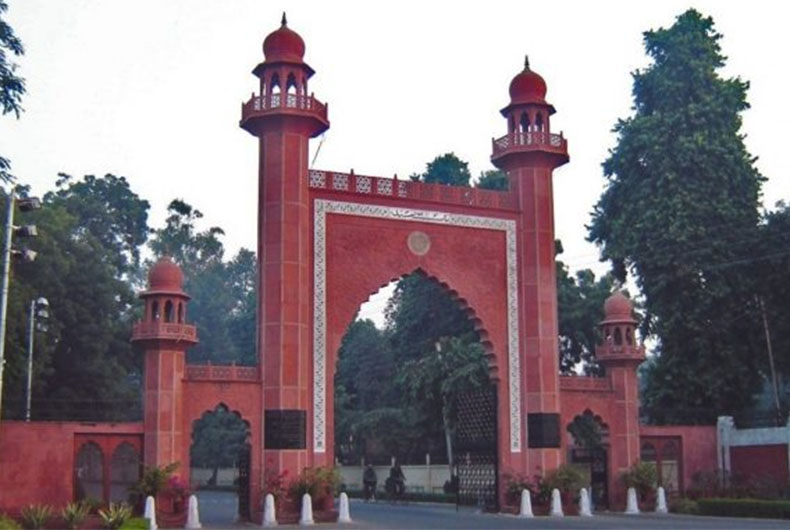
AMU is a continuous Dream. it is not the culmination of the dream.Let the dream remain in our Eyes. Dream for the real world. Dream for the Digital World.
In fact AMU is the WORLD for Aligs.
In Jawab-e-Shikwa Iqbal says:
کوئی قابل ہو تو ہم شان کئی ديتے ہيں
ڈھونڈنے والوں کو دنيا بھی نئی ديتے ہيں
Koi Qabil Ho Tau Hum Shan-e-Kai Dete Hain
Dhoondne Walon Ko Dunya Bhi Nai Detey Hain!
Are we Living Syed’s Dream? Have we reached the end of the dream?
Lets make it BEST in the world.
Let there be Dream in our Eyes.
Here is the video about how the WORLD for Aligarian is:
Posted in earth
Leave a comment


