
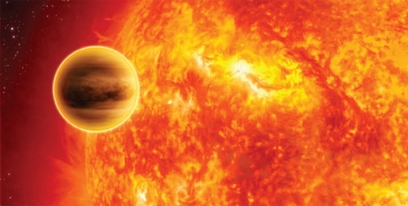
 Astronomers have found what appears to be a gigantic suicidal planet.The odd, fiery planet is so close to its star and so large that it is triggering tremendous plasma tides on the star. Those powerful tides are in turn warping the planet’s zippy less-than-a-day orbit around its star.The result: an ever-closer tango of death, with the planet eventually spiraling into the star.


Total Visitors
- 5,631,385
Search Inside
My You Tube Channel
-
Visitors on The Site

-
Join 6,676 other subscribers
Fill This Form to Contact Me
Top Posts & Pages
- About Me and This Site
- Waste to Energy in India
- Google Blimps & Balloons to Provide Wireless Networks in Africa
- Gond Tribe of India
- Blackwater Rivers: Why are some rivers darker and slow-moving?
- Social Processes: Concept, Types and Salient Features
- Geography Study Material for NTA-NET & IAS Exams
- Levant: The Term, The Region and Cities
- Gujjar Tribe
- Physical Divisions of North America: An Overview
Being Social
Pages
- Article Submission
- Basics of Geography
- Book Reviews
- Disaster Management
- Field Training and Tour
- Geography Notes
- Geography of Tourism
- Geography Study Material for NTA-NET & IAS Exams
- Geomorphology
- Geomorphology Class Black Board
- Hindi Posts
- Human Geography
- My Projects
- New UGC NET Syllabus-Geography
- Online Class
- Posts on Geography Practicals and Statistical Techniques
- Regional Studies
- Settlement Geography
- Social Geography
- Urban Agro Systems
- Urban Systems
- Useful Links
- Water Resources
- About Me and This Site
Blogroll
Digital Blackboards
My Pages
Other Sites I Am Involved With
Recommended Links
Useful Links


