travelerreport's avatartravelerreport

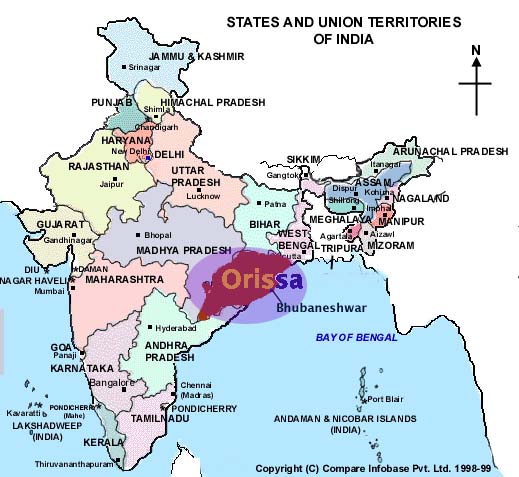
Among the many tribes living in India, the largest one is the Santal. Most of them live in the states of Jharkhand, Chhattisgarh, West Bengal and Orissa. And even in Bangla desh.

In the past, Santal were nomads wandering from place to place in quest of agricultural lands. ( Indeed, agriculture was and is still their main occupation). Nowadays, their settlements are permanent. But sometimes, a family leaves the village for a new site when there is scarcity of land, outbreak of an epidemic or fear of witchcraft. Santhal villages are big. From 50 to 100 households. Many villages consist of a number of hamlets situated around the main hamlet. Adjacent to each village, there is a ritual place (“jaher” in santali language), a sacred grove where the village deities reside. The Santal decorate the walls of their houses with different colours, figures of human beings, flowers, animals,…

Because Santal are coquettish, men have scarifications on their…

View original post 542 more words

Posted in Uncategorized | Leave a comment

Gravity Influences Life Form

Earth’s gravity mapped in colourful geoid visualisation ..

Gravitational biology
Gravitational biology is the study of the effects gravity has on living organisms. Throughout the history of the Earth life has evolved to survive changing conditions, such as changes in the climate and habitat. The only constant factor in evolution since life first began on Earth is the force of gravity. As a consequence, all biological processes are accustomed to the ever-present force of gravity and even small variations in this force can have significant impact on the health and function of organisms.

Gravity and life on Earth

The force of gravity on the surface of the Earth, normally denoted g, has remained constant in both direction and magnitude since the formation of the planet.As a result, both plant and animal life have evolved to rely upon and cope with it in various ways.

Effect on Plants(Gravitropism)

Plant tropisms are directional movements of a plant with respect to a directional stimulus. One such tropism is Gravitropism, or the growth or movement of a plant with respect to gravity. Plant roots grow towards the pull of gravity and away from sunlight, and shoots and stems grow against the pull of gravity and towards sunlight.

Animal struggles with gravity

Gravity has had an effect on the development of animal life since the first single-celled organism. The size of single biological cells is inversely proportional to the strength of the gravitational field exerted on the cell. That is, in stronger gravitational fields the size of cells decreases, and in weaker gravitational fields the size of cells increases. Gravity is  a limiting factor in the growth of individual cells.

Gravity and life elsewhere

Every day the realization of space habitation becomes closer, and even today space stations exist and are home to long-term, though not yet permanent, residents. Because of this there is a growing scientific interest in how changes in the gravitational field influence different aspects of the physiology of living organisms, especially mammals since these results can normally be closely related to the expected effects on humans. All current research in this field can be classified into two groups.

The first group consists of the experiments that involve gravitational fields of less than one g, termed hypogravity. All space travel is done in hypogravity, and effective gravitational fields on any space station without Artificial gravity are on the order of hypogravity, and therefore the understanding of the effects of hypogravity on the human body is necessary for prolonged space travel and colonization.

Hypergravity

The second group consist of those involving gravitational fields of more than one g, termed hypergravity. For brief periods during take-off and landing of space craft astronauts are under the influence of hypergravity. Understanding the effects of hypergravity are also necessary if colonization of planets larger than the Earth is ever to take place.
Recent experiments
Recent experiments have proven that alterations in metabolism, immune cell function, cell division, and cell attachment all occur in the hypogravity of space. For example, after a matter of days in microgravity (< 10-3 g), human immune cells were unable to differentiate into mature cells. One of the large implications of this is that if certain cells cannot differentiate in space, organisms may not be able to reproduce successfully after exposure to zero gravity.

Stress associated with space flight is responsible for the inability of some cells to differentiate. These stresses can alter metabolic activities and can disturb the chemical processes in living organisms. A specific example would be that of bone cell growth. Microgravity impedes the development of bone cells. Bone cells must attach themselves to something shortly after development and will die if they cannot. Without the downward pull of a gravitational force on these bone cells, they float around randomly and eventually die off. This suggests that the direction of gravity may give the cells clues as to where to attach themselves.

Effect on Plant Roots

Arabidopsis germination

Arabidopsis germination (Photo credit: BlueRidgeKitties)

On Earth plant roots exhibit characteristic behaviors called waving and skewing, which were thought to be gravity-dependent events. This is how the roots develop and grow in terms of direction and changes in direction. However, Arabidopsis plants grown on the International Space Station (ISS) have proved this theory wrong, according to a study published in BioMed Central’s open access journal BMC Plant Biology: root waving and skewing occur in spaceflight plants independently of gravity.

To test what happens to plant root growth when you remove gravity entirely, a research team from the University of Florida, Gainesville, USA, grew two types of Arabidopsis thaliana cultivars – Wassilewskija (WS) and Columbia (Col-0) — on the ISS.

The plants were grown in specialized growth units that combined a plant habitat with a camera system which captured images every six hours. Imaging hardware delivered the telemetric data in real-time from the ISS, and comparable ground controls were grown at the Kennedy Space Center.

It was found that, in the absence of gravity, but in the presence of directional light, spaceflight roots remained strongly negatively phototropic and grew in the opposite direction of the shoot growth, as they do back on Earth.

Experimenters Anna-Lisa Paul and Robert Ferl commented “Although plants use gravity as an orientating tropism on the Earth’s surface, it is clear that gravity is neither essential for root orientation, nor is it the only factor influencing the patterns of root growth. It seems that other features of the environment are also required to ensure that a root grows away from the seed, thereby enhancing its chances of finding sufficient water and nutrients to ensure its survival.”

Links,Sources and Inspirations:

Wikipedia

ENN

Gravity Mapping

Posted in BIODIVERSITY | Leave a comment

travelerreport's avatartravelerreport

Before Islam replaced buddhism and hinduism in the Northern Areas of Pakistan, complex indigenous religions were practised. Ra or Aftab, the solar deity, was an archetypal figure from whom the rulers of Bolor ( ancient name of the Northern Areas) traced their descent. Spiritual guarantors ( shamans) performed a variety of seasonal religious festivals ensuring the overall fertility of the land and the people.

Different “altitudinal zones of spirituality” have been identified. All the major peaks, such as Nanga Parbat ( 8125 m.) and Rakaposhi ( 7788 m.), are considered the abodes of “clean spirits”, mostly female, which inhabit fairy castles. Below this is the zone of “mayaro”, domain of the markhor ( a wild goat) and ibex, both considered sacred and tended by fairies. The agricultural zone is considered neutral, man’s home. Last is the demonic sphere, a realm reserved for dangerous invisible things; demons lurking near the mouths of glaciers…

View original post 133 more words

Posted in Uncategorized | Leave a comment

Air Pollution in Mediterranean MegaCities

pollutionfree's avatarPollution Free Cities

Megacities as hot spots of air pollution in the East Mediterranean(45 page pdf, Maria Kanakidou, Nikolaos Mihalopoulos, Tayfun Kindap, Ulas Im, Mihalis Vrekoussis, Evangelos Gerasopoulos, Eirini Dermitzaki, Alper Unal, Mustafa Koçak, Kostas Markakis, Dimitris Melas, Georgios Kouvarakis, Ahmed F. Youssef, Andreas Richter, Nikolaos Hatzianastassiou, Andreas Hilboll, Felix Ebojie, Folkard Wittrock, Christian von Savigny, John P. Burrows, Annette Ladstaetter-Weissenmayer, Hani Moubasher, Atmos. Environ., Nov. 30, 2010)

Also discussed here: Impacts of East Mediterranean megacity emissions on air quality( 21 page pdf, U. Im and M. Kanakidou, Atmos. Phy. July 23, 2012)

And here: Mediterranean capital pollution has far-reaching effects on air quality(Science for Environment Policy, Nov. 22, 2012)

Today we review research that examines the state of air pollution in several eastern Mediterranean magacities (Cairo, Istanbul, Athens – over 10M population) and the impact of some mitigation strategies on the cities as well as on…

View original post 57 more words

Posted in Uncategorized | Leave a comment