

My ex-Durham colleague Jennifer Bagelman and Sarah Marie Wiebe discuss the Northern Gateway Pipelines Project in The New York Times. They suggest the pipeline would function more as a border than a gateway:
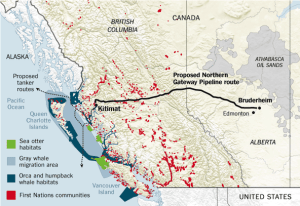
If completed, this border would cut across indigenous territory, interfering with the land use of more than 50 First Nations communities, including members of the Coastal First Nations and Yinka Dene Alliance. Environmental groups like Forest Ethics and the Wilderness Committee warn that the pipelines would disrupt and displace the lives of people and other creatures, jeopardizing grizzly bears, caribou and salmon. Even before construction, the prospect of a pipeline is dividing people in a debate framed as jobs vs. environmental protection.
 The most severe droughts are associated with prolonged shortages of water and result in widespread crop and other vegetation losses. In this map, the region affected the most is shaded in dark depending on the vegetation stress faced. The image shows the number of weeks that areas across the globe have experienced exceptional drought vegetation stress, dating back to 1981 when NOAA’s satellites first began monitoring vegetation patterns. Areas above 60 degrees latitude and desert locations have been omitted from the analysis.
 India successfully launched five foreign satellites from four countries on board PSLV-C23 rocket which placed them in orbit.


