Ecumenopolis: city without limits

archithoughts's avatararchithoughts

I have to share this great article written by Juan Manuel Restepo on Favela Issues.

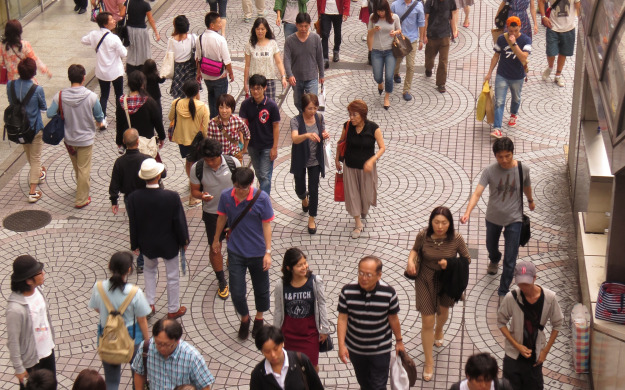
In today’s cities we see how governments struggle to create solutions and to implement large policies. Cities are more complex, diverse and dynamic making governance almost impossible. Governments can’t make changes in these cities by themselves. They need to build collective efforts with all the stakeholders in the city.
IMG_3491

Nevertheless, politicians keep on promising and acting as if they had the capacity to make real changes by themselves. They keep on bringing THE SOLUTION for mobility, security, education and health without really understanding the issues or the actors behind them that control real power in the city. During the political campaigns they promise everything and give figures of all the great changes they want to make. But when they get elected the passionate candidates crush with a wall of the real power that controls the city through…

View original post 845 more words

Posted in Uncategorized | Leave a comment

Space Research Organization of India launches IRNSS 1C Navigation satellite : A New Step in Making an Independent Navigation System

ISRO  successfully launched IRNSS 1C on board ISRO’s PSLV C26 rocket from the spaceport  moving a step closer to setting up the country’s own navigation system on par with Global Positioning System (GPS) of the US.

The satellite  is the third of the series of seven satellites ISRO is planing to launch to put in place what is called the Indian Regional Navigation Satellite System. It will be placed into a sub Geosynchronous Transfer Orbit (sub GTO) with a 284 km perigee (nearest point to Earth) and 20,650 km apogee (farthest point to Earth) with an inclination of 17.86 degree with respect to the equatorial plane.

IRNSS is designed to provide accurate position information service to users in India as well as the region extending up to 1,500 km from its boundary, which is its primary service area.

IRNSS’s applications include:

  • Terrestrial and marine navigation
  • Disaster management
  • Vehicle tracking
  • Fleet management
  • Navigation aide for hikers and travellers
  • visual and voice navigation for drivers.

Few countries have their own navigation systems – Russia’s Global Orbiting Navigation Satellite System (GLONASS), United States’ Global Positioning System (GPS), European Union’s Galileo (GNSS), China’s BeiDou satellite navigation system and the Quasi-Zenith Satellite System.

read more here

Posted in Achievements, GPS, India, Satellites, Space | Tagged , , | Leave a comment

Political Control of Sanitation in India

JC Martel's avatarOn the rapid urbanization of Asian cities and built environment in the U.S.

Between 30-60% of India’s population use facilities for defecation, with most sanitation infrastructure development occurring over the past two decades. Sanitation is the responsibility of the states under India’s Constitution. Yet political activity for sanitation is observed in each governmental role – prime minister, president, supreme court, state legislatures, congress, and bureaucracy. Recently, the Indian Prime Minister Narendra Modi who was elected into office in May 2014 has been utilizing a political campaign for “Not temples, but toilets” during and continuing after his election. In a recent Times of India news article, Congress reportedly critiqued Prime Minister Modi for claiming sanitation improvements as his own political agenda, while failing to recognize the momentum for sanitation that other political institutions had created. Does it matter which political institutions are supporting sanitation? How does authority over sanitation differ among government roles? Finally, how do elected officials control implementation by non-elected government officials?

View original post

Posted in Uncategorized | Leave a comment

Africans shaped India’s History and Ruled !!(link)

There was a time in India’s history when being African was no taboo and they mingled in the society and in fact, played a crucial role in India’s history. Some Africans at one point of time were part of India’s ruling elite. The story of Yakut in Razia’s court is not a lone one.

Here are some notable examples.

The journey of Africans to India was itself incredible: bought and brought by Arab slave traders, they were packed into hell ships that came to India via the Indian Ocean and its surrounding seas. They were bought by kings, princes, rich merchants and aristocrats and were referred to as habshis. But not all remained slaves. Some like Yakut did make their own destiny. But while Yakut’s was perhaps a story that didn’t end too well, others set examples worth emulating.

Malik Kafur’s is an interesting case. The transgender slave was bought by Sultan Alauddin Khilji’s general Nusrat Khan for a thousand dinars. Kafur caught the fancy of the sultan and rose through the ranks, becoming his deputy and entering the history books as Nawab Hazar Dinari. In his last days, an enfeebled Khilji was at the mercy of Kafur who effectively ruled Delhi and also played kingmaker after the sultan’s death.

In the Deccan, Africans were making an impact on the political landscape. The small states of the Bahmani kingdom resisted the expansion of the Mughal Empire to the south. One of the pillars of this resistance was Malik Ambar, the prime minister and general of Ahmadnagar  who was an African by origin. Ambar is believed to be the father of guerrilla warfare in India since he used his Maratha cavalry against the Mughals with great effect.

The Bijapur state had a powerful group of habshi nobles led by Ikhlas Khan, a powerful general.

Some Africans also get to set up independent kingdoms, like the Siddis of Janjira. The Janjira state and its successor state of Sachin survived until Independence.

Read at Source

Posted in Human Geography, India, Links, opinions | Tagged , , , , | Leave a comment