The Effect of Global Transport on Climate Change
Global transport is now something we all take for granted whether it’s travelling for
work or pleasure; or whether it’s the delivery of an item we purchase at the click of a
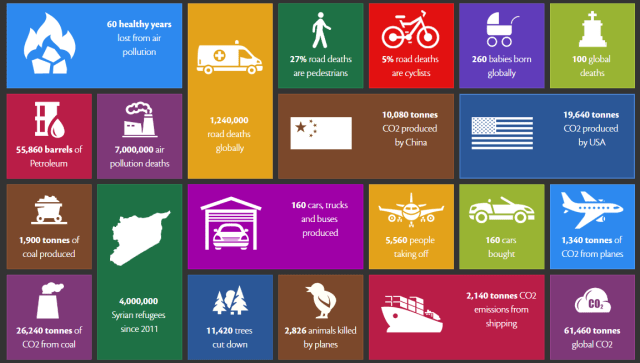
button. If we take air travel alone, there are now more than 100,000 flights per day
globally and according to the Air Transport Action Group flights accounted for
producing 770 million tonnes of CO2 in 2015. That figure only scratches the surface
of the emissions produced by jets, road vehicles and shipping combined.
Climate Change
Few scientists would now try to deny that our planet is warming and a big contributor
to climate change is greenhouse gases such as carbon and nitrous oxide; and
methane. The Center for Biological Diversity states that around 15% of manmade
carbon dioxide can be attributed to global transportation, and it is recognized that in
the last two decades transportation emissions increased by 45%. More worryingly
this shows no sign of slowing down.
A clear sign of global warming on our environment is the melting of the polar ice caps
and in May 2016 the arctic ice fell to a record low, 580,000 square kilometres below
the previous May record which was set in 2004. Antarctica has seen the collapse of
large sections of the Larsen B ice shelf and it is estimated the shelf will totally
disintegrate by the end of the decade.
Reducing Emissions
It is imperative we reduce emissions and therefore major changes need to be made
to how we travel. Electric and hybrid vehicles are increasing in popularity, however a
recharging-point network needs to be put in place before their use is mainstream;
and implementation of this has been slow.
The weight of aeroplanes is also an issue as the heavier the plane the more fuel it
uses. Commercial aircraft companies have been experimenting with carbon-fibre and
the A350 XWB Airbus has just been introduced to the Qatar Airways fleet. With over
half of the frame made from carbon fibre-reinforced plastic this plane will use
substantially less fuel on every flight.
There is still a long way to go however, and it will take the concerted effort of both
companies and governments around the world to ensure we make changes. Only
time will tell whether these changes will be in time to reverse the damage we have
already done to our environment.