Process of Urbanization and Factors of Temporal Urban Growth

World as well as India  is urbanizing at a rapid pace. Though the current level of urbanization in India is lowest compared to the other developing countries. The absolute size of urban population is enormous. By the turn of the millennium about 300 million Indians lived in nearly 3700 towns and cities (urban areas) spread across the length and breadth of the country. This comprised of nearly 30 per cent of its total population in sharp contrast to 60 million (15 per cent) who lived in urban areas in 1947 at the time of our independence. During the last 50 years the population has grown two and a half times more and the urban India has grown as almost second largest in the world, only next to China.

This century is set to become India’s urban century with more people living in cities and towns than in the country side (rural areas) (Goldman Sachs, 2007). India has 10 of the fastest growing cities in the world and is witnessing massive urbanization. The urban growth is happening not only in large cities but also in small and medium sized towns. This chapter aims at analyzing the size and growth of Urban India across the states. For the analysis purpose the data from 1901, 1991 and 2001 census is used. This part of the study covers the Pattern of growth of urban population in India, State-wise growth of urban population and drivers of urban growth in India, State level trends and disparities in urban growth. Finally, it covers the analysis of the fruitful policies and conclusions.

Factors of Temporal Urban Growth in India and World

The first cities seem to have appeared sometime between 6000 and 5000 B.C. These cities were however small and hard distinguished from lawns. By 3000 B.C., there was in existence what may be called “true” cities. After that there was a lull, for some 2000 years. It was not until Greco-Roman times that cities came into existence.

It is curious that the cities in the regions where city life had originated eventually went into eclipse and cities appeared in new regions. After sometime the cities of Mesopotamia, India and Egypt, of Persia, Greece and Rome fell mostly for the reason that they had all been tied Lo an economy that was primarily agricultural.

In Western Europe the cities became more numerous and the growth of cities kept going on. The nineteenth century was a period of true urban revolution and since 1800 urbanization has gone ahead much faster and reached proportions far greater than at any previous Lime in world history. What are the factors which led to the growth of cities?

Surplus Resources

“Cities grow wherever a society, or a group within it, gains control over resources greater than are necessary for the mere sustenance of life.” In ancient times these resources were acquired through subjugation of man by man. Slavery, forced labour or Taxation by the ruling or conquering class supplied the foundations of the growth of city life. In modern Limes man has won over nature and extended his power.

He has exploited the natural resources Lo such a great extent through technological improvements that now relatively few people can supply the basic needs of many. The extension of man’s power over nature, especially in the western countries, has been the primary condition of the modern growth of cities and city population.

 Industrialization and Commercialization

The urban growth has also been greatly stimulated by the new techniques of production associated with industrial revolution. The invention of machinery, the development of steam power, and the application of huge capital in industrial enterprises led to the establishment of gigantic manufacturing plants which brought about the mobility of immobile groups of workers hastening their concentration around a factory area.

For the sake of working with others and of high wages men abandoned rural work and streamed into the industrial cities. Thus, Jamshedpur, a steel centre in India, Chicago, Liverpool, Manchester, Glasgow became the big industrial cities of the world. With the coming of mechanical power, a new geographical shift has been made.

Formerly, aggregations of peoples were found along the river valleys, where the land was fertile and flat. But today they are found near the sources of coal and iron. The use of scientific methods and of machinery driven by electricity or the combustion engine in production of goods has now enabled one-quarter of population to support the other three quarters, whereas a century ago three-quarters were required to feed one-quarter. Cities now grow without much reference to the agricultural lands.

While industrialization has stimulated city growth, trade and commerce also have played an important part in urban expansion. In ancient civilizations too cities grew wherein goods were distributed and commercial transactions were carried. Thus, Athens, Sparta, Venice, Pataliputra (Modern Patna) were great trading centres.

In modern times, the development of modern marketing institutions and of methods of exchange has greatly contributed to the growth of cities. Today face to face commercial transactions need not be carried in big cities but the mere fact that a large percentage of their residents are engaged in “paper” enterprises is a significant factor to add to the city growth.

 Development of Transport and Communication

The development in methods of transportation and communication and the facilities which cities offer for satisfying the desire for communication also explain urban growth. Industrialization depends upon transportation so that raw material and manufactured goods can be carried in large volume. In an industrial city the means of transport and communication are essentially developed.

The city is connected not only with other parts in and outside of the country but through developed means of local transportation the different parts of the city as well are connected to each other. At the time factory was introduced, local transportation facilities were poor. The factory workers were compelled to live near their place of employment. Congestion of housing resulted.

The local transport added to the population of the city by extending its boundaries. The city was divided into different areas, a market area, a dwelling area, a slum area, a factory area and so on. In earlier cities lack of adequate local transportation prevented such a marking off of natural areas. The modern city is a community which has become highly differentiated in its parts.

 Economic Pull of the City

Cities provide more opportunity for personal advancement than do the rural areas. Modern business and commerce pull young men to the cities where they are paid munificent salaries. People live in cities not because they like them as place of residence but because they can get jobs there. Employment opportunities are more in the city than in the village.

Even businessmen come to the city from the village to avail of better opportunities for making higher profits. As the standard of living in the country rises, there is an increasing demand for the kind of commodities which are supplied in and by cities.

This increased demand means that people can earn livelihood in a larger percentage in the cities. It is in the city that leaders, religious or educational, receive special and high recognition. In short, the possibilities of greater achievement and better living in the city account for a good deal for urban expansion.

 Educational and Recreational Facilities

Until recently all high schools were in cities in India. The elementary schools in a city are better equipped than in the village. Most training schools, colleges, and technical schools are urban. Most big libraries are situated in cities.

Examination Centres for competitive examinations are located in cities and the recruiting agencies are also urban located. Art galleries and museums are urban. Prominent educationists give their talks in cities. Naturally, on account of all these facilities young men and women are attracted to the cities for higher education.

Recreational facilities are available in cities. Amusement theatres and operas are urban. By making appeals to the feelings and play impulses of children and adults alike they draw them to the cities.

Links:

Resource Making Characteristics of Population

Posted in Class Notes, earth, Urban Studies | Leave a comment

Massive Scale of Discovery In Remaining Forests Inspires, Raising The Stakes For Conservation

Organikos's avatarOrganikos

View original post 321 more words

Posted in earth | Leave a comment

Relationship Between Culture and Tourism is Increasing

 Tourism and culture were viewed as largely separate aspects  earlier. Cultural resources were seen as part of the cultural heritage of destinations, related to the education of the local population and the underpinning of local or national cultural identities. Tourism, on the other hand, was largely viewed as a leisure-related activity separate from everyday life and the culture of the local population. This gradually changed towards the end of the century, as the role of cultural attractions in motivating tourists and distinguishing destinations from one another become more obvious. The growing articulation between culture and tourism was stimulated by a number of factors.

Increased interest in culture, particularly as a source of identity and differentiation in the face of globalization worked as a motivation. Growing levels of cultural capital, stimulated by rising education levels also helped the process. Aging populations in developed regions having enough wealth and time also increased the demand.  A desire for direct forms of experience (“life seeing” rather than sightseeing) was developed in later years of 20th century also augmented cultural tourism.   Increased mobility in our times creating easier access to other cultures increased tourism.

 Cultural tourism was seen as a growth market and “quality” tourism and an increasing supply of culture as a result of regional development helped the tourism industry. Growing accessibility of information on culture and tourism through new technologies further increased the demand. The emergence of new nations and regions eager to establish a distinct identity e.g. the impact of newly-independent states in Central and Eastern Europe created new curiosities.

Culture has been increasingly employed as an aspect of the tourism product and destination imaging strategies, and tourism has been integrated into cultural development strategies as a means of supporting cultural heritage and cultural production. This synergy between tourism and culture is seen as one of the most important reasons for encouraging a more direct relationship between these two elements. This relationship is even more significant, given the growing importance of both tourism and culture for economies around the globe. According to OECD , international tourism accounts for approximately 30% of global service exports in 2006 (OECD 2008). Culture and creativity are increasingly being recognised as important economic drivers. An OECD study on the economic importance of culture indicated that in several major economies, the value of the cultural industries was between 3% and 6% of the total economy .

The widespread cultural, economic and social benefits lead to at policies promoting linking culture and tourism or the narrower development of “cultural tourism”  worldwide at continental, national and regional levels. In Europe,  the European Commission promotes cultural tourism as a means of underpinning the “unity in diversity” of the EU population. Travelling to experience the culture of others allows tourists and hosts to appreciate cultural difference as well as underlying cultural ties. In Australia and Canada, culture and tourism have been linked to the development of economic opportunities for indigenous peoples. In Africa , Latin America and Asia, cultural tourism is often seen as a means of supporting heritage conservation as well as raising local incomes (Richards, 2007). The widespread cultural, economic and social benefits mean that policies promoting linking culture and tourism or the narrower development of “cultural tourism” have become evident worldwide at continental, national and regional levels. In Europe, for example, the European Commission promotes cultural tourism as a means of underpinning the “unity in diversity” of the EU population. Travelling to experience the culture of others allows tourists and hosts to appreciate cultural difference as well as underlying cultural ties. In Australia and Canada, culture and tourism have been linked to the development of economic opportunities for indigenous peoples. In Africa, Latin America and Asia, cultural tourism is often seen as a means of supporting heritage conservation as well as raising local incomes.

Posted in Class Notes, earth, Tourism and Travel | 7 Comments

Types of Tourism : An Overview

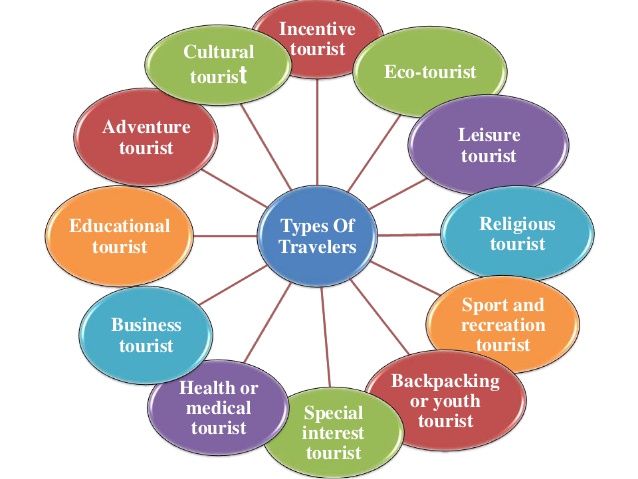
Traveling is one effective way to see the world, experience new cultures and meet new people at the same time. For many tourists, however, traveling accomplishes many other purposes that don’t even have anything to do with the joy of visiting a new place. This is why there are many different types of tourism that explain why tourists choose a particular destination and the things that they expect to do when they are there.

Recreational Tourism

Tourism is an often activity for recreational purposes. Most tourism took for a change and rest; this is the reason why package tours have become so popular. Perhaps the most common type of tourism is what most people associate with traveling. This is when people go to a place that is very different from their regular day-to-day life to relax and have fun. Beaches, theme parks, and campgrounds are often the most common places frequented by recreational tourists.

Nature Tourism
For tourists who want to see wildlife or bask in the joy of just being in the midst of nature, nature tourism is the answer. Ecotourism and nature treks are all part of this kind of tourism. Bird watching, for example, is one activity that nature tourists are fond of doing. What marks this kind of tourism is that it is environmentally responsible, has low impact and advantageous to the local community.

Religious tourism is another type of tourism where people go to a religious location or locations to follow the footsteps of their founder or to attend a religious ceremony. Catholics, for example, go on pilgrimages in the Holy Land to experience the paths where Jesus walked. India represents the multi-religious composition of the population. Various package tours are organized to enable people to attend religious duties and visit places of religious importance. E.g. Char Dham yatra.

It is also commonly referred to as faith tourism, is a type of tourism, where people travel individually or in groups for pilgrimage, missionary, or leisure (fellowship) purposes.

The world’s largest form of mass religious tourism takes place in India at the Kumbh Mela pilgrimage, which attracts over 100 million pilgrims. North American religious tourists comprise an estimated $10 billion of the industry.

Modern religious tourists are more able to visit antique holy cities and holy sites around the world. The most famous holy sites are the Great Mosque of Mecca, the Holy Shrine of Imam Hoseyn in Karbala, the Holy Shrine of Imam Reza in Mashhad, the Holy Shrine of Lady Fatima Masuma in Qom, the Sanctuary of Our Lady of Fátima in Cova da Iria, the Basilica of Our Lady of Guadalupe in Mexico City, the Church of the Nativity in Bethlehem, the Western Wall in Jerusalem and the St. Peter’s Basilica in Rome. Religious tourism has existed since antiquity.

A study in 2011 found that 2.5 million people visited Karbala on the day of Arbaeen in 2013, pilgrims visited Jerusalem for a few reasons: to understand and appreciate their religion through a tangible experience, to feel secure about their religious beliefs, and to connect personally to the holy city.

Medical or health tourism is a relatively new type of tourist activity where the main focus of travel is improving one’s health, physical appearance or fitness. For instance, certain countries promote the expertise of their doctors and surgeons in the field of cosmetic surgery and invite foreigners to have their liposuction, facelift, nose lift and other forms of cosmetic procedures to be done there. Medical tourism also incorporates aspects of recreation tourism where the patient goes to a relaxing getaway to recover from the procedure.

 Environmental Tourism

Rich and affluent tourists are preferred to spend more visits to remote places where they get pollution free airs to breathe.It is the  tourism that is designed to contribute to the protection of the environment or at least minimizes damage to it, often involving travel to areas of natural interest in developing countries or participation in environmental projects

 Historical Tourism

Tourist is interested to know how our forefather lived and administered in a particular area. They visit heritage locations, temples, churches, museums, forts, etc.

Ethnic Tourism

This refers to people traveling to distant places looking to their routes and attending to family obligations. Marriage and death bring people together to their native places. Persons who are settled overseas during the later part of life visit place of their birth for giving a boost to ethnic tourism.

Cultural Tourism

Some people are interested to know how other people or communities stay, survive and prosper. The kind of culture they practice their art and music is different from ours. So in order to acquire knowledge, understands culture well, to become familiar with the culture, they undertake a journey. If the objective of one’s visit to a particular place is to get to know its history and culture then this type of tourism is known as cultural tourism. Tourists may visit different landmarks of a particular country or they may simply opt to focus on just one area. They may also attend festivals and ceremonies in order to gain a better understanding of the people, their beliefs and their practices. If the objective of one’s visit to a particular place is to get to know its history and culture then this type of tourism is known as cultural tourism. Tourists may visit different landmarks of a particular country or they may simply opt to focus on just one area. They may also attend festivals and ceremonies in order to gain a better understanding of the people, their beliefs and their practices.

 Adventure Tourism

There is a trend among the youth to take an adventure tour. They go for trekking, rock climbing, river rafting, etc. They organized campfire and stay under the blue sky. This tourism is meant for people with strong nerves who can tolerate stress.

Health Tourism

In recent years, health tourism has become highly popular. People visit nature cure centers and hospitals providing specialist treatment. Many foreigners visit India for treatment because similar services in their country are costly. It is a relatively new type of tourist activity where the main focus of travel is improving one’s health, physical appearance or fitness. For instance, certain countries promote the expertise of their doctors and surgeons in the field of cosmetic surgery and invite foreigners to have their liposuction, facelift, nose lift and other forms of cosmetic procedures to be done there. Medical tourism also incorporates aspects of recreation tourism where the patient goes to a relaxing getaway to recover from the procedure.

 Music Tourism

It can be part of pleasure tourism as it includes the moment of people to sing and listen music and enjoy it. It is the act of visiting a city or town, to see a music festival or other music performances. This sort of tourism is particularly important to small villages such as Glastonbury, as well as large cities like Glasgow. Music festivals are visited by many tourists annually.

The Artful Music Tourist Board is a movement, started to celebrate this, in 2003 by musicians and their friends at The Paradise Bar (now Royal Albert pub) in London, UK.

Rural Tourism

It involves traveling and arranging tours in order to popularize various village destinations.

Rural tourism may be defined as the movement of people from their normal place of residence to rural areas for a minimum period of twenty-four hours to the maximum of six months for the sole purpose of leisure and pleasure. Rural tourism refers to all tourism activities in a rural area.

It can be an Eco and animal-friendly tourism. Wildlife tourism means watching wild animals in their natural habitat. Wildlife tourism is an element of many nations’ travel industry centered around observation and interaction with local animal and plant life in their natural habitats. While it can include eco- and animal-friendly tourism, safari hunting, and similar high-intervention activities also fall under the umbrella of wildlife tourism. Wildlife tourism, in its simplest sense, is interacting with wild animals in their natural habitat, either by actively (e.g. hunting/collection) or passively (e.g. watching/photography). Wildlife tourism is an important part of the tourism industries in many countries including many African and South American countries, Australia, India, Canada, Indonesia, Bangladesh, Malaysia, Sri Lanka and the Maldives among many. It has experienced dramatic and rapid growth in recent years worldwide and many elements are closely aligned to eco-tourism and sustainable tourism.

Adventure tourism is another type of tourism that is catered for those who want to do more than just visit regular tourist sites. These kinds of trips involve challenging activities like rock climbing, mountain climbing, and wild water rafting. It is a type of niche tourism involving exploration or travel to remote areas, where the traveler should expect the unexpected. Adventure tourism is rapidly growing in popularity as tourists seek unusual holidays, different from the typical beach vacation. Mountaineering expeditions, trekking, bungee jumping, rafting, and rock climbing are frequently cited as an example of adventure tourism.

Sports  and Pleasure Tourism

Many people today are stressed out in the corporate rat race and in need of rejuvenation. Thus, they go on trips that refresh their souls and spirits. This is called pleasure tourism and usually includes yoga workshops and detox vacations, among others. Others, however, de-stress by engaging in a particular sport. Called sports tourism, travelers here target places that are known for a particular sporting facility. Skiing, for example, is a type of sports tourism. Also included in this category are those who go to a destination to experience a sports spectacle such as the Olympics, FIFA World Cup, and others.

There are no strict delineations when tourists go on their trips. These kinds of tourism often overlap so it’s not unusual for travelers to experience more than one type of tourism in one vacation.

Conflict Tourism

What is conflict tourism? Simply when countries urge their citizens to visit destinations (or not visit destinations) where they have a political/military argument. For instance, Russia banning tourists from visiting Turkey.

Ecotourism

Ecotourism is a form of tourism involving visiting fragile, pristine, and relatively undisturbed natural areas, intended as a low-impact and often small scale alternative to standard commercial mass tourism. It means responsible travel to natural areas, conserving the environment, and improving the well-being of the local people. Its purpose may be to educate the traveler, to provide funds for ecological conservation, to directly benefit the economic development and political empowerment of local communities, or to foster respect for different cultures and for human rights. Since the 1980s, ecotourism has been considered a critical endeavor by environmentalists, so that future generations may experience destinations relatively untouched by human intervention. Several university programs use this description as the working definition of ecotourism.

Sleep Tourism

Going on a vacation might seem like a rather unconventional way to try to improve your sleep habits.

But sleep tourism has been growing in popularity for a number of years, with an increasing amount of sleep-focused stays popping up in hotels and resorts across the world.

Interest has skyrocketed since the pandemic, with a number of high profile establishments focusing their attention on those suffering from sleep-deprivation.

The Beach Holiday: A Post-World War II Phenomenon

Much of the post-World War II expansion of international tourism was based on beach holidays, which have a long history. In their modern, commercial form, beach holidays are an English invention of the 18th century, based on the medical adaptation of popular sea-bathing traditions. They built upon the positive artistic and cultural associations of coastal scenery for societies in the West, adhering to the informality and habits and customs of maritime society. Later beach holiday destinations incorporated the sociability and entertainment regimes of established spa resorts, sometimes including gambling casinos. Beach holidays built on widespread older uses of the beach for health, enjoyment, and religious rites, but it was the British who formalised and commercialised them. From the late 18th and early 19th centuries, beach resorts spread successively across Europe and the Mediterranean and into the United States. They also then took root in the European-settled colonies and republics of Oceania, South Africa, and Latin America and eventually reached Asia.

creating-customer-loyalty-in-the-travel-and-tourism-industry-3-638

A Video on Medical Tourism in India

Video About Ecotourism

Sports Toursim

Recreational Tourism

Source(s) and Link(s):

1  , 2

Wikipedia

Posted in Class Notes, earth, Tourism and Travel | 2 Comments