
Total Visitors
- 5,435,616
Search Inside
My You Tube Channel
-
Visitors on The Site

-
Join 783 other subscribers
Fill This Form to Contact Me
Top Posts & Pages
- Waste to Energy in India
- About Me and This Site
- Discontinuities Inside the Earth
- Principle of Uniformitarianism : A Basic Principle of Geomorphology
- Levant: The Term, The Region and Cities
- Migration Theories : Lee’s Push Pull Theory
- Gond Tribe of India
- Planning Regions of India: Concept,Classification and Delineation
- Gujjar Tribe
- Indian Rivers
Being Social
Pages
- Article Submission
- Basics of Geography
- Book Reviews
- Disaster Management
- Field Training and Tour
- Geography Notes
- Geography of Tourism
- Geography Study Material for NTA-NET & IAS Exams
- Geomorphology
- Geomorphology Class Black Board
- Hindi Posts
- Human Geography
- My Projects
- New UGC NET Syllabus-Geography
- Online Class
- Posts on Geography Practicals and Statistical Techniques
- Regional Studies
- Settlement Geography
- Social Geography
- Urban Agro Systems
- Urban Systems
- Useful Links
- Water Resources
- About Me and This Site
Blogroll
Digital Blackboards
My Pages
Other Sites I Am Involved With
Recommended Links
Useful Links
Alarmism Dies In The Maldives: 97% Of 186 Island Coasts Have Grown (59%) Or Not Changed (38%) Since 2005

ByKenneth Richardon21. December 2020
Despite sea level rise, a 2019 global analysis (Duvat, 2019) found 89% of 709 island coasts have been either stable or growing in size in recent decades. A new Maldives-only study (Duvat, 2020) finds rapid (>3 to >50%) coastal growth in 110 of 186 Maldives islands from 2005 to 2016. Just 5 islands ? 2.7% ? actually contracted in size during this period.
Last yearDr. Virginie Duvatpublished aglobal assessmentof how the Earth?s islands and atolls are faring against the ongoing challenge of sea level rise since satellite monitoring began in the 1980s.
Fortunately she found ?no widespread sign of physical destabilization in the face of sea-level rise.? In fact, a) none of the 30 atolls analyzed lost land area, b) 88.6% of the 709 islands studied were either stable or increased in area…
View original post 382 more words
Posted in earth
Leave a comment
Alpha, Beta and Gamma Cities
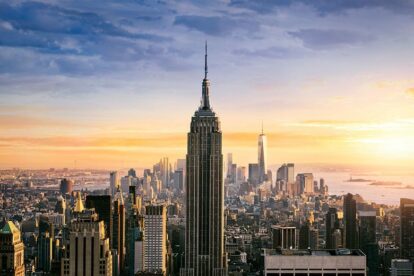
Alpha++ city New York
Every few years, important global economic cities are ranked by the Globalization and World Rankings Research Institute. It is considered the leading institute ranking the world’s cities.
Cities are categorized as Alpha, Beta or Gamma cities based on their connectivity to the rest of the world. Many factors are taken into account in this analysis, including cultural and political influence, although economic factors are the most important consideration. Alpha cities are the primary nodes in the global economic network. Beta and Gamma cities are smaller global cities that link economic regions into the global network.
The cultural and economic factors of “our” cities are important to us, of course. While we do have guides dedicated to larger cities like London and New York, we take pride in the fact that we write about lots of less-visited cities as well, like those you’ll see lower down this list. We believe that many popular cities are suffering from overtourism, so we encourage people to get off the beaten path and discover some less-known hidden gems.
Here’s a list with the latest data from 2018 (GAWC hasn’t done a study in 2020 yet). Spotted by Locals cities (many of which are in one of the categories) are linked, if you want to check our latest tips for those cities.
Alpha ++
London, New York
Alpha +
Beijing, Dubai, Hong Kong, Paris, Shanghai, Singapore, Sydney, Tokyo
Alpha
Bangkok, Brussels, Buenos Aires, Chicago, Frankfurt, Guangzhou, Istanbul, Jakarta, Kuala Lumpur, Los Angeles, Madrid, Melbourne, Mexico City, Miami, Milan, Moscow, Mumbai, Sao Paulo, Seoul, Taipei, Toronto, Warsaw, Zurich
Alpha –
Amsterdam, Barcelona, Bogota, Budapest, Dublin, Houston, Johannesburg, Lisbon, Luxembourg City, Manila, Montreal, Munich, New Delhi, Prague, Riyadh, Rome, San Francisco, Santiago, Shenzhen, Stockholm, Vienna, Washington D.C.
Beta +
Athens, Atlanta, Auckland, Bangalore, Boston, Bucharest, Cairo, Chengdu, Copenhagen, Dallas, Doha, Düsseldorf, Hamburg, Hangzhou, Hanoi, Ho Chi Minh City, Lima, Perth, Tel Aviv, Vancouver
Beta
Abu Dhabi, Beirut, Berlin, Brisbane, Calgary, Cape Town, Caracas, Casablanca, Chennai, Denver, Karachi, Kiev, Kuwait City, Lagos, Manama, Minneapolis, Montevideo, Nairobi, Nanjing, Oslo, Philadelphia, Rio de Janeiro, Sofia, Tianjin, Wuhan, Zagreb
Beta –
Almaty, Antwerp, Belgrade, Birmingham, Bratislava, Changsha, Chongqing, Dalian, Dhaka, Edinburgh, Geneva, George Town, Helsinki, Jeddah, Jinan, Kampala, Lyon, Manchester, Monterrey, Nicosia, Panama City, Port Louis, Qingdao, Quito, San José, San Juan, San Salvador, Seattle, Shenyang, Stuttgart, Suzhou, Tunis, Valencia, Xiamen
Gamma +
Accra, Adelaide, Cleveland, Colombo, Dar es Salaam, Detroit, Glasgow, Guatemala City, Guayaquil, Harare, Hyderabad, Lahore, Muscat, Osaka, Pune, Riga, Rotterdam, Xi’an, Zhengzhou
Gamma
Ahmedabad, Algiers, Amman, Ankara, Asunción, Austin, Baku, Baltimore, Belfast, Bilbao, Bristol, Charlotte, Guadalajara, Hefei, Islamabad, Kolkata, Kunming, La Paz, Ljubljana, Luanda, Lusaka, Phoenix, Porto, Saint Petersburg, San Diego, San Jose, Santo Domingo, St. Louis, Taiyuan, Tallinn, Tampa, Tbilisi, Tegucigalpa, Turin, Vilnius, Wellington
Gamma –
Belo Horizonte, Cologne, Curitiba, Durban, Fuzhou, Johor Bahru, Maputo, Medellín, Milwaukee, Minsk, Nantes, Nashville, Orlando, Ottawa, Penang, Phnom Penh, Poznan, Sacramento, San Antonio, Tirana, Wroclaw, Yangon
The GAWC institute also created a very cool graphic of interconnectivity between these world cities from 2010 (PDF, large!).
Source:
Posted in earth
Leave a comment
Is it Death of Nation State and Reemergence of City State?
If you’d been born 1,500 years ago in southern Europe, you’d have been convinced that the Roman empire would last forever. It had, after all, been around for 1,000 years. And yet, following a period of economic and military decline, it fell apart. By 476 CE it was gone. To the people living under the mighty empire, these events must have been unthinkable. Just as they must have been for those living through the collapse of the Pharaoh’s rule or Christendom or the Ancien Régime.
We are just as deluded that our model of living in ‘countries’ is inevitable and eternal. Yes, there are dictatorships and democracies, but the whole world is made up of nation-states. This means a blend of ‘nation’ (people with common attributes and characteristics) and ‘state’ (an organised political system with sovereignty over a defined space, with borders agreed by other nation-states). Try to imagine a world without countries – you can’t. Our sense of who we are, our loyalties, our rights and obligations, are bound up in them.
Cities are strangely unique organizational units. Over time, a city organically shifts its boundaries to reflect its people, not the other way around. Cities are about choices. Choices lead to possibilities. These qualities gives cities the Resilience they need.
An increasing proportion of the world’s population is living in megacities. The United Nations predicts that by 2030 there will be 41 megacity clusters containing two-thirds of the world’s population.
In a remarkable trend these Megacities, which are the economic powerhouses of the countries in which they exist, are becoming political powerhouses too. They’ve been organising into interdependent networks, such as the Global Parliament of Mayors, the C40 global network of cities committed to acting on climate change, and the Rockefeller Foundation’s 100 Resilient Cities. These networks have accumulated enough organisational experience and influence to make a significant mark in 2018 in international arenas such as COP24, the UN Climate Change Conference to be held in Poland in December 2018.
The growing autonomy and influence of cities has risen due to several factors. One is the global trend towards devolution. In England and Wales, for instance, there were no directly elected mayors at the start of the millennium. Now there are 23 and their electoral contests are attracting an increasing number of high-profile candidates.
There is a growing recognition that nation-states are – compared with cities – unfit for modern challenges. They have failed to deal effectively with issues arising from migration, climate change, wealth inequality and terrorism. This failure partly explains the declining faith in traditional political parties in many countries and in the value of democratic government itself. But it is also behind the rise of cities, which are much more effective at pragmatic problem-solving on issues ranging from flood management to dealing with increasing numbers of refugees.
It’s worth mentioning that nation-states are a new historical invention and have only been the dominant form of political organisation for the past two centuries. They are an extension of city states. Cities, in contrast, are the greatest and most enduring social technology ever invented by humankind. That is why cities lasted thousands of years, while empires and nations have risen and fallen around them. They risen and fell but lasted, nevertheless.
It is true that nations will not disappear quickly or completely, but we may remember 2018 as the year of the return of the Renaissance city-state. Get ready for bold initiatives from cities and their mayors in areas such as global warming, while national political parties bicker with each other and intergovernmental conferences remain locked in stalemate. The ancient ideal of the polis is back.
Source(s):
https://aeon.co/essays/the-end-of-a-world-of-nation-states-may-be-upon-us
https://www.pmi.org/learning/library/project-minded-vision-reemergence-city-4487
https://www.thnk.org/blog/the-return-of-the-city-state-in-2050-this-time-with-significant-upgrades/
Link(s):
Resilient City : A Solution to Problem of Climate Change
Posted in earth
Leave a comment


 Rashid's Blog: A Place for Inquisitive Souls