Urbanisation:Global Trends

Cities are the manifestation of the cultural, economic and social acceleration that we have experienced in our modern history. In the year 1950 about 2/3 of the population worldwide lived in rural settlements and 1/3 in urban settlements.
According to the Sustainable Urbanization Policy Brief, urban centres occupy less than 5% of the world’s landmass. But they account for around 70% of both global energy consumption and greenhouse gas emission. Innovation in urban infrastructure and technology is essential when addressing this issue.

Urban planning decisions and strategic design thinking in the context of rapid urbanization account for social equity, mobility patterns, global competitiveness and energy-efficiency.

As densities decline, city areas grow faster than city populations  and affect environmental sustainability at a local, regional and global scale. How we manage this unprecedented urban growth in the following years is likely to determine the outcome of our sustainability endeavours.

Percentage urban and location of urban agglomerations with at least 500,000 inhabitants, 2014
Percentage urban and location of urban agglomerations with at least 500,000 inhabitants, 2014. Source: UN | World Urbanization Prospects: The 2014 Revision, Highlights

Between now and 2050, 90% of the expected increase in the world’s urban population will take place in the urban areas of Africa and Asia  . In other words the projected urban growth will be concentrated in cities in the developing world where the correlation of the rate of urbanization with economic growth has been weaker.

The global trends of urbanization in the first decades of the 21st century are significantly different from what we have experienced so far in terms of urban transition. Urbanization is taking place at lower levels of economic development and the majority of future urban population growth will take place in small- to medium-sized urban areas in developing countries. This is the case for India.Expansion of urban areas is on average twice as fast as urban population with significant consequences for greenhouse gas emissions and climate change.

Global Urban Population Growth 1990-2030
Source: UN | World Urbanization Prospects: The 2014 Revision, Highlights

According to this year’s United Nations report on World Urbanization we will observe the following trends:

  • Continuing population growth and urbanization are projected to add 2.5 billion people to the world’s urban population by 2050, with nearly 90% of the increase concentrated in Asia and Africa.
  • The fastest growing urban agglomerations are medium-sized cities and cities with less than 1 million inhabitants located in Asia and Africa.
  • Most megacities and large cities are located in the global South.
  • Just three countries — IndiaChina and Nigeria – together are expected to account for 37 per cent of the projected growth of the world’s urban population between 2014 and 2050. India is projected to add 404 million urban dwellers, China 292 million and Nigeria 212 millions.
  • Close to half of the world’s urban dwellers reside in relatively small settlements of less than 500,000 inhabitants, while only around 1/8 live in the 28 mega-cities with more than 10 million inhabitants.
  • The number of mega-cities has nearly tripled since 1990; and by 2030, 41 urban agglomerations are projected to house at least 10 million inhabitants each.
  • Tokyo is projected to remain the world’s largest city in 2030 with 37 million inhabitants, followed closely by Delhi where the population is projected to rise swiftly to 36 million.
Contribution to the increase in urban population by country, 2014 to 2050
Contribution to the increase in urban population by country, 2014 to 2050. Source: UN | World Urbanization Prospects: The 2014 Revision, Highlights

Urban scaling holds both the key to long-term sustainable development and irreversible damages to our planet. The expected increase in urban land cover during the first three decades of the 21st century will be greater than the cumulative urban expansion in all of human history . These unprecedented rates of urbanization put enormous pressure on environmental sustainability thresholds and indicators. Tackling strategic components of urban form such as density levels, land use patterns and connectivity will have a major impact on the global economy and climate. We must plan our Urban Forms well.

Source(s):

MORPHOCODE

Posted in earth | Leave a comment

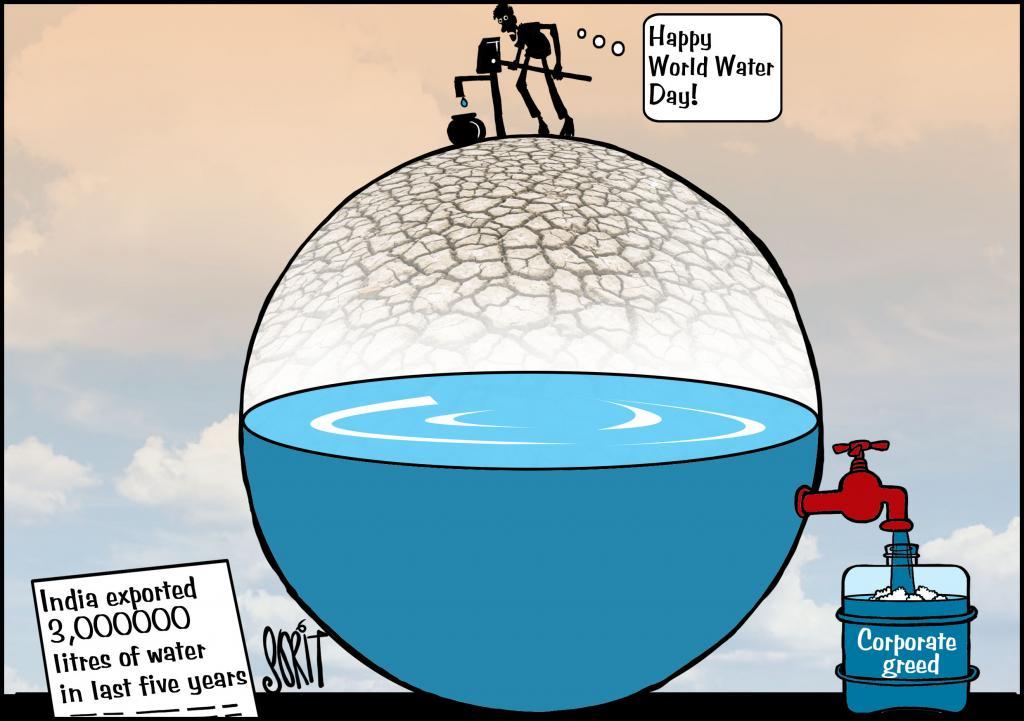
World Water Day and Reality

Posted in earth | Leave a comment

Urban Transformation : Ways of Sustainability for Cities Across the World

Develop a National Economic Development Strategy — and place Cities at its Heart.

Nothing impedes progress more than a disjointed approach. To spur action and investments across sectors and ministries, a shared national vision is crucial.As economic engines that produce 80% of the world’s GDP and are home to 56% of the world’s population, cities will need to be at the core of national net-zero strategies.

Pursue national policies to support cities that are compact, connected, clean and resilient.

Urban transformation toward more compact, connected, clean and resilient cities can support a wide range of development priorities, including enhanced economic competitiveness, improved public health, higher living standards and reduced pollution. It is needed that governments introduce national policies that prevent urban sprawl, which creates a barrier for provision for municipal services and converts urban systems into slums.

India is one country that has pursued national policies to support urban transformation. Its National Mission for Sustainable Habitat aids cities in tackling climate risk and fostering clean, inclusive and sustainable development. Meanwhile its new Climate Smart Cities Assessment Framework uses 28 indicators to assess cities’ vulnerabilities and potential for action on energy and green buildings, urban planning, green spaces and biodiversity, mobility, air quality, water and waste management. Nearly 100 cities across the country now use the tool’s knowledge-sharing platform to learn from each other’s experiences and implement best practices to create a more compact, connected and clean city.

Fund and Finance Green urban Infrastructure.

Funding sustainable and resilient urban infrastructure such as public transport and green buildings offers the potential for enormous economic returns to national governments as a result of energy and material savings.

Support of Local Climate Action in Cities through Governance and fiscal reforms that enable local government leadership and facilitate collaboration.

In order to create an environment that empowers local leaders and mayors to take even greater action on climate, national governments can push through policy and fiscal reforms to secure investment and create metropolitan authorities to foster collaboration and an integrated approach.

For instance, in South Africa, reforming the Electricity Regulation Act should soon enable municipalities to procure their own clean energy, thereby improving access to renewables. Some municipalities such as eThekwini, which encompasses the city of Durban, now plan to build their own renewable generation capacity mainly from wind and solar, reducing their reliance on the central grid system.

Prioritisation of measures to build Resilience and Expand Economic Opportunities for the Poor.

National governments should not be fearful that there will be job losses from the transition to a low-carbon economy. Decarbonizing cities has the potential to create millions of new jobs and could catalyze a just transition. Recent analysis from Vivid Economics for the Coalition for Urban Transitions found that about 31 million new jobs could be created in 2030 in China, India, Indonesia, Brazil, Mexico and South Africa by adopting low-carbon measures modelled in the report versus the business-as-usual alternative.

Work with the private sector to help finance urban transformation.

In order to meet the financing gap for sustainable urban infrastructure, we’ll need a significant increase in investment both in the public and private sectors. National governments can promote policies that stimulate and de-risk private sector investment and encourage public-private partnerships.

Source(s):

WEF

Posted in earth | Leave a comment

Educational Philosophy of Plato

Of all the great educators who shaped the concept of education into what it is today, Plato’s name deserves special mention. Apart from being a philosopher, his fame also rests on being a mathematician and writer of philosophical dialogues. He was the most famous student of Socrates and the teacher of Aristotle.
Plato has contributed greatly to develop the fundamental principles of education. The first institution of higher learning in the entire Western world was founded by Plato. The name of this school was the Academy. Today we use the word ‘academics’ to broadly refer to college and university courses or studies. It might interest you to know that the word ‘academics’ was originated from the name of Plato’s school.

To put it simply, the Academy was a university for higher learning that included astronomy, physical science, philosophy and mathematics. In this age of Transnational Universities , Plato’s Academy is still relevant.In addition to being the founder of the Academy, Plato delivered lectures there. Historians are of the opinion that it made use of a method of teaching which combined lectures, seminars and dialogues. Plato’s ideas on education appear in his other well-known work named Laws. It was his final work which he was still working on at the time of his death……

read more here at Source

Posted in earth | Leave a comment