Forestry can create 10 million jobs:UN

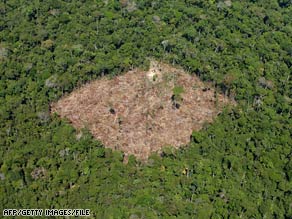
The United Nations is urging countries to invest in green jobs working with “sustainable forest management” to address the growing problem of unemployment worldwide. At least 10 million such jobs could be created, the U.N. Food and Agriculture Organization will say in a report to be released this week. The report does not mention any countries but is aimed at “mainly regions with substantial rural unemployment and degraded land areas,” said C.T.S. Nair, chief economist in the U.N. Forestry Department and one of the authors of the report. While all countries could benefit from investing in these green jobs, Nair said, Asia and Africa — and to some extent Latin America — could benefit the most. India, China and almost all countries in Africa stand to benefit, he added.

The United Nations said it already is seeing indications that some countries — such as the United States, India and South Korea — are interested and taking action to invest in sustainable forest management by making it part of their economic stimulus plans. Sustainable forestry aims to prevent depletion of forests by managing them and making sure their use does not interfere with natural benefits or the local environment.

source

also published in  The Huffington Post

Posted in BIODIVERSITY | Tagged , | 1 Comment

Vellore Research Centre in India makes Stem Cell Breakthrough

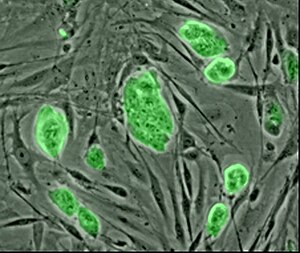
Mouse embryonic stem cells with fluorescent marker.

The Centre for Stem Cell Research at Christian Medical College has succeeded in reprogramming cells drawn from adult mice and making them function like stem cells found in the human embryo. It has opened a new chapter in stem cell therapy in the country, as the technology can now be applied to generate similar stem cells from adult human cells too. These can be used to study genetic disorders relating to blood, muscle, brain and even diseases like diabetes.

The use of embryos to draw stem cells has been the subject of a controversy, and the latest discovery may mean that embryos need not necessarily be used in the process. ”This is an important milestone for India in stem cell research and signifies a paradigm shift in the way diseases can be treated. We will now begin work on human cells to generate disease-specific iPS cells to study hereditary diseases,” Dr Alok Srivastava, who heads the research centre, said. ”For India, this means once we are able to take this on to human cells also; we will not have to rely on external help for generating models for studying and treating human diseases. With regard to clinical significance, as anywhere else in the world, we need to be very careful not to give an impression to people that this is going into human treatment anytime soon. It could be years before that happens and it will be only after the safety of use of such cells is clearly established,” he said.

In February, the research centre, supported by the department of biotechnology, ministry of science and technology and CMC, was successful in generating in mice these ”induced pluripotent stem (iPS) cells” which are similar to embryonic stem cells. Researchers will soon move on to generating similar cells from normal and diseased human cells.

The centre looks primarily at translational research – research that has potential for clinical applications. Embryonic stem cells have great capacity for self-renewal and are used in regenerative medicine and tissue replacement. The induced pluripotent stem (iPS) cells generated at the research centre may have the same potential, researchers say. India is the fifth country, after Japan, US, China and Britain, to achieve these results. The iPS technology is relatively new and acknowledged worldwide as the ”ultimate manufacturing process”. Scientists can now use the human skin or other cells like an assembly line to roll off cells that have the ability to adapt themselves to any tissue in the body that requires healing or replenishment.

Stem cells are cells found in most, if not all, multi-cellular organisms. They are characterized by the ability to renew themselves through mitotic cell division and differentiating into a diverse range of specialized cell types. Research in the stem cell field grew out of findings by Canadian scientists Ernest A. McCulloch and James E. Till in the 1960s.The two broad types of mammalian stem cells are: embryonic stem cells that are isolated from the inner cell mass of blastocysts, and adult stem cells that are found in adult tissues. In a developing embryo, stem cells can differentiate into all of the specialized embryonic tissues. In adult organisms, stem cells and progenitor cells act as a repair system for the body, replenishing specialized cells, but also maintain the normal turnover of regenerative organs, such as blood, skin or intestinal tissues.

Induced pluripotent stem cells commonly abbreviated as iPS cells or iPSCs, are a type of pluripotent stem cell artificially derived from a non-pluripotent cell, typically an adult somatic cell, by inducing a “forced” expression of certain genes.

Induced Pluripotent Stem Cells are believed to be identical to natural pluripotent stem cells, such as embryonic stem cells in many respects, such as the expression of certain stem cell genes and proteins, chromatin methylation patterns, doubling time, embryoid body formation, teratoma formation, viable chimera formation, and potency and differentiability, but the full extent of their relation to natural pluripotent stem cells is still being assessed.

IPSCs were first produced in 2006 from mouse cells and in 2007 from human cells. This has been cited as an important advancement in stem cell research, as it may allow researchers to obtain pluripotent stem cells, which are important in research and potentially have therapeutic uses, without the controversial use of embryos.

sources

TOI

wikipedia

Posted in BIODIVERSITY | 1 Comment

Kuiper Belt

In 1950, Dutch astronomer Jan Oort hypothesized that comets came from a vast shell of icy bodies about 50,000 times farther from the Sun than Earth is. A year later astronomer Gerard Kuiper suggested that some comet-like debris from the formation of the solar system should also be just beyond Neptune. It was The Kuiper Belt.

The Kuiper belt  sometimes called the Edgeworth-Kuiper belt, is a region of the Solar System beyond the planets extending from the orbit of Neptune (at 30 AU) to approximately 55 AU from the Sun. It is similar to the asteroid belt, although it is far larger — 20 times as wide and 20–200 times as massive. Like the asteroid belt, it consists mainly of small bodies (remnants from the Solar System’s formation). It is home to at least three dwarf planets – Pluto, Haumea and Makemake. But while the asteroid belt is composed primarily of rock and metal, the Kuiper belt objects are composed largely of frozen volatiles (dubbed “ices”), such as methane, ammonia and water.

It is now considered to be the source of the short-period comets. Occasionally the orbit of a Kuiper Belt object will be disturbed by the interactions of the giant planets in such a way as to cause the object to cross the orbit of Neptune. It will then very likely have a close encounter with Neptune sending it out of the solar system or into an orbit crossing those of the other giant planets or even into the inner solar system. There are presently nine known objects orbiting between Jupiter and Neptune (including 2060 Chiron (aka 95 P/Chiron) and 5145 Pholus; see the MPC’s list). The IAU has designated this class of objects as Centaurs. These orbits are not stable. These objects are almost certainly “refugees” from the Kuiper Belt. Their future fate is not known. Some of these show some cometary activity (ie, their images are a little fuzzy indicating the presence of a diffuse coma). The largest of these is Chiron which is about 170 km in diameter, 20 times larger than Halley. If it ever is perturbed into an orbit that approaches the Sun it will be a truly spectacular comet. Curiously, it seems that the Oort Cloud objects were formed closer to the Sun than the Kuiper Belt objects. Small objects formed near the giant planets would have been ejected from the solar system by gravitational encounters. Those that didn’t escape entirely formed the distant Oort Cloud. Small objects formed farther out had no such interactions and remained as the Kuiper Belt objects. Several Kuiper Belt objects have been discovered recently including 1992 QB1 and 1993 SC (above). They appear to be small icy bodies similar to Pluto and Triton (but mostly smaller). There are more than 800 known trans-Neptunian objects (as of early 2004); see the MPC’s list. Many orbit in 3:2 resonance with Neptune (as does Pluto). Color measurements of some of the brightest have shown that they are unusually red. In late 2002, a Kuiper Belt object over 1000 km in diameter was discovered and provisionally designated 2002 LM60 “Quaoar”. In early 2004 an even larger one, 2004 DW, was found (its size isn’t well known yet, but it’s almost certainly smaller than Pluto). And in late 2005 the discovery of 2003 UB313 (now officially named “Eris”) was announced; it is very likely somewhat larger than Pluto. It is estimated that there are at least 35,000 Kuiper Belt objects greater than 100 km in diameter, which is several hundred times the number (and mass) of similar sized objects in the main asteroid belt. A team of astronomers led by Anita Cochran report that the Hubble Space Telescope has detected extremely faint Kuiper Belt objects (left). The objects are very small and faint perhaps only 20 km or so across. There may be as many as 100 million such comets in low-inclination orbits and shining brighter than the HST’s magnitude-28 limit. (A follow-up HST observation failed to confirm this observation, however.) Spectra and photometric data have been obtained for 5145 Pholus. Its albedo is very low (less than 0.1). Its spectra indicates the presence of organic compounds, which are often very dark (e.g. the nucleus of Comet Halley). Some astronomers believe that Triton, Pluto and its moon Charon are merely the largest examples of Kuiper Belt objects (Pluto can still be considered a member of the Kuiper Belt in addition to its classification as a “dwarf planet”).

Since the first discovery in 1992, the number of known Kuiper belt objects (KBOs) has increased to over a thousand, and more than 70 000 KBOs over 100 km in diameter are believed to reside there.The Kuiper belt was initially believed to be the main repository for periodic comets, those with orbits lasting less than 200 years. However, studies since the mid-1990s have shown that the Kuiper belt is dynamically stable, and that it is the farther scattered disc, a dynamically active region created by the outward motion of Neptune 4.5 billion years ago, that is their true place of origin.Scattered disc objects such as Eris are KBO-like bodies with extremely large orbits that take them as far as 100 AU from the Sun. The centaurs, comet-like bodies that orbit among the gas giants, are believed to originate there. Neptune’s moon Triton is believed to be a captured KBO. Pluto, a dwarf planet, is the largest known member of the Kuiper belt. Originally considered a planet, it is similar to many other objects of the Kuiper belt, and its orbital period is identical to that of the KBOs known as “Plutinos”.

links

source

wikipedia

Kuiper Belt Objects

Posted in Solar System | 3 Comments

Coral Atolls are Now Blamed for Sea Level Rise

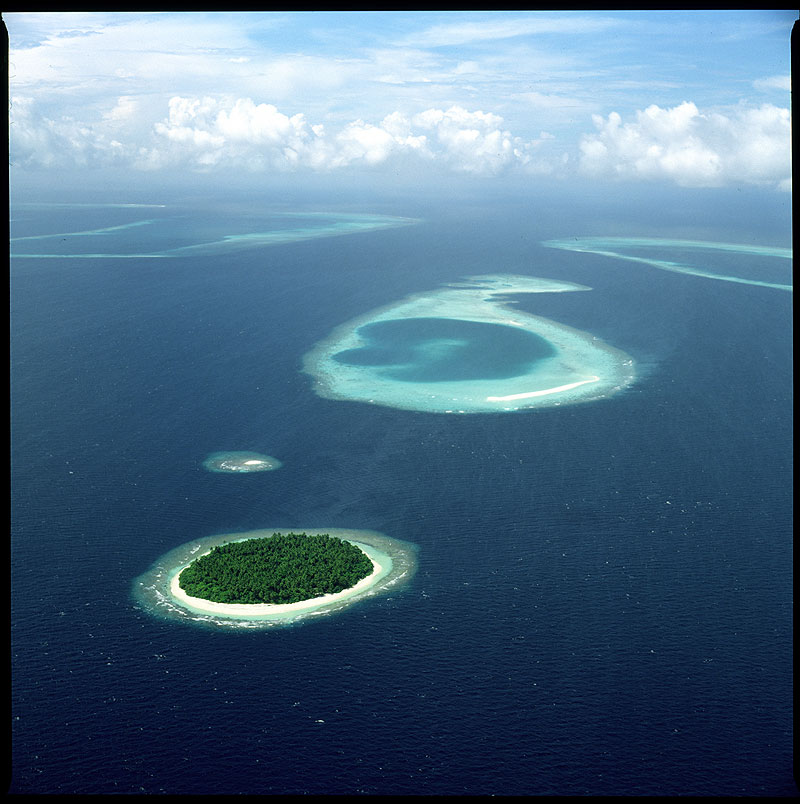
MUCH has been written of late regarding the impending demise of the world’s coral atolls due to sea level rise.Interestingly  in the Solomon Islands, the sea level rise has been blamed for salt water intrusion into the subsurface “lens” of fresh water under some atolls.

Beneath the surface of most atolls, there is a lens shaped body of fresh water which floats on the seawater underneath.The claim is that the rising sea levels are contaminating the fresh-water lens with seawater. These claims of blame ignore several facts. The first and most important fact, discovered by none other than Charles Darwin, is that coral atolls essentially “float” on the surface of the sea.

Atolls exist in a delicate balance between new sand and coral rubble being added from the reef, and sand and rubble being eroded by wind and wave back into the sea.When the sea falls, more sand tumbles from the high part, and more of the atoll is exposed to wind erosion. The atoll falls along with the sea level. When the sea level rises, wind erosion decreases. The coral grows up along with the sea level rise.

The flow of sand and rubble onto the atoll continues, and the atoll rises. Since atolls go up and down with the sea level as Darwin discovered, the idea that they will be buried by sea level rises is totally unfounded. They have gone through sea level rises much larger and much faster than the current one.

read more

Posted in BIODIVERSITY, Ecosystem, oceans | Tagged | 1 Comment