
Continental drift is a theory by Alfred Wegener that Earth’s continents were once joined as a supercontinent called Pangaea and have since drifted to their current locations. Evidence for this includes the way continental coastlines fit together like a jigsaw puzzle, identical fossils of ancient animals found on different continents, and similar rock formations and mountain ranges. Although the theory was initially met with skepticism, it has developed into the modern understanding of plate tectonics, which explains how continents move on large lithospheric plates.
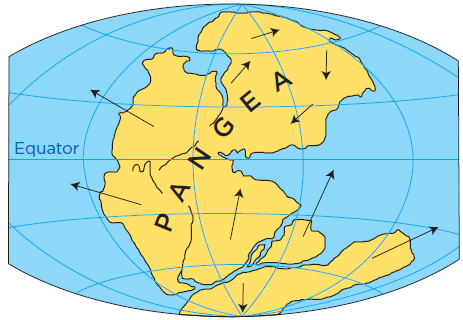
The idea of continents being connected originated with thinkers like Alexander von Humboldt in the early 1800s and Abraham Ortelius in 1596.
In 1912, the German meteorologist Alfred Wegener presented the first detailed explanation of continental drift. He proposed the existence of a supercontinent, Pangaea, which broke apart and drifted over millions of years.
Evidence for Continental Drift
- Continental Jigsaw Fit:The coastlines of continents, particularly South America and Africa, fit together like puzzle pieces.
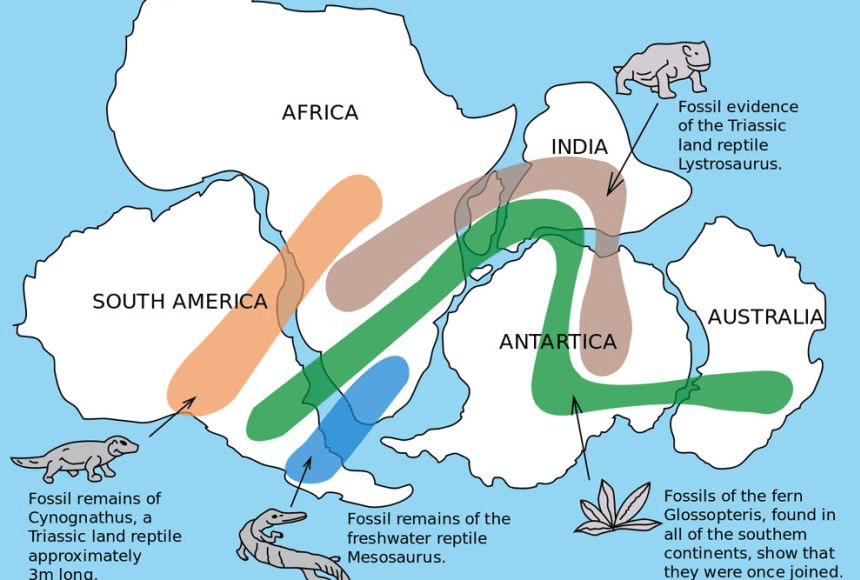
- Fossil Evidence:Similar fossils of ancient animals, like the freshwater reptile Mesosaurus, have been found on continents now separated by vast oceans.
- Rock Formations:Identical rock types, geological structures, and mountain ranges are found on continents that are now far apart.
From Continental Drift to Plate Tectonics
- Initial Skepticism: Wegener’s theory faced doubt due to unclear reasons for continental movement.
- Mantle Convection: In 1931, Arthur Holmes suggested mantle convection as the cause of continental movement.
- Modern Theory of Plate Tectonics: Continental drift became part of the plate tectonics theory, where the Earth’s lithosphere consists of moving tectonic plates.
Read More Here


 Rashid's Blog: A Place for Inquisitive Souls