

This new book might be of interest to this blog’s readers:
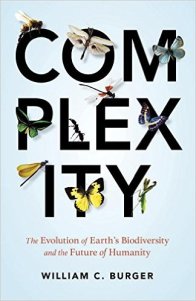
William C. Burger, Complexity: The Evolution of Earth’s Biodiversity and the Future of Humanity (Amherst, NY: Prometheous Books, 2016), 380 pp.
Publisher’s description Tracing the arc of evolutionary history, biologist William C. Burger shows that cooperation and symbiosis have played a critical role in the ever increasing complexity of life on earth. Life may have started from the evolution of cooperating organic molecules, which outpaced their noncooperating neighbors. A prime example of symbiosis was the early incorporation of mitochondria into the eukaryotic cell (through a process called “endosymbiosis”). This event gave these cells a powerful new source of energy. Later, cooperation was again key when millions to trillions of individual eukaryotic cells eventually came together to build the unitary structures of large plants and animals. And cooperation between individuals of the same species resulted in complex animal societies, such…
View original post 101 more words


 Rashid's Blog: A Place for Inquisitive Learners
I have always believed that complexity was a key evolutionary trait that allowed for biodiversity here on Earth. Otherwise we would only have single-celled creatures as the dominant life form. Although in truth they still are today whether we drill below the ice into submerged Antarctic lakes or descend underground kilometers deep into strata filled with single-celled life. I think complexity is seen as the penultimate success of evolution from the perspective of those who are its beneficiaries – us!
LikeLike