
.svg/250px-Greenland_on_the_globe_(Greenland_centered).svg.png) Greenland is an autonomous country within the Kingdom of Denmark, located between the Arctic and Atlantic Oceans, in east of the Canadian Arctic Archipelago. Though a part of the continent of North America, Greenland has been politically and culturally associated with Europe specifically Norway and Denmark for more than a millennium due to political and cultural reasons.
Greenland is an autonomous country within the Kingdom of Denmark, located between the Arctic and Atlantic Oceans, in east of the Canadian Arctic Archipelago. Though a part of the continent of North America, Greenland has been politically and culturally associated with Europe specifically Norway and Denmark for more than a millennium due to political and cultural reasons.
 In 2008, the people of Greenland voted and passed a referendum supporting greater autonomy; 75%In 2008, the people of Greenland voted and passed a
In 2008, the people of Greenland voted and passed a referendum supporting greater autonomy; 75%In 2008, the people of Greenland voted and passed a referendum supporting greater
In 2008, the people of Greenland voted and passed a referendum supporting greater autonomy; 75%In 2008, the people of Greenland voted and passed a referendum supporting greater
In 2008, the people of Greenland voted and passed a referendum supporting greater autonomy; 75%In 2008, the people of Greenland voted and passed a referendum supporting greater autonomy; 75%
In 2008, the people of Greenland voted and passed a referendum supporting greater autonomy; 75%
In 2008, the people of Greenland voted and passed a referendum supporting greater autonomy; 75% of votes cast were in favour of
In 2008, the people of Greenland voted and passed a referendum supporting greater autonomy; 75% of votes cast were in favour of autonomy.
Greenland is, in terms of area, the world’s largest island,over 3/4 of which is covered by the only contemporary ice sheet outside of Antarctica. With a population of 56,370 (2013), it is the least densely populated country in the world.
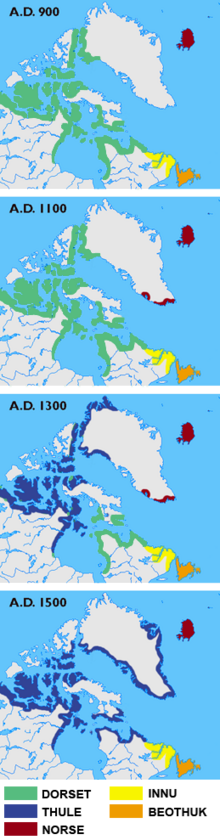
Greenland is an ancient settlement and has been inhabited off and on for at least the last 4,500 to 5,000 years by Arctic peoples whose forebears migrated there from Canada. Norsemen settled on the uninhabited southern part of Greenland in the beginning of 10th century. Inuit peoples arrived here in the 13th century. The Norse colonies disappeared in the late 15th century. In the early 18th century, Scandinavia and Greenland came back into contact with each other, and Denmark established sovereignty over the island.

The last written records of the Norse Greenlanders are of a marriage in 1408 in the church of Hvalsey—today the best-preserved Nordic ruins in Greenland.
Having been ruled by Denmark-Norway for centuries, Greenland became a Danish colony in 1814, and a part of the Kingdom of Denmark in 1953 under the Constitution of Denmark. In 1979, Denmark granted home rule to Greenland, and in 2008, Greenlanders voted to transfer more power from the Danish royal government to the local Greenlandic government. Under the new structure, in effect since 21 June 2009,the Danish government retains control of foreign affairs, national defence, the police force, and the justice system. It also retains control of monetary policy.
Some More History
The people migrated to Greenland across the Davis Strait from the American continent more than 4,000 years ago. The links with Europe were established with the Norse settlements in 985 AD and lasted until the mid 15th century. The flourishing European whaling industry in the 16th century restored regular visits to Greenland, but a permanent link was not established until the settlement of the Danish-Norwegian priest Hans Egede in 1721. This formed the basis of Danish sovereignty for the next 258 years, where the establishment of the trade monopoly the Royal Greenland Trade Department, the KGH (Kongelige Grønlandske Handel), was particularly significant.
The Name
It was the early Scandinavian settlers who gave the country the name Greenland. In the Icelandic sagas, it is said that the Norwegian-born Icelander Erik the Red was exiled from Iceland for murder. Along with his extended family and his thralls, he set out in ships to find the land rumored to lie to the northwest. After finding it and settling there, he named it Grœnland (translated as “Greenland”), supposedly in the hope that the pleasant name would attract settlers.
The name of the country in Greenlandic (Kalaallisut) is Kalaallit Nunaat (“land of the Kalaallit”).The Kalaallit are the indigenous Greenlandic Inuit people who inhabit the country’s western region.
Economy
Until the Second World War, Greenland was a closed country with a very low standard of living. In 1906, sheep farming was introduced in the southern part of the country and commercial fishing started in 1908. During the Second World War, the German occupation of Denmark meant that all contact with Denmark was suspended and officials in Greenland and Washington made contact with the USA, which agreed to defend Greenland; in 1951-1952 an American military base was established at Thule. After the war, a popular movement arose in favour of modernisation of the country and the basis of the welfare system which today characterises Greenland was laid in the 1950s.
Sources:
Related articles
- Mining rights in Greenland vote (bigpondnews.com)
- Greenland warns EU about access to mineral wealth (worldbulletin.net)
- NEWS: Greenland votes for change (nunatsiaqonline.ca)
- Chinese interests spark independence calls in Greenland (icenews.is)
- This One is for YOU- Greenland. (courtsandsportsradio.com)


 Rashid's Blog: A Place for Inquisitive Souls
I Salute sir…….very nice collections
LikeLike