‘Artificial Skin’ Developed using Gold and Resin

 Using  gold and a kind of resin, a team of scientists at the Technion-Israel Institute of Technology has discovered how to make a new kind of flexible sensor that one day could be integrated into electronic skin, or e-skin. If scientists learn how to attach e-skin to prosthetic limbs, people with amputations might once again be able to feel changes in their environments.

The findings appear in the June issue of ACS Applied Materials & Interfaces.

read here

Posted in inventions, News | Tagged , , , , , | Leave a comment

Helping the most vulnerable farmers adapt to climate change – lessons from a Farm Africa project

dianabuja's avatarDIANABUJA'S BLOG: Africa, The Middle East, Agriculture, History and Culture

See on – Africa and Beyond

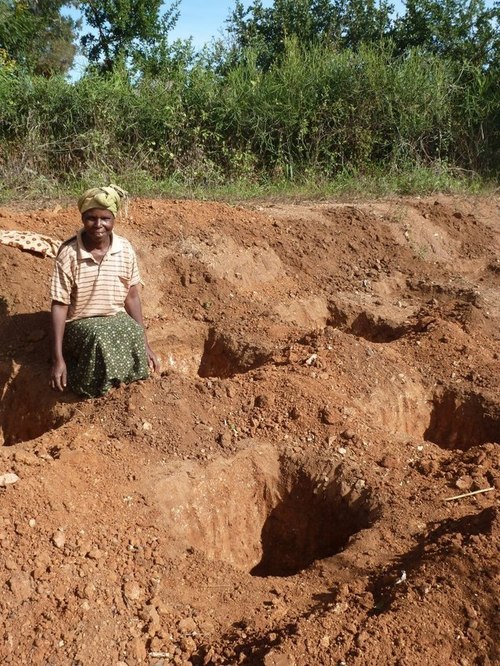
By Jonathan Finnighan Helping the most vulnerable farmers adapt to climate change – lessons from a Farm Africa project The first thing that strikes me about Mwangangi’s farm is that it looks abando…

…The impact evaluation found that two-thirds of the farmers in the project are now using new micro-catchments on their farms, and about half started cultivating drought tolerant crops that they weren’t before. Crop yields from zai pits greatly improved, especially for farmers with very arid soils: many reported that their yields tripled or more. And on average, farmers estimated that their families had an additional month of food from their harvests after using the new farming methods, and that this allowed them to spend more money on things other than food – such as buying animals and farming inputs and improving their home.

diana buja‘s insight:

The zai pits described…

View original post 91 more words

Posted in Uncategorized | Leave a comment

Garmin Rolls With The Punches Of Changing Navigation Game With Smartphone HUD For Cars

Posted in Uncategorized | Leave a comment

New database about approval for GM crops

argylesock's avatarScience on the Land

Probably the least catchy of titles belongs to the International Service for the Acquisition of Agri-biotech Applications (ISAAA). Not catchy! But these people have a lot of information to share.

This week, they announce a new database about approval for GM crops. That’s genetically modified crops, also called genetically engineered (GE) or biotech crops. ISAAA says, ‘In 2012, 170.3 million hectares of commercialized biotech crops were planted by more than 17 million farmers in 28 developing and industrial countries worldwide. These numbers are clear indications that many farmers from different agricultural conditions choose biotech crops because of the benefits they offer.’

You can get ISAAA’s newsletter delivered to your email inbox. I do. You can search the new GM database for crops or countries that interest you.

View original post

Posted in Uncategorized | Leave a comment