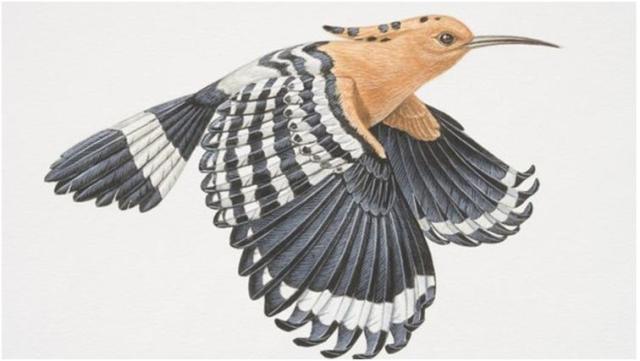
Cyclones are devastating but now they are given interesting names. Hudhud is an interesting case, how a small bird’s name be given to a massive cyclone!!
Lets try to find out.
How the Naming Started
Hurricanes and tropical cyclones in the Atlantic have had their own names since 1953, a practice begun by Miami’s National Hurricane Centre and maintained and updated by the WorldMeteorological Organization (WMO), a Geneva-based agency of the United Nations.
However, it came to South Asia and the Middle East only later.
Cyclones originated in the north Indian ocean were unnamed before 2004.
The main reason, according to Dr M Mahapatra, head of India’s cyclone warning centre, was that in an “ethnically diverse region we needed to be very careful and neutral in picking up the names so that it did not hurt the sentiments of people”.
In 2004 they clubbed together and agreed on their favourite names.It was when an international panel on tropical cyclones led by the WMO sat down and decided to name their cyclones as a committee.Eight countries – India, Pakistan, Bangladesh, Maldives, Myanmar, Oman, Sri Lanka and Thailand – took part. They settled on a list of 64 taking eight names from each country for upcoming cyclones.
The list is an alphabetical one, according to each country. The last cyclone in the region was Nanauk in June, the name was contributed by Myanmar.
Names can also be suggested by the general public in the member country or by the government. India, for example, welcomes suggestions on the condition that the name must be “short and readily understood when broadcast, not culturally sensitive and not convey some unintended and potentially inflammatory meaning”.
This time, following the alphabetical order, it was Oman’s turn
Last year, Phailin, the name for a massive cyclone which battered India’s south-eastern coast and led to the evacuation of more than 500,000 people, was provided by Thailand. Some of the Indian names in the queue are the more prosaic Megh (Cloud), Sagar (Ocean) and Vayu (Wind).
The Hudhud or hoopoe bird is an exotic creature noticed for its distinctive crown of feathers and is widespread in Europe, Asia and North Africa.
Next time a cyclone hits the region, it’s Pakistan’s turn to give it a name It will be called Nilofar. Last time Pakistan named a cyclone was Nilam in November 2012.
A name helps people and the media to identify each cyclone and become more aware of its implications. It also does not confuse people if there is more than one tropical cyclone brewing in the region.
And these cyclones often prove to be deadly – their names resonate for a very long time.
Links and References:
http://www.bbc.com/news/world-asia-india-29564007
http://www.geebd.com/?p=5629


 Smartphone user faces


 Rashid's Blog: A Place for Inquisitive Souls