Last post analyses a vital question to a boy that what he will become in life. Many in India has not an attractive career path to follow. They become Rag Pickers on streets. They are a vital part of our civic system ironically.
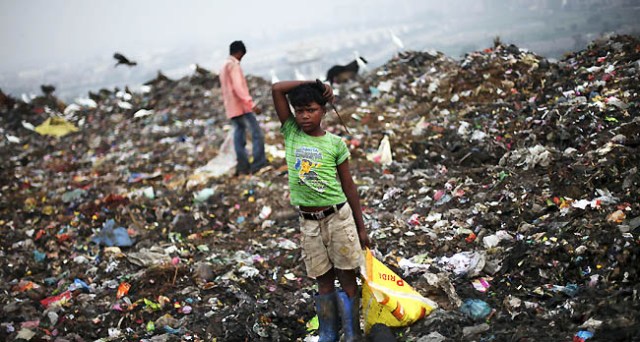
Rag pickers in India work as a second line waste disposal system, an informal system as our formal waste disposal system is not very good. Without them our cities would have become more dirty and not so civic. Even our tourist attractions are not filth free.
Poverty recruits them.
Most of them are extremely poor, illiterate, and belong to rural immigrant families. Many commence their profession at the young age of five to eight years.
Most of them never attend any school or have any formal education.But they are innovative.You must have seen one of them holding a magnet and searching something as if in search of a treasure!! The magnet catches nails which fetch a good price in market.
Their families are in need of extra incomes from these young children .While they are collecting rags they are subjected to chemical poisons and infections. Because of malnutrition they suffer from retarded growth and anemia. The rag pickers are very susceptible to diseases like tuberculosis and cancer due to their exposure to hazardous materials.
According to Wikipedia a Rag-picker, or Chiffonnier, was a 19th- and early 20th-century term for someone who made a living by rummaging through refuse in the streets to collect material for salvage. Scraps of cloth and paper could be turned into cardboard, broken glass could be melted down and reused, and even dead cats and dogs could be skinned to make clothes. The rag-pickers did not recycle the materials themselves; they would simply collect whatever they could find and turn it over to a “master rag-picker” (usually a former rag-picker) who would, in turn, sell it—generally by weight—to wealthy investors with the means to convert the materials into something more profitable
Like most of the businesses in India middlemen are there as main beneficiaries. though many of them are former ragpickers and almost as poor and jobless as ragpickers.
In many case middlemen who engage these children. They are required to collect, bottles, plastic, metal parts, glass pieces and other waste. They also collect food-waste for their own consumption. If found in access they share it with their friends and the elders. The middlemen pocket the major share of the sales and pays only paltry to the youngsters. As earning members of the family they do not heed much to the elders of the family’s advice. They commence chewing and smoking tobacco. Soon they become addicted to alcohols and then they switch to hard liquors. They even do not refrain from taking the drugs.
India has a serious garbage disposal problem. The quantum of garbage generated has gone up and even smaller cities are producing more waste than before. The landfills are overburdened and proper segregation of waste is a must. And while the problem continues to pile on unabated, the people carrying this burden, the ragpickers whose services almost all of us rely on for keeping our surroundings clean, continue to languish unacknowledged by the government.Despite performing a very useful social service at great risk to their health and well-being, for little money, their contribution to our dream of a Swachch Bharat is clearly being undermined.
There are many ways to address the problem We can convert biomass such as food to energy..Another one is the waste to energy initiative. It is a good solution and is working well. but this answer comes with new questions and problens. There are around 40 lakh ragpickers in India, with five lakh in Delhi alone.Desperate for cheap energy, the Delhi government is experimenting with power plants fueled by garbage. One plant is running on a trial basis and two more are under construction.If those plants start in near future, they would generate enough electricity to power 50,000 homes by burning much of the 8,000 tons of garbage the Indian capital generates each day. That garbage would be picked from homes and offices by private companies, instead of the networks of ragpickers who came to the city seeking opportunity and found it wheeling pushcarts of garbage through the streets.
Some who recycle 100 kilograms (220 pounds) daily can earn as much as $6 a day, but most earn about $4.
On the earth day we should pledge to not to ignore them and should try to integrate them into our formal waste disposal system. Or we should keep them segregated?
Perhaps they work better than our formal waste disposal system.Any suggestions?
Perhaps we can accept waste as money. This school accepts waste as school fee.
Co-founded by Parmita Sharma and Mazin Mukhtar in 2016, Akshar Forum is a school run for underprivileged students with the objective of training students to ‘earn a livelihood by being responsible to the government’. Education is far from conventional here – Akshar helps students explore their own creativity and set their own limits.
Link(s),Source(s) and Inspiration(s):
Kamat’s Potpouri
Youth ki Awaaz


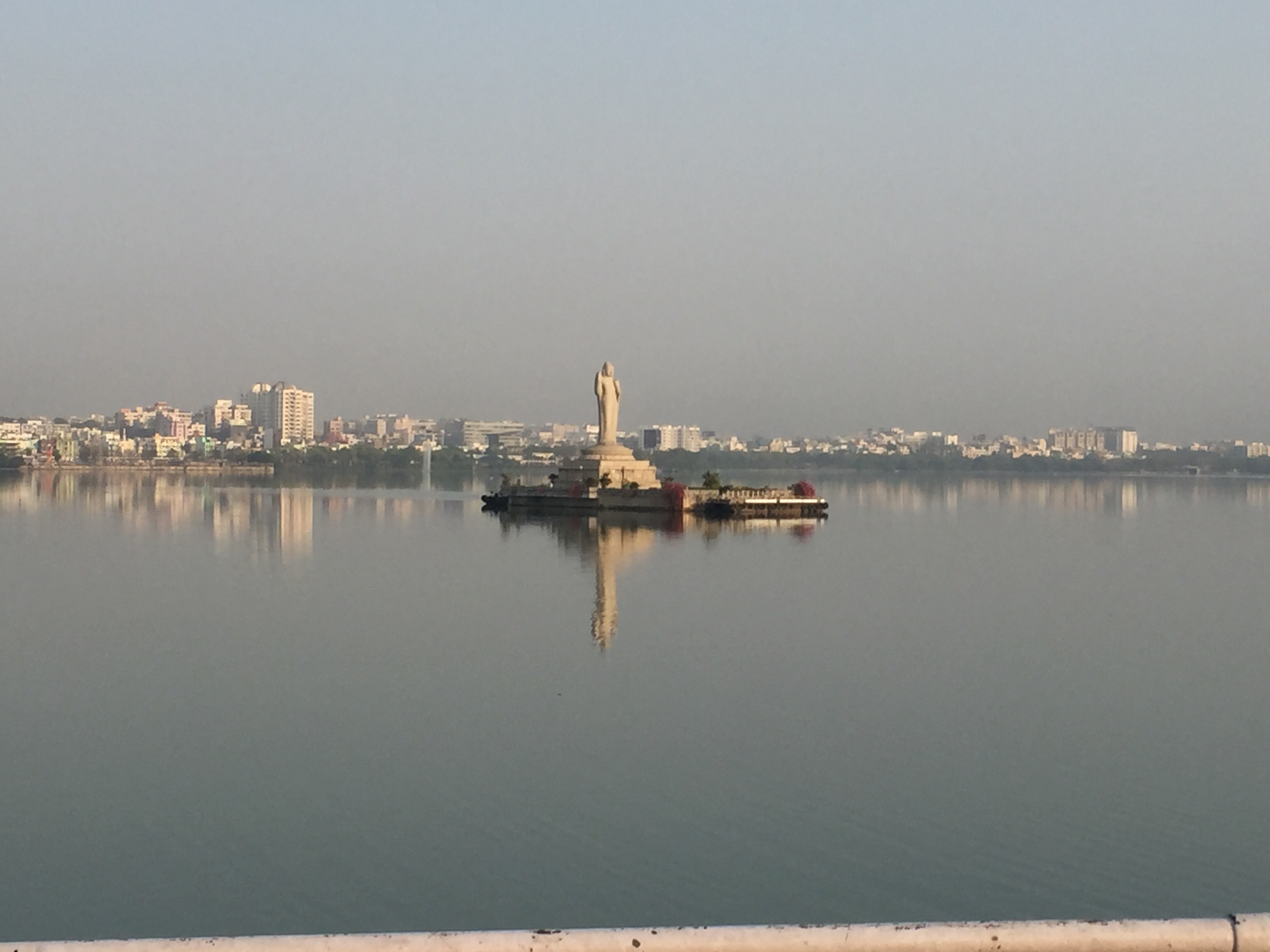 Hussainsagar with the Buddha who toppled over a few years ago

 Samuel Crompton memorial statue, Bolton. Image Credit: Kenneth Allen


