‘Tales of the City’ Turns 40: as the World Burns

Jason Luger's avatarurbanculturalstudies

40 years ago (in 1978), the first of Armistead Maupin’s ‘Tales of the City’ installments appeared in the San Francisco Chronicle.

TalesoftheCity-US_1st_edition.png

The ‘Tales’ would eventually be published as 9 novels, from the first ‘Tales of the City’ to 2014’s ‘The Days of Anna Madrigal’. Maupin, who came of age as a young gay man in San Francisco during the halcyon pre-Aids golden age of the 1970s, chronicled a changing city through vignettes surrounding a cast of memorable characters. These characters are archetypes of the San Francisco of-then, and according to Maupin, all bits and pieces of the author’s personality, a sort of dramatized autobiographical sketch. Maupin, hailing from a conservative North Carolina dynasty, found liberation in San Francisco. But alongside liberation, much quirkiness, whimsy, satire, and yes, darkness.

What is most remarkable about the ‘Tales’ series is the way it captures the essence of a vanished world. San Francisco at the…

View original post 1,676 more words

Posted in earth | Leave a comment

Future City: A Perspective by Noman Ahamad Khan

Future City

As we see the word “Future City” it strikes in our mind that a city which is prosperous in its facilities, its beauty, its management, its communication, standard etc. But have a ponder on the word Future city, does it really have the same meaning as mentioned above ?

The question arises here that the “future” we are talking about, should have the time period of 100-200 yr or more.

The word “Future city” is as complex and dynamic as the human behaviour and his time/nature. I think the city which admire the people of future generation should be termed as Future city.

As the human needs changes and so their behaviour, planning of future city will be difficult. Therefore, it is necessary to implement all the steps and precaution in future city. First of all, we should learn the ideas of future city by analyzing present days difficulties of the cities and apply preventive measures to overcome it.

As we know human behaviour is dynamic in nature, he/she changes with time and is not satisfied by their previous facilities, then consider it all and make a city which fulfills their desires.

Thirdly, the most important criteria is to consider all parameters that affect the human life, health, safety etc. By having all these considerations, we can construct the model of future city.

Salient Features of Future City :

  1. Location of the city
  2. Tectonically stable area
  3. Low possibilities of natural hazard like, Earthquake, landslides, floods, etc.
  4. Moderate climate condition
  5. Nearness to the working place.
  6. Establishment of city in pre-planned way :
  7. Roads should be designed in organized way so that less energy as well as time is needed to travel.
  8. Societies should be established in such a way that flourishes the culture and ethics.
  9. Establishment of schools, hospitals, security systems, malls etc. in proper way.
  10. Establishment of canal system so that less pollution occurs.
  11. In emergency cases, alternate ways to evacuate the city in less time and many others that are using in present day and try to overcome the problems happening in present day cities.

By fulfilling all these parameters, how one should plan the near future possibilities of human behaviour and their change.

  1. Near Future Changes
  2. Communication system
  3. People become advanced as time has passed, so high speed travelling facilities like bullet trains, metros, accessible air service and other mode of services.
  4. Proper arrangement of electricity as it is the main source of energy.
  5. Better telecom services in order for people to communicate better.
  6. Better infrastructure that consume less and land which supports human burden.
  7. The city should have more greenery, gardens, waterfalls etc.
  8. For health considerations, various features should be like :

(i)      Well established hospitals, trauma centres, ambulance facilities etc.

(ii)     Environment free from pollution

(iii)    Industries should control their level of pollution

(iv)    Pure water supply for drinking .

Digitization of the City

         Digitization is the integration of digital technologies in everyday life. It also means the process of making everything digital and the process of converting information into digital format.

  • It is a strong force that happens everywhere in the city. It has both positive and negative effects.
  • Digital technologies and their adopting methods bring a lot of new and unpredictable changes.
  • Digital technologies raise several new ethical questions and dilemnas regarding privacy, security.
  • Digitization has many potential benefits for cities. Digitization is helpful to solve and improve many old urban problems.
  • It can enhance the way a city runs, improve service, provision and reduce cost. It also reduces the work force, changes the dimension of city completely. Therefore, it is important element for future city.

Other Assignments:

Ashna’s

Laskar’s

Shafiq’s

Syed Aiyazuddin’s

Wajeeha’s

Toiba’s

Hilal’s

Heena’s

Farhin’s

Assma’s

Sufia’s

Sharda’s

Mandal’s

Afzal’s

Sadiq’s

Maheen’s

Juvairiya’s

Sabia’s

Posted in Class Assignments M.Sc. Geography 2017-19 AMU, Aligarh, earth, opinions, urban morphology, Urban Studies | 19 Comments

Pressing Problems of Chennai

Anyone who lived in India’s bigger cities like Delhi, Mumbai, and Kolkata would consider Chennai  as a city with comparatively better infrastructure. But then, why should Chennai be compared and measured against other cities in India, when Chennai is the biggest producer of automobiles in India and only the second biggest city exporting IT services in India?

But these facts hide more than what they reveal. Some of the biggest infrastructure issues in Chennai were not even known to local residents. They just continue to suffer and wonder what is wrong.

 Dumping Garbage in own Garden:

Chennai has one of the most beautiful, few of the last remaining natural wet lands of south India. It’s called Pallikaranai Marsh, an ecologically sensitive, scenic area visited by 100’s of migratory birds from Europe and Asia. The area, Pallikaranai, itself could have received this name from one of its visitors, Pallid Harrier, a bird from Eastern Europe! (Pallid Harrier= Pallikaranai, though this is my guess, there is information available that Englishmen had sighted Pallid Harrier south of Guindy, which is where Pallikaranai is).


The original expanse of the marshland was 1200 acres, which acted as one of the biggest catchment reservoir areas for about 250 square kilometers (Which is proved by its soil type, alluvium, and granite gneiss). Thanks to the government’s innovative ‘idea’ of dumping Garbage right on the wetlands, the area of the marsh was being encroached day by day by indiscriminate garbage dumping and other activities by the corporation. What is left now is just about 100 acres of the wetland! Laying the outer ring road (Thorapakkam-Pallavaram road) right across the marshland became the master lethal stroke, enabling the corporation to dump garbage on both sides of the water body.

Impacts? Almost all of the southern suburbs are flooded during every monsoon, with no reservoir to drain the rain water! In low lying areas like Velachery, Pallikaranai, Adyar, Tiruvanmiyur, Thuraipakkam and Perungudi Industrial estate, it’s a common sight every year to see residents getting trapped in their own flooded homes frequently visited by snakes and other floating animals.
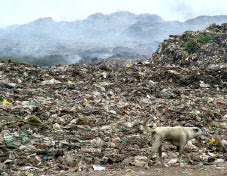
To add fuel to the fire, the corporation started burning the garbage to create more space for more ‘garbage’, thus making the marsh one of the most polluted area in India! In 2006, air quality analysis, done by a U.S.-based Global Community Monitor, rated this dumping yard the most poisonous area in India. With the intervention of local residents and the court, the burning has stopped, but the garbage dumping goes on!
The Expert committee formed by the High court has categorically stated that

“The current dumping site on Pallikaranai marsh does not meet 13 out of 17 criteria set out for selection of a dumping site as per MSW regulation. So, Dumping should not only be immediately stopped but whatever has been dumped so far should also be removed”

But then, who cares?

Chennai generates about 3300 Tons/day of waste. With no proper planning for waste disposal in place, there is no surprise that precious-but-easy resources are over exploited and garbage mounts are being increasingly seen everywhere and the residents are slow-poisoned by the emissions of the burning.

Road Accidents: 

In Chennai, more than 1,000 people die in road accidents every year! This is the highest in the country. Going by this number, we’re witnessing the equivalent of Mumbai 26/11 massacre on Chennai roads, once EVERY 2 MONTHS.

Delhi has more than double the number of vehicles as in Chennai, but still number of accidents and number of casualties is the highest in Chennai. Bangalore had the highest number of accident causalities in 2005, but since then Chennai’s roads have taken over the title of the deadliest roads. (Bangalore suffers from bumper to bumper travel condition for most part of the day, thus eliminating one of the accident-causing factors ‘speed’).

For Indian metro standards, the roads are not too narrow in Chennai, but the lack of enforcement of traffic regulations is taking it’s toll on people’s life and happiness.

 Lack of social infrastructure in Peripheral District Areas:

With beautiful coast on the eastern side, old Industrial activities on Northern side, Chennai is left with only two directions to grow. South and West. And it has. With the government declaring ‘Old Mahabalipuram Road’ (now Rajiv Gandhi Salai) as the ‘IT Corridor’ encouraging Information Technology majors setting up their shops in the area, supplemented by a 6 lane express way, south Chennai has seen a growth unprecedented in Chennai’s history.

With the Bangalore highway declared as ‘Industrial Corridor’ with automobile and electronic companies setting up their shops, West Chennai is fast catching up.

The IT Corridor employs about 130,000 employees with all of India’s top#5 IT Companies running their shops in multiple locations along with many more companies. With the crazy number of hours IT employees spend in their offices, there is no surprise why many hate to waste their precious time in commute. Most of the IT people I had spoken to, expressed their helplessness in having to spend many hours for commute to office. Fixing the traffic bottle neck, though, is important, this is not a solution.

The answer lies in creating better social infrastructure in Peripheral Business Districts. An hour lost in the evenings is a precious hour lost spending with family! The time lost in commute is directly taken from the time people used to spend with their families or friends. This ‘recharging’ time, if missed, will have negative consequences in the long term, on employee’s productivity, morale and so happiness.

There is not even one movie theatre along the IT Corridor or GST Road or Bangalore Highway!
There is not even one shopping mall in any of those 3 important corridors! Though all these three arterial roads and nearby areas are catching up, there is more to be done to ensure that employees start ‘living’ in nearby areas with lesser time spent on commuting.

  Water problem:

With many short-sighted attempts to resolve the water crisis, there has not been even a single holistic permanent solution attempted, implemented or even proposed for Chennai. The humongous proportion of the issue could best be understood by this one example: In April 2010, few of India’s biggest software companies in Chennai had to shut their shops down for a day due to water unavailability. Imagine the loss of productivity for a day of tens of thousands of employees!

The private tanker Lorries, who normally supply water to majority of the companies and residents wanted to show their strength to protest against Government’s insistence on following regulations related to public lakes. The water supply regulated and rationed by Chennai Metro Water is infrequent and insufficient and does not even cover 35% of Chennai Metro area.

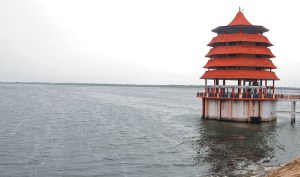
Chennai Metro’s current water requirement is about 2000 MLD (Million Liters per Day). Water supplied by Chennai Metro Water is about 700 MLD. Remaining 1300 MLD is met by tanker Lorries and other means. That’s a whopping 65% deficit! The total reservoir capacity of all major lakes, Chembarambakkam, Poondi, Puzhal and Cholavaram, is only 11 TMCFT; which is just 3 month supply to the metro area!
Corporation is building Desalination plants to purify and supply water from the sea. But even with the newly proposed desalination capacity, it’s only 10% of the demand (200 MLD). The total deficit is 55% (1100 MLD)! On the other hand the economics of desalination leaves much to be desired. Singapore has one of the most cost efficient desalination plants which costs about Rs.25 for 1000 Liters. This is about 8 times costlier than other conventional water purification methods.
Chennai Corporation has hired a consulting company to explore and identify new water resources so that the demand can be met. Let’s hope that they come up with some credible and innovative solution.

The Inconvenient truth of public transportation:

I used to wonder how the public transportation is still very popular in Chennai, despite being one of the toughest experiences, both physically and mentally (A one way trip on 5E will tell you why). Thousands of people are moving into Chennai on a daily basis from many parts of India. Many of those, who need to ‘survive’, are left only with the inconvenient public transportation and one can see the desperation in the crowd.
When the National Urban Transport Policy aims at 70% usage on Public transportation, the state of public transportation in Chennai is anything but inviting.
Most of the buses and trains are overcrowded all the time. When the patronage is there, why not plan and ply more buses and trains?

Source(s): SoviBlog
Posted in Class Notes, earth, Glimpses of Our Cities, Urban Studies | Leave a comment

Future City Plan by Afzal Nadeem Siddiqui

How will our Future Cities Look?

            Imagine a city of the future. Do you see clean streets, flying cars and Robots doing all the works?

            No one really knows what the future holds, but the reality now is that our urban spaces are overcrowded and polluted.

            With the half world’s population currently living in urban areas cities are key to the future of sustainable development.

Background :

            With over half the World’s population living in cities, the 21st century has been described as the urban century. It is estimated that 75% of the global population will be living in cities by 2050.

            The time is ripe, says experts to start designing smarter urban environments both new cities needed to sustain an ever-growing population, and retrofits on the ones that we have lived in centuries.

            So here is the plan for our future sustainable cities.

Infrastructure :

  1. Remote Monitoring and Proper Management for Building: Wireless building energy monitoring systems allow all existing building to be remotely monitorable and controlled to minimize energy use and identify a hot spot for action.
  2. Sky Scrapers: This type of building will help in a great way to maximize land usage. It will help with urban planning and can be utilized to control population density.
  3. Airy Rooms: Our future buildings rooms must be built in such a way that each rooms receives proper sunlight. Proper passage for inlet of fresh air.
  4. Better Security System : Inplantment of hi-tech cameras and modern equipment to prevent theft issues and provide proper security to citizens and for their assets.
  5. Water Harvesting Systems: As we are facing the problem of availability of fresh water. As we know that our cities water table has reached its minimum level. In future, our building should have proper Rain Water harvesting system that will reduce the problem of deficient of water.
  6. Terrace Parts: We can utilize over massive building terrace into the park. It is a great way to maximize the land usage and the people will not need to travel kilometers to visit the park.
  7. Terrace Farming: We can create a small soil field on our building terrace and used that building terrace for sowing vegetables. So the people will have access to fresh vegetable.
  8. Climate Resilience: It should go without saying these days that planning requirement for the built environment includes protection from weather extremes: overheating flooding and storms.

Transportation :

  1. Water cities : In future we can plant accelerators lane, which be connected to the main streams of city and spread all over the city, this initiative will make travelling easy in the city and people will less dependent on vehicle.
  2. Air Taxies: In future, air cars can be launch to reduce traffic burden. The most important advantage will be that it will reduce time taken in travelling. Passenger can travel a long distance in a short period of time.
  3. Sustainable Charging Station: This will encourage people to buy electric cars and bikes. People will use an electric vehicle instead of using fuel vehicle.


Pollution :

  1. Verticle Gardens: For controlling pollution we can plant ventricle garden in our cities on flavor, building, terrace.

* It will reduce urban heat island effect and smog.

* Cleans outside air of pollutant and dust and offset the carbon footprint of people and fuel emission.

* Acts as a soundproofing barrier.

* Increase biodiversity by creating habitat for bird and insects.

* Can be used to grow food such as small fruit, vegetable and herbs in urban setting, creating sustainable and local control of food sources.

  1. Less dependency on fuel: Modern vehicle should be made which runs on electricity, or solar energy et5c. which will leads to decrease used of fuel. Ultimately which will decrease pollutions.

Amusement :

  1. Air Restaurant: For fantastic amusement, air Restaurant can be opened so that the public can enjoy and have a different experience.
  2. Modern Multiplex: Modern types of multiplex can be opened in the future where the movie is shown in 7-D progress the public can delight a unique experience.
  3. The robot as a Maid: In future, the technology would be so advance that will make every work very easy. In future lame work of people. People will buy Robot and keep them on the place of Maid.

Energy :

  1. Local Energy : Community energy and district heating schemes combined heat and power, heat pumps (whether ground or water source) should all be encouraged.
  2. Anaerobic digestion : More power can generate from anaerobic digestion of organic and green waste to produce natural gas that may be injected into the mains used in local network combined heat and power plant or to power transport.
  3. Solar Energy : More dependency on solar energy which will help in following ways:

It will reduce electricity bills

Low maintenance cost

It can be used for diverse purposes

It is a Renewable Energy.

Health Facilities :

  1. Better Health Facilities: In future cities, the health facilities would be par different now. We will have modern machinery which will help to cure dangerous disease.
  2. Air Ambulance on lost fare: In our future city, facilities of air ambulance would be available on important point of cities at very low fare.
  3. Maternal Mortality rate in India’s was 167 (which is quite high) in 2016.

Infant Mortality rate of India’s was 37 per 1000 live birth in 2015 which is too high.

In future we can decrease these data by using Virtual Communication on like Hologram technique.

            By this we can provide better doctor management to pregnant women for delivery.

Communication :

  1. Devices that can translate languages in real time are allowing people from different countries and culture to communicate without the need for an Interpreter.
  2. In the distant future, we may be able to communicate by sending our thought through a network directly into someone else’s brain.
  3. 8-D communication. In the future, the communication pattern will fully change, people will carry a modern phone, which would have a Hologram technique. And communication would as realistic as face to face.

Other Assignments:

Ashna’s

Laskar’s

Shafiq’s

Syed Aiyazuddin’s

Wajeeha’s

Toiba’s

Hilal’s

Heena’s

Farhin’s

Assma’s

Sufia’s

Sharda’s

Noman’s

Mandal’s

Sadiq’s

Maheen’s

Juvairiya’s

Sabia’s

Posted in Class Assignments M.Sc. Geography 2017-19 AMU, Aligarh, earth, urban morphology, Urban Studies | 19 Comments