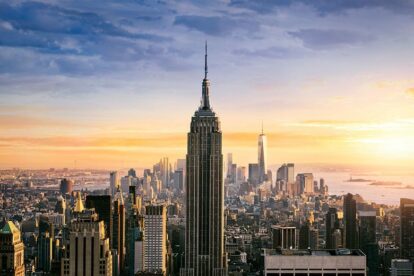
Alpha, Beta and Gamma Cities

Alpha++ city New York

Every few years, important global economic cities are ranked by the Globalization and World Rankings Research Institute. It is considered the leading institute ranking the world’s cities.

Cities are categorized as Alpha, Beta or Gamma cities based on their connectivity to the rest of the world. Many factors are taken into account in this analysis, including cultural and political influence, although economic factors are the most important consideration. Alpha cities are the primary nodes in the global economic network. Beta and Gamma cities are smaller global cities that link economic regions into the global network.

The cultural and economic factors of “our” cities are important to us, of course. While we do have guides dedicated to larger cities like London and New York, we take pride in the fact that we write about lots of less-visited cities as well, like those you’ll see lower down this list. We believe that many popular cities are suffering from overtourism, so we encourage people to get off the beaten path and discover some less-known hidden gems.

Here’s a list with the latest data from 2018 (GAWC hasn’t done a study in 2020 yet). Spotted by Locals cities (many of which are in one of the categories) are linked, if you want to check our latest tips for those cities.

Alpha ++

London, New York

Alpha +

Beijing, Dubai, Hong Kong, Paris, Shanghai, Singapore, Sydney, Tokyo

Alpha

Bangkok, Brussels, Buenos Aires, Chicago, Frankfurt, Guangzhou, Istanbul, Jakarta, Kuala Lumpur, Los Angeles, Madrid, Melbourne, Mexico City, Miami, Milan, Moscow, Mumbai, Sao Paulo, Seoul, Taipei, Toronto, Warsaw, Zurich

Alpha –

Amsterdam, Barcelona, Bogota, Budapest, Dublin, Houston, Johannesburg, Lisbon, Luxembourg City, Manila, Montreal, Munich, New Delhi, Prague, Riyadh, Rome, San Francisco, Santiago, Shenzhen, Stockholm, Vienna, Washington D.C.

Beta +

Athens, Atlanta, Auckland, Bangalore, Boston, Bucharest, Cairo, Chengdu, Copenhagen, Dallas, Doha, Düsseldorf, Hamburg, Hangzhou, Hanoi, Ho Chi Minh City, Lima, Perth, Tel Aviv, Vancouver

Beta

Abu Dhabi, Beirut, Berlin, Brisbane, Calgary, Cape Town, Caracas, Casablanca, Chennai, Denver, Karachi, Kiev, Kuwait City, Lagos, Manama, Minneapolis, Montevideo, Nairobi, Nanjing, Oslo, Philadelphia, Rio de Janeiro, Sofia, Tianjin, Wuhan, Zagreb

Beta –

Almaty, Antwerp, Belgrade, Birmingham, Bratislava, Changsha, Chongqing, Dalian, Dhaka, Edinburgh, Geneva, George Town, Helsinki, Jeddah, Jinan, Kampala, Lyon, Manchester, Monterrey, Nicosia, Panama City, Port Louis, Qingdao, Quito, San José, San Juan, San Salvador, Seattle, Shenyang, Stuttgart, Suzhou, Tunis, Valencia, Xiamen

Gamma +

Accra, Adelaide, Cleveland, Colombo, Dar es Salaam, Detroit, Glasgow, Guatemala City, Guayaquil, Harare, Hyderabad, Lahore, Muscat, Osaka, Pune, Riga, Rotterdam, Xi’an, Zhengzhou

Gamma

Ahmedabad, Algiers, Amman, Ankara, Asunción, Austin, Baku, Baltimore, Belfast, Bilbao, Bristol, Charlotte, Guadalajara, Hefei, Islamabad, Kolkata, Kunming, La Paz, Ljubljana, Luanda, Lusaka, Phoenix, Porto, Saint Petersburg, San Diego, San Jose, Santo Domingo, St. Louis, Taiyuan, Tallinn, Tampa, Tbilisi, Tegucigalpa, Turin, Vilnius, Wellington

Gamma –

Belo Horizonte, Cologne, Curitiba, Durban, Fuzhou, Johor Bahru, Maputo, Medellín, Milwaukee, Minsk, Nantes, Nashville, Orlando, Ottawa, Penang, Phnom Penh, Poznan, Sacramento, San Antonio, Tirana, Wroclaw, Yangon

The GAWC institute also created a very cool graphic of interconnectivity between these world cities from 2010 (PDF, large!).

Source:

Spotted by Locals

Posted in earth | Leave a comment

Is it Death of Nation State and Reemergence of City State?

If you’d been born 1,500 years ago in southern Europe, you’d have been convinced that the Roman empire would last forever. It had, after all, been around for 1,000 years. And yet, following a period of economic and military decline, it fell apart. By 476 CE it was gone. To the people living under the mighty empire, these events must have been unthinkable. Just as they must have been for those living through the collapse of the Pharaoh’s rule or Christendom or the Ancien Régime.

We are just as deluded that our model of living in ‘countries’ is inevitable and eternal. Yes, there are dictatorships and democracies, but the whole world is made up of nation-states. This means a blend of ‘nation’ (people with common attributes and characteristics) and ‘state’ (an organised political system with sovereignty over a defined space, with borders agreed by other nation-states). Try to imagine a world without countries – you can’t. Our sense of who we are, our loyalties, our rights and obligations, are bound up in them.

Cities are strangely unique organizational units. Over time, a city organically shifts its boundaries to reflect its people, not the other way around. Cities are about choices. Choices lead to possibilities. These qualities gives cities the Resilience they need.

An increasing proportion of the world’s population is living in megacities. The United Nations predicts that by 2030 there will be 41 megacity clusters containing two-thirds of the world’s population.

In a remarkable trend these Megacities, which are the economic powerhouses of the countries in which they exist, are becoming political powerhouses too. They’ve been organising into interdependent networks, such as the Global Parliament of Mayors, the C40 global network of cities committed to acting on climate change, and the Rockefeller Foundation’s 100 Resilient Cities. These networks have accumulated enough organisational experience and influence to make a significant mark in 2018 in international arenas such as COP24, the UN Climate Change Conference to be held in Poland in December 2018.

The growing autonomy and influence of cities has risen due to several factors. One is the global trend towards devolution. In England and Wales, for instance, there were no directly elected mayors at the start of the millennium. Now there are 23 and their electoral contests are attracting an increasing number of high-profile candidates.

There is a growing recognition that nation-states are – compared with cities – unfit for modern challenges. They have failed to deal effectively with issues arising from migration, climate change, wealth inequality and terrorism. This failure partly explains the declining faith in traditional political parties in many countries and in the value of democratic government itself. But it is also behind the rise of cities, which are much more effective at pragmatic problem-solving on issues ranging from flood management to dealing with increasing numbers of refugees.

It’s worth mentioning that nation-states are a new historical invention and have only been the dominant form of political organisation for the past two centuries. They are an extension of city states. Cities, in contrast, are the greatest and most enduring social technology ever invented by humankind. That is why cities lasted thousands of years, while empires and nations have risen and fallen around them. They risen and fell but lasted, nevertheless.

It is true that nations will not disappear quickly or completely, but we may remember 2018 as the year of the return of the Renaissance city-state. Get ready for bold initiatives from cities and their mayors in areas such as global warming, while national political parties bicker with each other and intergovernmental conferences remain locked in stalemate. The ancient ideal of the polis is back.

Source(s):

https://aeon.co/essays/the-end-of-a-world-of-nation-states-may-be-upon-us

https://www.pmi.org/learning/library/project-minded-vision-reemergence-city-4487

https://www.thnk.org/blog/the-return-of-the-city-state-in-2050-this-time-with-significant-upgrades/

Link(s):

Resilient City : A Solution to Problem of Climate Change

Posted in earth | Leave a comment

Making a City : Politics, Power and Democracy

Urbanism is a way of life for today’s world and we largely have to live with and in cities, if not today then tomorrow. There is not a scientifically or technically correct or incorrect way of making a city. Defining what makes a good city is more a matter of heart and soul than of engineering. It is an art of knitting urban fabric. Yet, despite the subjective nature of urbanism, a government must adopt a vision and promote it, make decisions, build, define rules and enforce them – it must not only envision but also enact the city. If a good city is society’s collective work of art, then its government acts as the piece’s conductor and often its composer as well.

It is not possible to leave it up to private entrepreneurs whether there should be pavements or how wide they should be, how tall buildings should be, whether there should be parks and, if yes, where or how big they should be, and whether there should be a mixture of residential and commercial buildings. The fact that government intervention is essential, together with the reality that there are multiple possible designs for a city. City design tells us about the past and future of the city.

In actual urban environments, Adam Smith’s notion that individuals seeking their own benefit brings about the best for society as a whole is not always valid

There are at least two types of equality we can realistically strive for in our time: the first is equality in quality of life,The second kind of equality – which is still within our reach – is to make truly effective the principle that the public good must prevail over private interest. The first article in every constitution stipulates that all citizens are equal before the law. Consequently, some state explicitly that the public good must prevail over private interest. In cities the interests of a few individuals often conflict with those of the community as a whole. It is the role of politics and governmental institutions to manage those conflicts and find ways of promoting inclusion and social justice.

Our century is Urban Century. According to the United Nations, there will be nearly 2.8 billion new inhabitants in cities in developing countries over the next 40 years. It is in cities in developing countries like India that many of the core urban and environmental challenges are concentrated in this century. And issues of equality and inclusion are particularly relevant there, as their societies are highly unequal. Inequality and exclusion can be even more painful than poverty, but the way we create and organise cities may be a powerful instrument in constructing equality and social justice.

Public space dedicated to pedestrians can be a means to a more inclusive society. It ought to be democratic.During work time the highest executive and the lowest-ranking employee may be equally satisfied or dissatisfied; in public space they both meet colleagues and do their jobs. It is only during leisure time that an abyss separates their quality of life. The upper-income executive goes home to a large house, probably with a garden, has access to sports clubs, country houses, restaurants, expensive cultural activities and trips abroad. The low-income person and his or her children live in a very small dwelling and the only alternative to television for spending their leisure time is public space accessible for pedestrians.

Access to green spaces may be the most formidable barrier to inclusion. We also have to decide whether they are really good for the city.What the poor may or may not have in future is access to green spaces and sports facilities – unless governments act today. B

A protected bicycle lane in a city in a developing country is a powerful symbol, showing that a citizen on a US$ 30 bicycle is as important as one in a US$ 30,000 car. A protected bicycle lane along every street is not a cute architectural fixture, but a basic democratic right – unless one believes that only those with access to a car have a right to safe mobility. Quality pavements and bicycle lanes show respect for human dignity, regardless of the level of economic development of a society. Many citizens in economically advanced societies cannot drive, because they are too young or too old, or because they have some kind of disability.

A democratic city must be designed for the most vulnerable of its members. There is a fight for the scarce road space between cars and public transport, pedestrians and cyclists; and there is a battle for public funds between car owners demanding more road infrastructure and lower-income citizens demanding schools, sewage systems, housing, parks and other basic infrastructures. The minority of car owners usually command the most political clout and thus direct public investment to road infrastructure aimed at reducing peak-hour traffic jams, leaving the needs of the poor unattended. Both urban and rural roads ignore or take poor care of pedestrians’ and cyclists’ infrastructure needs, especially in developing countries.

In a City striving to be Democratic, Resources should be concentrated on public transport. It is the amount of infrastructure available for cars that determines the level of car use.There is no ideal mix. Granularity of the city is a must in the future city design.


In most advanced cities today transport policy strive to finding ways of achieving lower levels of car use and a higher share for public transport, cycling and walking. In cities in developing countries ‘transport policy’ still largely means the opposite: how to facilitate more car use. In societies in developing countries, where less than 50 per cent of households do not have a car, having one is held as a visible certificate of belonging to society’s higher echelons. Upper-income people in less-developed and highly unequal societies tend to see using public transport alongside lower-income citizens as an affront to their position in society. Although they gladly use public transport when they travel to more advanced countries, they rarely go near it in their own.It is imperative here that ‘Last Mile Connectivity’ has a major role play in the decision.

This partly because a city that makes too much room for fast- moving cars becomes less humane and loses quality of life, but also because road-infrastructure investments primarily benefiting higher-income citizens, redirect public funds away from schools, parks, housing and many other needs. The most vulnerable members of society, such as the poor, the elderly, children and disabled citizens, are not normally conscious of their interests and rights and do not have much political influence. A democratic government must act on their behalf and confront powerful minorities on their behalf. It must convince even upper-income groups that car-use restriction benefits them as well in the longer term. But in the end it must wield its decision-making power in order to implement its vision regardless of political costs.

A healthy, large city will have both low- and high-income groups. Blunt extraction of funds from wealthier municipalities in order to transfer them to lower-income ones does not solve the problem: it has been found that those who spend funds not generated by themselves tend to do so inefficiently. To make matters worse, poorer citizens with lower levels of education tend to be easy prey to demagogues and corrupt politicians.

While there may be historical reasons for the existence of several municipalities within one city, once they are part of a large, modern metropolitan area there is little justification for them. Most citizens cross municipal borders unaware of their boundaries, except of course when the absurdity of such political subdivision is so extreme that public transport has to turn back at the border of the municipality, as happens in São Paulo. Long-term planning also becomes complicated when such subdivisions exist. Even the construction of a critical road artery or rail line becomes problematic. When different political parties control different municipalities, more problems arise, as has been the case in Mexico City. Bureaucratic expenses of many small municipalities are higher than those of one large one, and often the level of professional competence is lower within the smaller municipalities.

For these reasons Canada has merged nearly 1,000 municipalities over the last decade, achieving more social justice, lower bureaucratic expenses and better long-term planning. In Johannesburg several municipalities were also merged after the end of the apartheid regime, in order to achieve greater equity. Higher-income citizens tend to oppose these mergers, as some of their funds will subsequently have to be redistributed to lower-income areas. Many small-town politicians also oppose them as they may end up in an unelectable position, or simply because they prefer to be, as the saying goes, the head of a mouse rather than the tail of a lion.

Innovations are always difficult to implement. The status quo is maintained through a majority support, while ideas for change start with only a minority behind them. Government must act on behalf of the majority and also of the most vulnerable members of society, but it must also act on behalf of future generations. It is not possible for governments to provide all citizens with individual goods, yet it is possible to provide quality public goods and services: schools, libraries, transport and green space. Moreover, once citizens achieve a certain income level, it is easier to increase well-being through public goods than through private goods: through a concert hall, a green area, a waterfront.

Investments in flyovers to minimise traffic jams for upper-income groups seem normal. The poor in the same city might lack schools or basic sanitation and sometimes even clean water, while private waterfronts, pavement-less streets and urban roads abound. If we were truly rigorous in applying the prevalence of the public good, cities in developing countries would ban private car use during peak hours. Only a minority would be affected. Most people’s travel would take less time and there would be less air pollution; less road building and maintenance would free up public funds for better provisions for the needs of lower-income majorities.

The way cities are built determines to a large degree citizens’ quality of life for hundreds of years into the future.

Source(s) and Link(s):

Urban Age

Urban Form

Posted in earth | Leave a comment

What is a chromatogram?

Defining a Chromatogram.

A chromatogram is a graphic interpretation of information in relevance to time. The output is in the form of a chromatogram that we can get through the chromatography machine’s effective running. The results can be displayed on the hardcopy or even the electronic file. The type of output one hopes to get relies on the statistics and the information that is fed. Therefore, there can be many variations to the information one can get through the chromatogram. Due to their usefulness, these instruments are now functional in all sorts of laboratories to measure data in real-time. Some of the most common examples that can be given a GC run of a sample can be:

  • The identity of the sample
  • The physical information of the sample, such as its weight or concentration
  • A chart shows relevant peaks that form and the baseline; this baseline is also known as a trace.
  • The tabular display of the results can incorporate the raw data as well as the new information.

Though now automation is widely used to create chromatograms for various information purposes, this was not a very easy task to do in the past. It took a lot of time and effort to display information in this form.

How to read a chromatogram?

Through innovative and developed techniques, chromatogram reading has become a lot easier than it was. It is still essential to understand before what a chromatogram is before one can begin to read it. Some essential interpretation techniques even need interpretation. It is vital to check if the trace is perfect before any further assessment is done. If there is something wrong with it, moving forward can be all in vain. The checks that can be done on the trace are:

  • Checking if the baseline is all right means looking to see that it’s mainly flat and not too noisy
  • Checking if the formations of the peaks are symmetrical and sharp. It is also essential to check if they are on-scale as well.
  • Checking if the number of peaks is all right, and none of them are missing or faulty.
  • Check if all the retention times’ calculations correct and adequately identify the reference ones’ standard peaks.

Even though the data is easily in the display, it is the analyst’s responsibility to view this information, make a proper analysis of any errors that may be present, and then notify and amend those errors.

How was a chromatogram read before technological advancement?

Moreover, before implementing data integration in all forms of measuring tools became the standard procedure, the tedious method of using graph paper and scissors were widely used. A chart recording device was in link to the detection device to record the trace in those days. It was all done with the help of an ink pen. Now, to decipher the details from the path, the following techniques were commonly in practice:

The Counting squares technique.

In this process, a drawing with a pen and ruler helps make the best peak and the baseline. The analyst, after this procedure, would next count all the squares in every triangle. The sum was essential to find the sensor’s attenuation, and then calculations for the conformation of the sample were done.

The cutting and weighing technique

Now for the peaks that were in record, baselines would be made. Then the analyst would cut them out and weigh them together. The peak area being relational to the heaviness gave the paper’s wideness and told if the moisture content is uniform.

Additionally, actions like photocopying and zooming the trace were usually in use to surge accuracy.

But, in reality, these techniques were not as simple as written here, for they would have a lot of probability of errors. There were a lot of mistakes involved when there was an overlapping of peaks and diverse sampling. The likelihood of errors in these errors today is next to zero.

Conclusion

It is a very efficient instrument that is very popular today for different calculations related to the content’s reference with time. You can quickly get the output on an electronic file or even a piece of paper. The instrument’s efficiency has become profound with technology innovation when calculations would take days to complete in the older times, and now they can be done in mere seconds.  Now you know everything about what a chromatogram is. You will undoubtedly be more comfortable next time you will be using it.

Posted in earth | Leave a comment