

Total Visitors
- 5,455,379
Search Inside
My You Tube Channel
-
Visitors on The Site

-
Join 783 other subscribers
Fill This Form to Contact Me
Top Posts & Pages
- Waste to Energy in India
- About Me and This Site
- Gond Tribe of India
- Discontinuities Inside the Earth
- Migration Theories : Lee’s Push Pull Theory
- Levant: The Term, The Region and Cities
- Santhal:Largest Tribal Community in India
- Geography Study Material for NTA-NET & IAS Exams
- Physical Divisions of North America: An Overview
- The Structure of the Ocean Floor(Ocean Topography)
Being Social
Pages
- Article Submission
- Basics of Geography
- Book Reviews
- Disaster Management
- Field Training and Tour
- Geography Notes
- Geography of Tourism
- Geography Study Material for NTA-NET & IAS Exams
- Geomorphology
- Geomorphology Class Black Board
- Hindi Posts
- Human Geography
- My Projects
- New UGC NET Syllabus-Geography
- Online Class
- Posts on Geography Practicals and Statistical Techniques
- Regional Studies
- Settlement Geography
- Social Geography
- Urban Agro Systems
- Urban Systems
- Useful Links
- Water Resources
- About Me and This Site
Blogroll
Digital Blackboards
My Pages
Other Sites I Am Involved With
Recommended Links
Useful Links
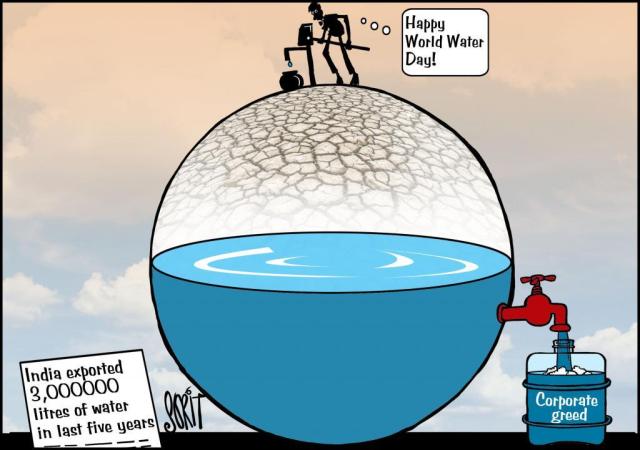
World Water Day and Reality
Posted in earth
Leave a comment
Urban Transformation : Ways of Sustainability for Cities Across the World
Develop a National Economic Development Strategy — and place Cities at its Heart.
Nothing impedes progress more than a disjointed approach. To spur action and investments across sectors and ministries, a shared national vision is crucial.As economic engines that produce 80% of the world’s GDP and are home to 56% of the world’s population, cities will need to be at the core of national net-zero strategies.
Pursue national policies to support cities that are compact, connected, clean and resilient.
Urban transformation toward more compact, connected, clean and resilient cities can support a wide range of development priorities, including enhanced economic competitiveness, improved public health, higher living standards and reduced pollution. It is needed that governments introduce national policies that prevent urban sprawl, which creates a barrier for provision for municipal services and converts urban systems into slums.
India is one country that has pursued national policies to support urban transformation. Its National Mission for Sustainable Habitat aids cities in tackling climate risk and fostering clean, inclusive and sustainable development. Meanwhile its new Climate Smart Cities Assessment Framework uses 28 indicators to assess cities’ vulnerabilities and potential for action on energy and green buildings, urban planning, green spaces and biodiversity, mobility, air quality, water and waste management. Nearly 100 cities across the country now use the tool’s knowledge-sharing platform to learn from each other’s experiences and implement best practices to create a more compact, connected and clean city.
Fund and Finance Green urban Infrastructure.
Funding sustainable and resilient urban infrastructure such as public transport and green buildings offers the potential for enormous economic returns to national governments as a result of energy and material savings.
Support of Local Climate Action in Cities through Governance and fiscal reforms that enable local government leadership and facilitate collaboration.
In order to create an environment that empowers local leaders and mayors to take even greater action on climate, national governments can push through policy and fiscal reforms to secure investment and create metropolitan authorities to foster collaboration and an integrated approach.
For instance, in South Africa, reforming the Electricity Regulation Act should soon enable municipalities to procure their own clean energy, thereby improving access to renewables. Some municipalities such as eThekwini, which encompasses the city of Durban, now plan to build their own renewable generation capacity mainly from wind and solar, reducing their reliance on the central grid system.
Prioritisation of measures to build Resilience and Expand Economic Opportunities for the Poor.
National governments should not be fearful that there will be job losses from the transition to a low-carbon economy. Decarbonizing cities has the potential to create millions of new jobs and could catalyze a just transition. Recent analysis from Vivid Economics for the Coalition for Urban Transitions found that about 31 million new jobs could be created in 2030 in China, India, Indonesia, Brazil, Mexico and South Africa by adopting low-carbon measures modelled in the report versus the business-as-usual alternative.
Work with the private sector to help finance urban transformation.
In order to meet the financing gap for sustainable urban infrastructure, we’ll need a significant increase in investment both in the public and private sectors. National governments can promote policies that stimulate and de-risk private sector investment and encourage public-private partnerships.
Source(s):
Posted in earth
Leave a comment
Educational Philosophy of Plato
Of all the great educators who shaped the concept of education into what it is today, Plato’s name deserves special mention. Apart from being a philosopher, his fame also rests on being a mathematician and writer of philosophical dialogues. He was the most famous student of Socrates and the teacher of Aristotle.
Plato has contributed greatly to develop the fundamental principles of education. The first institution of higher learning in the entire Western world was founded by Plato. The name of this school was the Academy. Today we use the word ‘academics’ to broadly refer to college and university courses or studies. It might interest you to know that the word ‘academics’ was originated from the name of Plato’s school.
To put it simply, the Academy was a university for higher learning that included astronomy, physical science, philosophy and mathematics. In this age of Transnational Universities , Plato’s Academy is still relevant.In addition to being the founder of the Academy, Plato delivered lectures there. Historians are of the opinion that it made use of a method of teaching which combined lectures, seminars and dialogues. Plato’s ideas on education appear in his other well-known work named Laws. It was his final work which he was still working on at the time of his death……
read more here at Source
Posted in earth
Leave a comment


 Rashid's Blog: A Place for Inquisitive Souls
