


Total Visitors
- 5,507,485
Search Inside
My You Tube Channel
-
Visitors on The Site

-
Join 6,689 other subscribers
Fill This Form to Contact Me
Top Posts & Pages
- About Me and This Site
- Levant: The Term, The Region and Cities
- Discontinuities Inside the Earth
- Migration Theories : Lee’s Push Pull Theory
- Waste to Energy in India
- Geography Notes
- Settlement Geography
- Scales in Geography: An Overview and Simple Method of Constructing Scales
- भारत के भौतिक विभाग
- Gond Tribe of India
Being Social
Pages
- Article Submission
- Basics of Geography
- Book Reviews
- Disaster Management
- Field Training and Tour
- Geography Notes
- Geography of Tourism
- Geography Study Material for NTA-NET & IAS Exams
- Geomorphology
- Geomorphology Class Black Board
- Hindi Posts
- Human Geography
- My Projects
- New UGC NET Syllabus-Geography
- Online Class
- Posts on Geography Practicals and Statistical Techniques
- Regional Studies
- Settlement Geography
- Social Geography
- Urban Agro Systems
- Urban Systems
- Useful Links
- Water Resources
- About Me and This Site
Blogroll
Digital Blackboards
My Pages
Other Sites I Am Involved With
Recommended Links
Useful Links
Humanity & Melting History
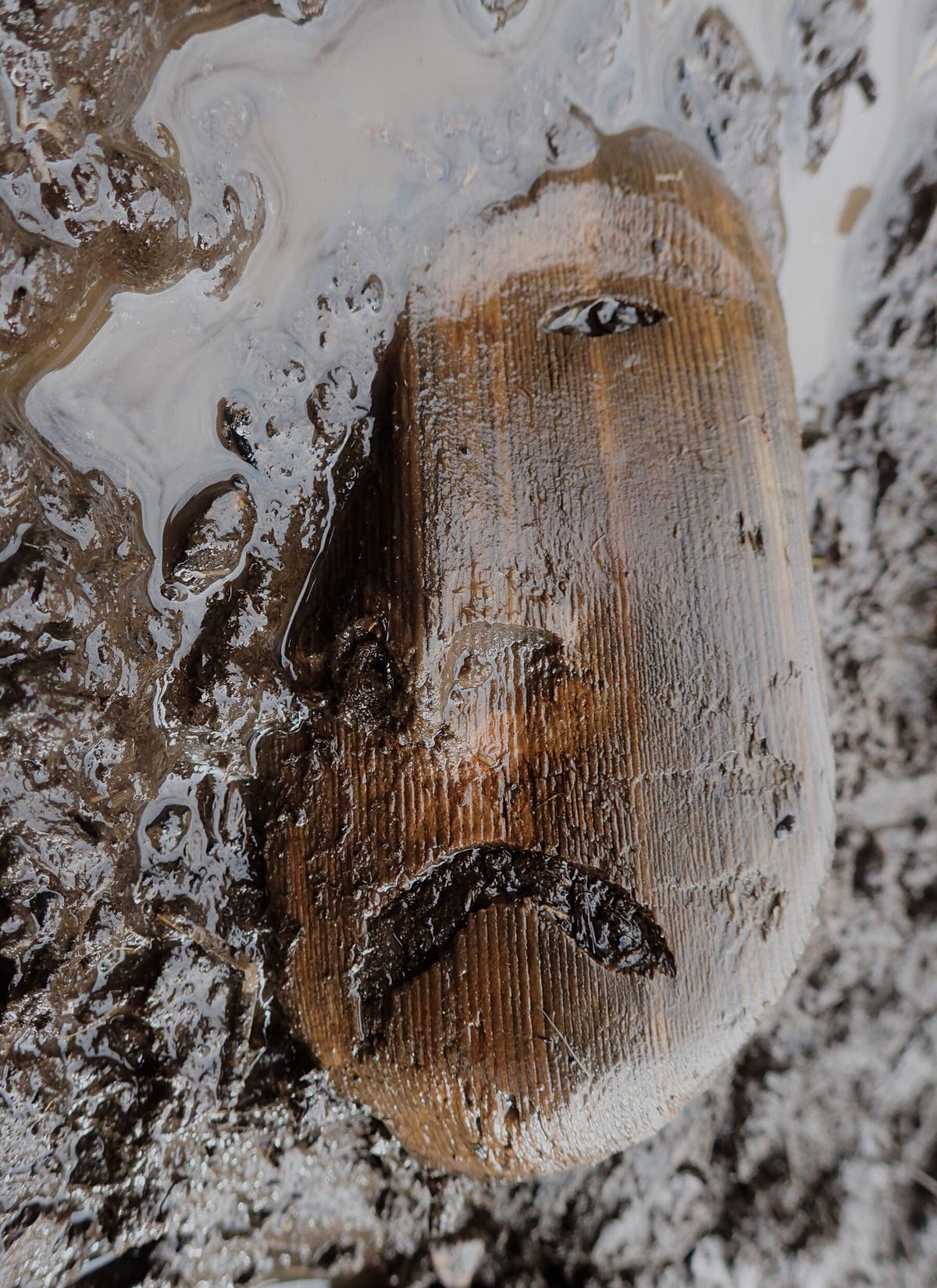 A mask belonging to the Yup’ik people of Alaska emerging from the permafrost. It is one of more than 100,000 artifacts retrieved from Nunalleq, the site of a village that was attacked by rivals 350 years ago. University of Aberdeen
When I posted about this book yesterday I had the long arc of history on my mind all day, and now this:
As Earth Warms, Human History Is Melting Away
Climate change is revealing long-frozen artifacts and animals to archaeologists. But the window for study is slender and shrinking.
The Langfonne ice patch in Norway. Glacier Archaeology Program, Innlandet County Council
For the past few centuries, the Yup’ik peoples of Alaska have told gruesome tales of a massacre that occurred during the Bow and Arrow War Days, a series of long and often brutal battles across the Bering Sea coast and the Yukon. According to one account, the carnage started…
View original post 317 more words
Posted in earth
Leave a comment
Scotland’s Awesome Accomplishments
 Scotland’s new strategy calls for a totally carbon-free electricity sector by 2032. Photograph: Murdo Macleod for the Guardian
Thanks to the Guardian for their excellent environmental coverage:
Scotland sets ambitious goal of 66% emissions cut within 15 years
Holyrood ministers aim higher after hitting target of 42% cut by 2020 six years early, but say Brexit poses challenge
View original post 251 more words
Posted in earth
Leave a comment
Overcrowding and its Impact in Cities: Some Examples
The world is experiencing rapid population growth and urbanization. Advances in medical science have allowed for increased life expectancy as well as decreased infant mortality, while birth rates have largely remained unchanged. This combination of circumstances has led to great growth; between 1999 and 2011, the population increased by nearly one billion people.
The population increase has led to rapid urbanization. People migrate to cities with the promise of economic or educational opportunity, technological advancement, and access to health care. It is estimated that by 2050, 66 percent of the world’s population will live in urban areas. It is now a way of life.
This urbanization of cities that are neither prepared nor equipped to deal with overcrowding places strain on both natural and manmade resources alike. The following is a list of five cities suffering from both poverty and overcrowding. It is to be noted here that urban poverty is fundamentally different from rural poverty.
Five Major Cities Dealing With Poverty and Overcrowding
- Mumbai, India: With a population density of 171.9 people per square mile, India is notorious for overcrowding. Mumbai is an example of the phenomenon.Mumbai serves as India’s commercial hub and is home to the Bollywood industry, making it prone to migration. The population of Mumbai has doubled in 25 years, leading to many slum neighborhoods like Dharavi .I n fact, half of the population of Mumbai lives in overcrowded, unsanitary slums that comprise only eight percent of the city’s geographic area.
- Dhaka, Bangladesh: Being named the most densely populated city in the world in 2015, Dhaka suffers from overcrowding and poverty alike. It has also been named to lists of least livable cities and fastest growing cities.Its population is over 18 million, with a density of 114,300 people per square mile. Roughly one-third of Dhaka’s residents live in poverty, with two million inhabiting slums or without any form of shelter.
- Lagos, Nigeria: Lagos is Africa’s fastest growing city. In 2017, the population was 21 million; the U.N. predicts that this number will rise to over 24 million by 2030.Situated between the Atlantic Ocean and a lagoon, Lagos is Nigeria’s commercial capital. Yet, 300,000 people live in slum neighborhoods and make a living by fishing out of hand-built canoes. One-fifth of the city’s residents live in poverty.The slum houses are fashioned from scrap-metal and elevated on stilts to protect against flooding. There is little access to clean water, electricity or quality education. The majority of slums are built along the coast, causing friction with the wealthy as well as the government, which has evicted many communities on faulty logic in order to seize the land.
- Manila, Philippines: Manila has a population of 1.7 million and a land area of less than 10 square miles, leading to a high population density of over 170,000 people per square mile. Manila serves as the Philippines capital and home of its banking and commerce industries.In Manila, 600,000 people live in slum districts, which are ridden with disease and malnutrition. Many kids do not attend school, as parents are often forced to choose between feeding the family or sending the kids to school.
- Ulaanbaatar, Mongolia: Ulaanbaatar boasts the highest population density on this list, with over 760,000 people per square mile. The influx in population resulted in unplanned neighborhoods known as “ger” areas, which house 60 percent of Ulaanbaatar’s population but are vulnerable to natural disasters and lack water and sanitation sources as well as electricity.A number of expensive apartment buildings mark the city’s skyline, yet many of these buildings remain empty due to the high cost of living. The government intervention has tended to benefit the upper-income subgroups, rather than those living in poverty.
Source: Borgen Project
Posted in earth
Leave a comment


 Rashid's Blog: A Place for Inquisitive Souls