 Dear Readers
We are going to Kashmir – on Vacation and sightseeing for ten days.I will write about our experiences and will share photographs with you if possible. For these updates you can also check Here and Here.
Bye
Rashid

Dear Readers
We are going to Kashmir – on Vacation and sightseeing for ten days.I will write about our experiences and will share photographs with you if possible. For these updates you can also check Here and Here.
Bye
Rashid
 We thought, until recently, that the Moon was just about the driest place in the solar system. Then reports of moonwater started “pouring” in – starting with estimates of scant amounts on the lunar surface, then gallons in a single crater, and now 600 million metric tons distributed among 40 craters near the lunar north pole.A radar probe on India’s Chandrayaan-1, found 40 craters each containing water ice at least 2 meters deep.NASA released details about how much water ice has been detected in the north lunar pole.
In the image ,A Mini-SAR radar map of the lunar north pole Craters circled in green are believed to contain significant deposits of frozen water
read more here
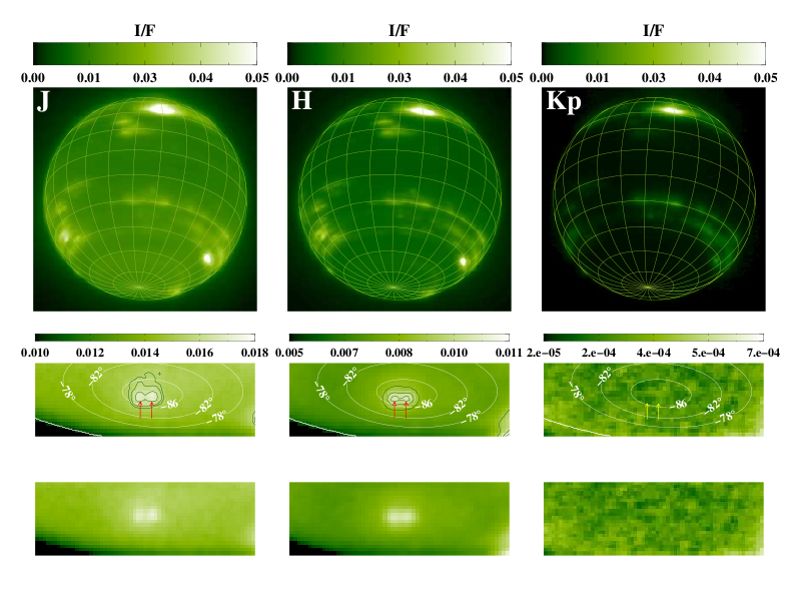 Scientists peering over old and recent images of the gas giant Neptune, the eight planet from the Sun, were recently amazed to discover an eerily familiar pattern in the way clouds at the planet’s south pole were behaving. Their analysis revealed that the region was at the moment battered by what could best be described as a hurricane, as clouds at the location appeared to be trapped in a massive vortex. The process is very likely to be going on for a few years, as even the images delivered by the Voyager spacecraft showed indications of them, Technology Review reports.
 An Italian scientist team announced the discovery of Wembo-Nyama crater, a gigantic impact crater in Congo. The new crater, which measures between 36 and 46 kilometres in diameter, is claimed by some scientists to be one of the largest craters discovered in the past ten years or so.
Italian researchers who have had a chance to look at the feature proposed a number of causes for its creation, but eventually they themselves came to the conclusions that nothing but a space impact – most likely an asteroid or a comet – could have formed this hole.
The Unia River flows around the ring structure, underlining its round shape.
Some of the largest craters are:
– Vredefort: S Africa, 300km-wide, 2 billion years old
– Sudbury: Canada, 250km-wide, 1.8 billion years old
–Chicxulub: Mexico, 170km-wide, 65 million years old (buried under Mexico’s Yucatan Peninsula)
– Popigai: Russia, 100km-wide, 35.7 million years old
– Manicouagan: Canada, 100km-wide, 214 million years old
Sources:


 Rashid's Blog: A Place for Inquisitive Souls
