
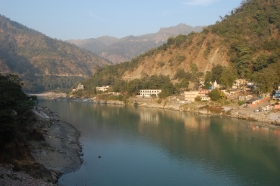
 The soils and sediments at the bottom of rivers are rich in organic material. They can store carbon for thousands of years according to a study from the Woods Hole Oceanographic Institution (WHOI). Despite often high rates of erosion and sediment transport, the riverbed can hold organic carbon for 500 to 17,000 years. The researchers focused their studies on the Ganges-Brahmaputra basin in India, which feeds off waters from the Himalaya Mountains. The fact that riverbeds store much carbon is a cause for concern. In a changing climate, the soils could be destabilized, releasing the carbon back to the atmosphere.The WHOI researchers used radiocarbon dating to determine the age of carbon stored in the riverbed. Upstream in the Ganges watershed, carbon was stored up to 17,000 years. However, downstream in the floodplain, the longest residence times were only 3,500 years.
read more here


Pingback: Long-Term Carbon Storage in Ganges Basin May Portend Global Warming Worsening | Climate of Our Future
Pingback: The 99 Footsteps | Moshebarabraham2013's Blog