
Total Visitors
- 5,610,544
Search Inside
My You Tube Channel
-
Visitors on The Site

-
Join 6,676 other subscribers
Fill This Form to Contact Me
Top Posts & Pages
- Waste to Energy in India
- About Me and This Site
- The Structure of the Ocean Floor(Ocean Topography)
- Gond Tribe of India
- Levant: The Term, The Region and Cities
- Physical Divisions of North America: An Overview
- Discontinuities Inside the Earth
- Basics of Geography
- Migration Theories : Lee’s Push Pull Theory
- Santhal:Largest Tribal Community in India
Being Social
Pages
- Article Submission
- Basics of Geography
- Book Reviews
- Disaster Management
- Field Training and Tour
- Geography Notes
- Geography of Tourism
- Geography Study Material for NTA-NET & IAS Exams
- Geomorphology
- Geomorphology Class Black Board
- Hindi Posts
- Human Geography
- My Projects
- New UGC NET Syllabus-Geography
- Online Class
- Posts on Geography Practicals and Statistical Techniques
- Regional Studies
- Settlement Geography
- Social Geography
- Urban Agro Systems
- Urban Systems
- Useful Links
- Water Resources
- About Me and This Site
Blogroll
Digital Blackboards
My Pages
Other Sites I Am Involved With
Recommended Links
Useful Links
Gandhi’s Top 10 Fundamentals for Changing the World

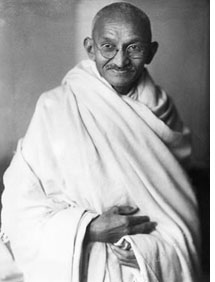 “You must not lose faith in humanity. Humanity is an ocean; if a few drops of the ocean are dirty, the ocean does not become dirty.”
“The difference between what we do and what we are capable of doing would suffice to solve most of the world’s problem.”
“If I had no sense of humor, I would long ago have committed suicide.”
Mahatma Gandhi needs no long introduction. Everyone knows about the man who lead the Indian people to independence from British rule in 1947.
So let’s just move on to some of my favourite tips from Mahatma Gandhi.
1. Change yourself.
“You must be the change you want to see in the world.”
“As human beings, our greatness lies not so much in being able to remake the world – that is the myth of the atomic age – as…
View original post 965 more words
Posted in Uncategorized
Leave a comment
Prominent Scientist Professor Obaid Siddiqi Passes Away
 Obaid Siddiqi FRS, National Research Professor at the National Centre for Biological Sciences, Tata Institute of Fundamental Research (TIFR) passed away on 26 July 2013. He is survived by his wife Asiya, sons Imran and Kalim, and daughters Yumna and Diba.
He was born in 1932 in Uttar Pradesh and received his early education at Aligarh Muslim University.
Whole scientific community of the planet,India and AMU will miss him..
Posted in News
Leave a comment


