
We’re now seeing stories like this: Autumn Winds Crucial for European Clean Energy Targets. Oilprice.com says: ‘Europe could only hope wind speeds …
How Warming Climates Are Reducing Global Wind Speeds

We’re now seeing stories like this: Autumn Winds Crucial for European Clean Energy Targets. Oilprice.com says: ‘Europe could only hope wind speeds …
How Warming Climates Are Reducing Global Wind Speeds
A few kilometres northeast of modern Şanlıurfa in south-eastern Turkey, the tell of Göbekli Tepe is situated on the highest point of the otherwise barren Germuş mountain range. Rising 15 metres and with an area of about 9 hectares, the completely man-made mound covers the earliest known monumental cult architecture in the ancient Near East. Constructed by hunter-gatherers right after the end of the last Ice Age, they also intentionally buried it about 10,000 years ago………..
read here
Continental drift is a theory by Alfred Wegener that Earth’s continents were once joined as a supercontinent called Pangaea and have since drifted to their current locations. Evidence for this includes the way continental coastlines fit together like a jigsaw puzzle, identical fossils of ancient animals found on different continents, and similar rock formations and mountain ranges. Although the theory was initially met with skepticism, it has developed into the modern understanding of plate tectonics, which explains how continents move on large lithospheric plates.
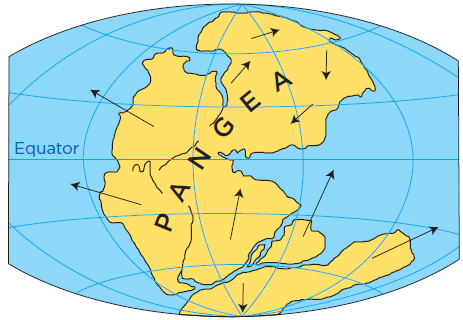
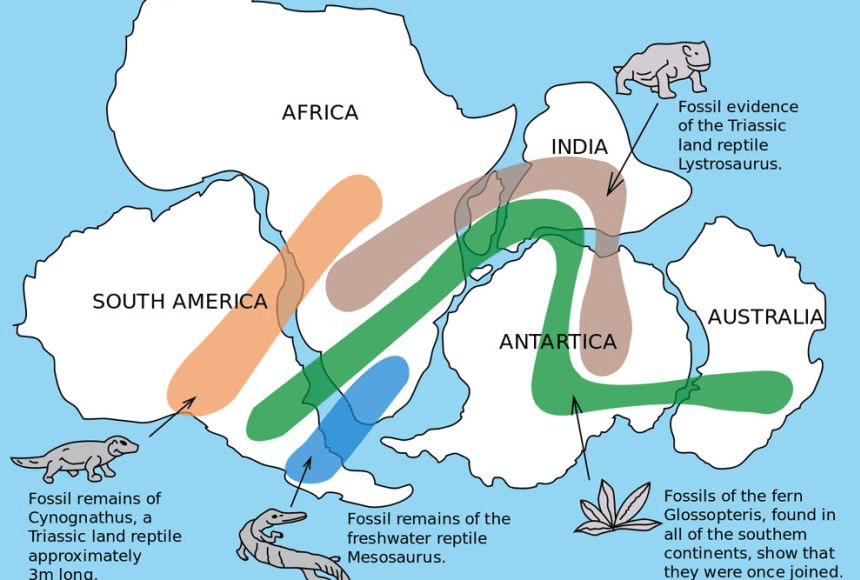
The idea of continents being connected originated with thinkers like Alexander von Humboldt in the early 1800s and Abraham Ortelius in 1596.
In 1912, the German meteorologist Alfred Wegener presented the first detailed explanation of continental drift. He proposed the existence of a supercontinent, Pangaea, which broke apart and drifted over millions of years.
Evidence for Continental Drift
From Continental Drift to Plate Tectonics
Read More Here
In the fertile lands between the Tigris and Euphrates rivers, humanity’s first great experiment with civilization unfolded. This land, known as Mesopotamia, meaning “the land between rivers,” has often been called the cradle of civilization. Here, amid marshes, floodplains, and deserts, people forged the foundations of urban life, writing, law, and empire. From small agricultural villages to mighty cities like Ur, Babylon, and Nineveh, Mesopotamia witnessed some of the most remarkable achievements of the ancient world.
Archaeology has given us the means to look back at this world, long buried beneath layers of earth and time. Through the recovery of clay tablets, monumental ruins, irrigation canals, pottery, and bones, archaeologists have pieced together a vivid picture of how Mesopotamian societies rose, flourished, and ultimately fell. Each artifact whispers of innovation, struggle, ambition, and the relentless forces—both human and natural—that shaped the destiny of this ancient land.
The Birth of Cities
The story begins with the transition from foraging to farming. Around 10,000 years ago, in the broader region known as the Fertile Crescent, humans began cultivating grains and domesticating animals. Archaeological evidence shows that by the 6th millennium BCE, farming villages dotted the Mesopotamian plains. Sites such as Tell Hassuna and Tell Halaf reveal communities practising agriculture, weaving textiles, and crafting pottery.
The Invention of Writing
Among Mesopotamia’s most significant contributions was the invention of writing. Archaeologists have traced the origins of cuneiform, the world’s earliest writing system, to Uruk around 3200 BCE. What began as simple clay tokens representing goods evolved into pictographs pressed onto wet clay tablets. Over centuries, these pictographs became stylized wedges made with a reed stylus, giving rise to cuneiform.
Temples, Palaces, and Ziggurats
Mesopotamian cities were dominated by monumental architecture, symbols of both devotion and authority. The temple was the spiritual and economic heart of the city. Archaeological remains show that temples were not only places of worship but centers of storage, redistribution, and craft production. The temple of Inanna in Uruk, with its elaborate mosaics of colored stone, reveals the grandeur with which deities were honoured.
Ziggurats were important milestones in the evolution of cities. They were massive stone structures built in the Mesopotamian valley and western Iranian plateau, in the form of a terraced pyramid-like structure of successively receding stories or levels. In ancient times, they worked as nuclei for urban growth and towns were often established around them.
Law, Order, and Society
Mesopotamia’s law, order, and society were shaped by advanced legal codes like the Code of Hammurabi, strict social hierarchy, and religiously sanctioned governance, creating a complex framework that influenced justice and daily life.
Trade and Connectivity
The Tigris and Euphrates rivers served as major “water highways” for boats and ships, enabling efficient transport inside Mesopotamia and connecting cities to distant trading partners.Overland roads and caravan paths—including wide ancient roads mapped by satellite—linked cities such as Nineveh with sites in Anatolia (Turkey), Syria, Persia (Iran), and the Indus Valley.
The Rise of Empires
The rise of empires in Mesopotamia involved a series of powerful groups, starting with the Sumerians, then the Akkadians, Babylonians, Assyrians, and finally, large Persian empires like the Neo-Babylonian and Achaemenid. These empires often emerged from conflicts between strong city-states, with leaders such as Sargon of Akkad taking control of large territories by forming professional armies. Later empires were known for their military strength and efficiency in conquering and managing defeated populations.Maritime and river routes facilitated not just the movement of goods, but also enabled cultural and technological exchanges, influencing urban and economic growth.
EnvironmentalChallenges and Collapse
Mesopotamia faced severe environmental challenges—including soil salinization, drought, river course changes, deforestation, and unsustainable irrigation—which played a crucial role in its eventual collapse.
By the 6th century BCE, Mesopotamia’s long supremacy was fading. The Persian Empire absorbed Babylon, and while Mesopotamian traditions endured, the land ceased to be the world’s political center. Later conquests by Alexander the Great, the Seleucids, the Parthians, and the Romans further layered new cultures upon the old.
Yet Mesopotamia’s legacy never disappeared. Its inventions—writing, law, urban life, empire—became the foundations upon which later civilizations were built. Archaeology ensures that this legacy is not lost, bringing to light the voices of a civilization that shaped the world.
The Timeless Echo of Mesopotamia
To walk through the ruins of Ur, Babylon, or Nineveh is to hear echoes of humanity’s first great experiments with civilization. The ziggurats that once touched the sky, the tablets etched with humanity’s earliest words, the bones of kings and laborers alike—all tell us that the story of Mesopotamia is the story of us.
Archaeology reveals not only how Mesopotamia rose and fell but also why it continues to matter. It is a reminder that civilizations, no matter how mighty, are fragile; that human creativity can achieve wonders, yet must contend with nature’s power; and that our present is but one chapter in a vast, ongoing narrative.
Mesopotamia may have fallen, but its spirit endures in every city we build, every law we write, every story we tell. Through archaeology, its voice still speaks, urging us to listen, to learn, and to remember.
read more here


 Rashid's Blog: A Place for Inquisitive Souls