Origin of Town : Rise and Fall of Cities in Historical Perspective by Henri Pirenne

Henri Pirenne, (born Dec. 23, 1862, Verviers, Belg.—died Oct. 24, 1935, Eccle, near Brussels), Belgian educator and scholar, one of the most eminent scholars of the Middle Ages and of Belgian national development.

Pirenne’s first important book was Histoire de la constitution de la ville de Dinant au moyen âge (1889; “History of the Constitution of the City of Dinant in the Middle Ages”), a study of medieval town life that became one of the major themes of his later works. His greatest work, Histoire de Belgique, 7 vol. (1900–32; “History of Belgium”), gained him international respect for his innovative approach to socioeconomic developments in town life and his contention that Belgian unity was not the result of ethnic identification or political centralization but instead emerged from the position of Belgium as a centre of industrial and intellectual commerce between Latin and Germanic cultures.

According to Pirenne the City is an Economic Space.He focussed on Centrality of Sea.

The Roman Empire was fundamentally a maritime empire oriented around the Mediterranean Sea. There were of course nonmaritime frontiers in the wooded north of Europe and the deserts of the Sahara and the Middle East but most, if not all, was within the watershed of the Mediterranean-Black Sea. The sea not only provided the routes for political administration and military supervision but also for trade. Sea trade was predominantly in the hands of merchants from the Levantine, the Syrians and Jews. This trade made possible regional specialization and economies of scale. Not only were goods provided cheaper as a result this trade but there was a vastly larger variety of goods available.

The Germanic tribes in the West were becoming Romanized. Germans served in the Roman Army and sometimes Germans commanded the armies of Rome. Thus the conflicts in the West were not civilization versus barbarians but instead Romanized Germans fighting against Germanized Roman armies. The battles in the East were a different matter; there it was Roman culture versus Parthian (Persian) culture. Losses in the West could be regained by diplomacy if not military operations, but losses in the East were permanent. Thus the shift of administration from Rome to Constantinople reflected this situation.

When Moslems captured the Mediterranean in the seventh century the trade routes were cut. The Vikings later also made sea trade difficult. The Magyars swept into Europe out of Central Asia and further cut trade in the east. The net result is that individual regions could not count on producing some goods for market and using the proceeds from their sale to buy the other goods which were needed. Each region had to be self-sufficient.

Self-sufficiency has its attractions but with self-sufficiency are lost the gains from specialization and the economies of scale. The levels of income and standards of living decline so there may not be any market for trade goods even if they were available. The surpluses that could support some elements of the society pursuing cultural activities disappeared and almost everyone had to grub for a living.

Henri Pirenne, a prominent Belgian historian, developed a widely influential theory regarding the origin of towns, known as the Pirenne Thesis. Pirenne argued that towns in medieval Europe arose primarily as commercial centers, strategically located along trade routes, and their development was closely tied to the revival of long-distance trade after a period of decline caused by the closure of Mediterranean trade routes due to Arab expansion in the seventh century.

Pirenne’s model suggests that:

  • Cities originated as economic spaces based on commerce and long-distance trade. Towns formed not from agricultural settlements but as centers where trade networks converged, facilitating the exchange of goods and ideas.
  • The interruption of trade led to ruralization. After the Mediterranean region’s connection was severed by Arab conquest, European economies turned inward, with self-sufficient feudal estates dominating until trade revived around the 10th and 11th centuries.
  • Revival of trade led to urban rebirth. The resurgence of commercial activity fostered the growth of new towns at crossroads, river junctions, and ports, as merchants and artisans settled in these areas, eventually forming a new social class outside the feudal system.

Key Features of Pirenne’s Urban Theory

  • Trade networks were central. Towns typically grew at intersections of major trade routes, becoming hubs for economic activity and cultural exchange.
  • Economic and social transformation. The rise of towns marked the emergence of a bourgeois merchant class and the decline of feudalism, as towns gained economic and political autonomy.
  • Cities as islands of capitalism. According to Pirenne, medieval towns operated as centers of commerce in a largely agrarian and feudal world and represented the reawakening of European civilization through renewed maritime and overland exchange.

Legacy and Influence

Pirenne’s thesis challenged earlier views that focused primarily on agricultural or technological factors and instead highlighted the transformative impact of trade and commerce on urban development. His ideas remain foundational in debates on urban origins in historical geography and have shaped subsequent research and discourse on the evolution of European towns.

Link(s) and Source(s):

Britannica

Posted in earth | Leave a comment

Urban Design Reflects Past and Future of Cities

Urban design is the art of creating and shaping cities and towns. It involves the arrangement and design of buildings, public spaces, transport systems, services, and amenities. It is the process of giving form, shape, and character to groups of buildings, to whole neighbourhoods, and the city. It is a framework that orders the elements into a network of streets, squares, and blocks. Urban design blends architecture, landscape architecture, and city planning together to make urban areas functional and attractive. 

Urban design and urban planning

While the two fields are closely related, ‘urban design’ differs from ‘urban planning’ in its focus on the physical improvement of the public environment, whereas the latter tends, in practice, to focus on the management of private development through established planning methods and programmes, and other statutory development controls.

Recent years have seen a development in the use of design, as well as in design philosophy and design research. Design has come to mean more than shaping and aesthetics; it has increasingly become a strategic element in business innovation processes as well as in a number of societal development processes. A designer’s ability to combine, for instance, designing with user understanding and overall solutions is increasingly becoming a competitive parameter when companies develop new products and services.

An increasing number of countries have invested in design to promote their image internationally, to raise awareness among local consumers of the value of design and product quality, and to increase interest from local industry in the benefits of design for business performance. Furthermore, many of these countries have also invested in developing their design educational systems and their capabilities within the area of design research.

How the city has changed

‘Seen in a long-term historical perspective, city space has always served three vital functions – meeting place, marketplace and connection place. As a meeting place, the city provided opportunities for social exchange of information of all kinds. As a marketplace, the city facilitated commercial exchange of goods and services. And finally, public spaces enabled access to and connections between all the functions of the city…Within a span of only a few decades, a city devoted primarily to working city and basic necessities has been transformed into a city of leisure and enjoyment.’ (Gehl et. al., 2006). City is a social space.

In New City Life by famous Danish architect Jan Gehl et. al. (2006) the story is told about a survey among people in Copenhagen’s city centre. The main question was, “What is the primary reason for your being in Copenhagen’s city centre?”. The response was measured at two moments in time. The first was in the 1970s when the answer was “shopping”. Later in 2005 the response was often “being in the city”. Therefore the conclusion was that city space is a goal in itself, a worthwhile asset in its own right. According to Gehl et. al. (2006) more people use the central city and have spent more time there over the past 40 years, including evenings and weekends when the shops are often closed. ‘All in all, this is a dramatic and remarkable development that offers lessons for other cities that want to improve their public spaces as a way to enliven and enrich the experience of urban life.’

The spatial structure of cities has its roots in the recognition of urban centres and the notion of centrality in the urban system. In general, the spatial structure has two principal aspects: the morphological dimension, which refers to the locations, sizes and boundaries of the centres, and the functional dimension, which addresses the significance of the interrelationship between those hierarchical centres (Burger and Meijers 2012).

These two principles interact with each other with some level of correlation, but empirical studies at the intra-city scale offer very little to show a robust causal connection between the functional and morphological changes in cities (Hall 2002; Burger and Meijers 2012). In the term’s usage, the normative definitions of these aspects of spatial structure can be reflected in various scenarios.

The space syntax theory proposes that spatial urban structure shapes movement and then movement shapes functions in the city (Hillier 1996). Space syntax representations of spatial structures can efficiently capture as spatial descriptions functional patterns in historic or informal settlements and slums.

Link(s) and Source(s):

EUKN

Urban Fabric

Urban Morphology

Centrality in Cities

Posted in earth | Leave a comment

We Need Gandhi’s Talisma and Shastri’s – A Symbol of Common Man’s Industriousness and Power of ‘His’ Dreams

Image result for gandhi
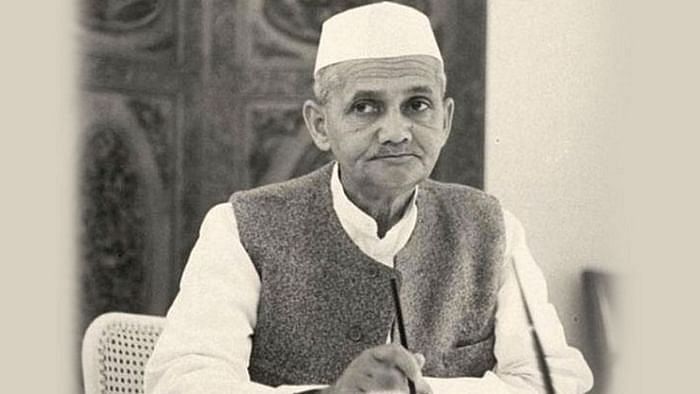
Lal Bahadur Shastri

We need Gandhi’s Talisma (mantra) more than ever today. Infact, we need it again and again.

And We Need Shastri ji Too. To me he is a symbol of Common Man’s Industriousness. His Talisma is Power of Common Man’s Dreams.

On Mahatma Gandhi’s birthday, let’s pay reverence to the man who paved his way with not any exceptional qualities but solely the truth… Because the truth was his only guiding light.

We need to remember “It is unwise to be too sure of one’s own wisdom. It is healthy to be reminded that the strongest might weaken and the wisest might err.”

AND

“You must be the change you wish to see in the world.

Lets Remember.Lets try to be courageous in the face of Violence- Mental and Physical

Posted in earth | Leave a comment

Second Urbanisation (c. 600 BCE–200 BCE) : Urban Zoom of India

During the time between 800 and 200 BCE the Sramana movement formed, from which originated Jainism and Buddhism. In the same period the first Upanishads were written. After 500 BCE, the so-called “Second urbanisation” started, with new urban settlements arising at the Ganges plain, especially the Central Ganges plain. The Central Ganges Plain, where Magadha gained prominence, forming the base of the Mauryan Empire, was a distinct cultural area, with new states arising after 500 BCE during the so-called “Second urbanisation”. It was influenced by the Vedic culture, but differed markedly from the Kuru-Panchala region. In this region the Shramanic movements flourished, and Jainism and Buddhism originated.

In the later Vedic Age, a number of small kingdoms or city states had covered the subcontinent, many mentioned in Vedic, early Buddhist and Jaina literature as far back as 500 BCE sixteen monarchies and “republics” known as the Mahajanapadas—Kashi, Kosala, Anga, Magadha, Vajji (or Vriji), Malla, Chedi, Vatsa (or Vamsa), Kuru, Panchala, Matsya (or Machcha), Shurasena, Assaka, Avanti, Gandhara, and Kamboja—stretched across the Indo-Gangetic Plain from modern-day Afghanistan to Bengal and Maharashtra. This period saw the second major rise of urbanism in India after the Indus Valley Civilisation.

Many smaller clans mentioned within early literature seem to have been present across the rest of the subcontinent. Some of these kings were hereditary; other states elected their rulers. Early “republics” such as the Vajji (or Vriji) confederation centred in the city of Vaishali, existed as early as the 6th century BCE and persisted in some areas until the 4th century CE. The educated speech at that time was Sanskrit, while the languages of the general population of northern India are referred to as Prakrits. Many of the sixteen kingdoms had coalesced to four major ones by 500/400 BCE, by the time of Gautama Buddha. These four were Vatsa, Avanti, Kosala, and Magadha. The life of Gautama Buddha was mainly associated with these four kingdoms. This period corresponds in an archaeological context to the Northern Black Polished Ware culture.

Upanishads and Shramana movements

Around 800 BCE to 400 BCE witnessed the composition of the earliest Upanishads. Upanishads form the theoretical basis of classical Hinduism and are known as Vedanta (conclusion of the Vedas). The older Upanishads launched attacks of increasing intensity on the ritual. Anyone who worships a divinity other than the Self is called a domestic animal of the gods in the Brihadaranyaka Upanishad. The Mundaka launches the most scathing attack on the ritual by comparing those who value sacrifice with an unsafe boat that is endlessly overtaken by old age and death.

Increasing urbanisation of India in 7th and 6th centuries BCE led to the rise of new ascetic or shramana movements which challenged the orthodoxy of rituals. Mahavira (c. 549–477 BCE), proponent of Jainism, and Gautama Buddha (c. 563–483 BCE), founder of Buddhism were the most prominent icons of this movement. Shramana gave rise to the concept of the cycle of birth and death, the concept of samsara, and the concept of liberation. Buddha found a Middle Way that ameliorated the extreme asceticism found in the Sramana religions.
Around the same time, Mahavira (the 24th Tirthankara in Jainism) propagated a theology that was to later become Jainism. However, Jain orthodoxy believes the teachings of the Tirthankaras predates all known time and scholars believe Parshvanatha (c. 872 – c. 772 BCE), accorded status as the 23rd Tirthankara, was a historical figure. Rishabhanatha was the 1st Tirthankara. The Vedas are believed to have documented a few Tirthankaras and an ascetic order similar to the shramana movement.

Magadha Dynasties

Magadha formed one of the sixteen Maha-Janapadas (Sanskrit: “Great Countries”) or kingdoms in ancient India. The core of the kingdom was the area of Bihar south of the Ganges; its first capital was Rajagriha (modern Rajgir) then Pataliputra (modern Patna). Magadha expanded to include most of Bihar and Bengal with the conquest of Licchavi and Anga respectively, followed by much of eastern Uttar Pradesh and Orissa. The ancient kingdom of Magadha is heavily mentioned in Jain and Buddhist texts. It is also mentioned in the Ramayana, Mahabharata and Puranas. The earliest reference to the Magadha people occurs in the Atharva-Veda where they are found listed along with the Angas, Gandharis, and Mujavats. Magadha played an important role in the development of Jainism and Buddhism, and two of India’s greatest empires, the Maurya Empire and Gupta Empire, originated from Magadha. These empires saw advancements in ancient India’s science, mathematics, astronomy, religion, and philosophy and were considered the Indian “Golden Age”. The Magadha kingdom included republican communities such as the community of Rajakumara. Villages had their own assemblies under their local chiefs called Gramakas. Their administrations were divided into executive, judicial, and military functions.

The Hindu epic Mahabharata calls Brihadratha the first ruler of Magadha. Early sources, from the Buddhist Pali Canon, the Jain Agamas and the Hindu Puranas, mentions Magadha being ruled by the Haryanka dynasty for some 200 years, c. 600 BCE – 413 BCE. King Bimbisara of the Haryanka dynasty led an active and expansive policy, conquering Anga in what is now West Bengal. The death of King Bimbisara was at the hands of his son, Prince Ajatashatru. During this period, Gautama Buddha, the founder of Buddhism, lived much of his life in Magadha kingdom. He attained enlightenment in Bodh Gaya, gave his first sermon in Sarnath and the first Buddhist council was held in Rajgriha. The Haryanka dynasty was overthrown by the Shishunaga dynasty. The last Shishunaga ruler, Kalasoka, was assassinated by Mahapadma Nanda in 345 BCE, the first of the so-called Nine Nandas, Mahapadma and his eight sons.

Persians and Greeks in northwest South Asia

In 530 BCE Cyrus the Great, King of the Persian Achaemenid Empire crossed the Hindu-Kush mountains to seek tribute from the tribes of Kamboja, Gandhara and the trans-India region (modern Afghanistan and Pakistan). By 520 BCE, during the reign of Darius I of Persia, much of the north-western subcontinent (present-day eastern Afghanistan and Pakistan) came under the rule of the Persian Achaemenid Empire, as part of the far easternmost territories. The area remained under Persian control for two centuries. During this time India supplied mercenaries to the Persian army then fighting in Greece. Under Persian rule the famous city of Takshashila became a centre where both Vedic and Iranian learning were mingled. Persian ascendency in North-western South Asia ended with Alexander the Great’s conquest of Persia in 327 BCE.

By 326 BCE, Alexander the Great had conquered Asia Minor and the Achaemenid Empire and had reached the northwest frontiers of the Indian subcontinent. There he defeated King Porus in the Battle of the Hydaspes (near modern-day Jhelum, Pakistan) and conquered much of the Punjab. Alexander’s march east put him in confrontation with the Nanda Empire of Magadha and the Gangaridai of Bengal. His army, exhausted and frightened by the prospect of facing larger Indian armies at the Ganges River, mutinied at the Hyphasis (modern Beas River) and refused to march further East. Alexander, after the meeting with his officer, Coenus, and after learning about the might of the Nanda Empire, was convinced that it was better to return.

The Persian and Greek invasions had repercussions in the north-western regions of the Indian subcontinent. The region of Gandhara, or present-day eastern Afghanistan and north-west Pakistan, became a melting pot of Indian, Persian, Central Asian, and Greek cultures and gave rise to a hybrid culture, Greco-Buddhism, which lasted until the 5th century CE and influenced the artistic development of Mahayana Buddhism.

Maurya Empire

The Maurya Empire (322–185 BCE) was the first empire to unify India into one state, and was the largest on the Indian subcontinent. At its greatest extent, the Mauryan Empire stretched to the north up to the natural boundaries of the Himalayas and to the east into what is now Assam. To the west, it reached beyond modern Pakistan, to the Hindu Kush mountains in what is now Afghanistan. The empire was established by Chandragupta Maurya assisted by Chanakya (Kautilya) in Magadha (in modern Bihar) when he overthrew the Nanda Dynasty. Chandragupta’s son Bindusara succeeded to the throne around 297 BCE. By the time he died in c. 272 BCE, a large part of the subcontinent was under Mauryan suzerainty. However, the region of Kalinga (around modern day Odisha) remained outside Mauryan control, perhaps interfering with their trade with the south.

Bindusara was succeeded by Ashoka, whose reign lasted for around thirty seven years until his death in about 232 BCE. His campaign against the Kalingans in about 260 BCE, though successful, lead to immense loss of life and misery. This filled Ashoka with remorse and lead him to shun violence, and subsequently to embrace Buddhism. The empire began to decline after his death and the last Mauryan ruler, Brihadratha, was assassinated by Pushyamitra Shunga to establish the Shunga Empire.

The Arthashastra and the Edicts of Ashoka are the primary written records of the Mauryan times. Archaeologically, this period falls into the era of Northern Black Polished Ware (NBPW). The Mauryan Empire was based on a modern and efficient economy and society. However, the sale of merchandise was closely regulated by the government. Although there was no banking in the Mauryan society, usury was customary. A significant amount of written records on slavery are found, suggesting a prevalence thereof. During this period, a high quality steel called Wootz steel was developed in south India and was later exported to China and Arabia.

Sangam Period

During the Sangam period Tamil literature flourished from the 3rd century BCE to the 4th century CE. During this period, three Tamil Dynasties, collectively known as the Three Crowned Kings of Tamilakam: Chera dynasty, Chola dynasty and the Pandyan dynasty ruled parts of southern India.

The Sangam literature deals with the history, politics, wars and culture of the Tamil people of this period. The scholars of the Sangam period rose from among the common people who sought the patronage of the Tamil Kings, but who mainly wrote about the common people and their concerns. Unlike Sanskrit writers who were mostly Brahmins, Sangam writers came from diverse classes and social backgrounds and were mostly non-Brahmins. They belonged to different faiths and professions like farmers, artisans, merchants, monks, priests and even princes and quite few of them were even women.

Link(s) & Source(s): ZOOMinINDIA

First Urbanisation in India

Posted in earth | Leave a comment