
And Now for Something Completely Different. Via Watts Up With That I learned about a Lawrence Berkeley National Laboratory study titled “Halfway to …
Halfway to zero: in search of virtual emission decreases

And Now for Something Completely Different. Via Watts Up With That I learned about a Lawrence Berkeley National Laboratory study titled “Halfway to …
Halfway to zero: in search of virtual emission decreases
Around the world, governments are making cities “smarter” by using data and digital technology to build more efficient and livable urban environments. This makes sense: With urban populations growing and infrastructure under strain, smart cities will be better positioned to manage rapid change.
But as digital systems become more pervasive, there is a danger that inequality will deepen unless local governments recognize that tech-driven solutions are as important to the poor as they are to the affluent.
City planners can deploy technology in ways that make cities more inclusive for the poor, the disabled, the elderly, and other vulnerable people. Examples are already abundant.
In Kolkata, India, a Dublin-based startup called Addressing the Unaddressed has used GPS to provide postal addresses for more than 120,000 slum dwellers in 14 informal communities. The goal is to give residents a legal means of obtaining biometric identification cards, essential documentation needed to access government services and register to vote.
But while these innovations are certainly significant, they are only a fraction of what is possible.
Public health is one area where small investments in technology can bring big benefits to marginalized groups. In the developing world, preventable illnesses comprise a disproportionate share of the disease burden.
City planners have sometimes been accused of promoting digital conveniences that favor the rich and exclude the poor. But as cities around the world are already demonstrating, it is possible to deploy technologies that serve everyone—even those on the margins of connectivity. As the urban world becomes “smarter,” cities will have an opportunity to become more inclusive. The alternative—the persistence and deepening of digital divides between communities—will not be easily undone.
Source(s)
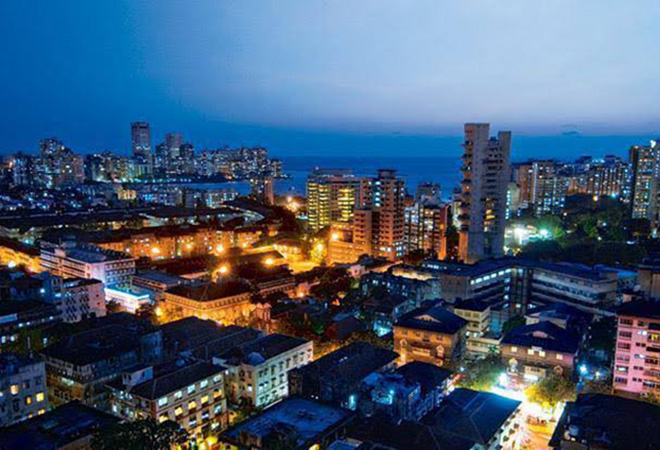
It would be appropriate to point out that while the NCRB provides statistics on UAs with populations above two million, some of the UAs are high on the demographic ladder and go right up to populations of 20 million and beyond. The five largest are Delhi, Mumbai, Kolkata, Chennai and Bengaluru. Of the 19 UAs, three each fall within the states of Maharashtra and Uttar Pradesh, two each in Gujarat, Kerala and Tamil Nadu and one each in Bihar, Delhi, Karnataka, Madhya Pradesh, Rajasthan, Telangana and West Bengal. For comparison, this article has clubbed together six UAs (Delhi, Ghaziabad, Jaipur, Kanpur, Lucknow and Patna) as northern UAs and six others (Bengaluru, Chennai, Coimbatore, Hyderabad, Kochi and Kozhikode) as southern UAs. In the interest of simplicity, all decimals in regard to crime rates have been dispensed with.
In terms of IPC crimes, Delhi’s rate of 1,306 (per lakh population) far exceeds any other UA. Kochi, Patna, Jaipur and Lucknow follow with crime rates of 809, 751, 683, and 600. The lowest crime rates with regard to IPC crimes are in Kolkata (141), Coimbatore (144), Hyderabad (187), Mumbai (212) and Chennai (221). The northern UAs in terms of IPC crime rates are about two times higher than southern UAs.
In terms of fatal attacks that have resulted in deaths, Patna tops the list, with a crime rate of nine murders per lakh population. It is followed by Nagpur (eight), Indore, Jaipur and Bengaluru (three each). The lowest crime rates for murder are reported from Kozhikode, Kochi, Kolkata, Mumbai and Hyderabad – all clocking below one murder per lakh population. Here, the northern UAs have almost three times higher crime rates than the southern UAs.
Delhi tops the crime rate chart for kidnappings and abductions with a rate of 32, followed by Indore (31), Patna (27), Lucknow (24) and Ghaziabad (23). The lowest crime rates are recorded by Coimbatore, Chennai, Kozhikode, Kochi and Kolkata, all below three. Here, the northern bloc has a crime rate seven times higher than the southern.
In regard to crimes against women, Lucknow has the highest rate of 179, followed by Delhi (152), Indore (130), Jaipur (128) and Kanpur (118). The lowest rates are reported from Coimbatore (seven), Chennai (15), Surat (28), Kolkata (29) and Kozhikode (33). Here again, the northern UAs have recorded a crime rate three times higher than the southern UAs.
For crimes against children, Delhi ranks the first with a crime rate of 35, followed by Mumbai (19), Bengaluru (eight), Pune (seven) and Indore (four). The lowest rates are recorded by Coimbatore, Ghaziabad, Patna, Kochi and Kozhikode, all below one. Senior citizens are the worst off in Mumbai with a crime rate of 30, followed by Delhi (20), Ahmedabad (14), Chennai (13) and Bengaluru (five). The best UAs for the old are Kanpur, Indore, Kozhikode, Ghaziabad and Patna, all below one. Here, as an exception, the northern bloc emerges kinder to senior citizens than the southern.
Jaipur emerges the leading UA in terms of economic offences (141), followed by Lucknow (65), Bengaluru (41), Delhi (30) and Kanpur (26). Coimbatore, Chennai, Kozhikode, Patna and Ahmedabad rank the lowest in economic offences, all below 10. A factor of more than two separates the northern UAs from the less crime-prone southern UAs. As the information technology hub of India, Bengaluru, leads in cyber-crimes (32), followed by Jaipur (22), Lucknow (21), Kanpur (eight) and Mumbai (seven). Chennai, Kozhikode, Coimbatore, Delhi and Kolkata are at the bottom of the list with crime rates lower than two.
An analysis of all the above data reveals that Delhi, Jaipur, Lucknow, Indore and Patna have the highest average crime rates across crime categories among top UAs of the country. At the other end are Kozhikode, Coimbatore, Chennai, Kolkata and Kochi with the lowest average crime rates among top UAs.
It is generally acknowledged that cities have a greater propensity to crime and that megacities have a higher crime rate than smaller cities. The 1994 Statistical Abstract of the United States, for instance, found that metropolitan cities had 79 percent more crime than other American cities and 300 percent more violence than rural areas. Further, New York and Los Angeles, the largest US cities, had crime rates that were approximately four times higher than other metropolitan areas. The reasons assigned to this phenomenon of more crime in cities are greater access to wealth, greater anonymity on account of large-size-cum-high-density and hence lower probability of arrest and the larger urban ability to attract crime-prone individuals.
Establishing the causality of crime in relation to the nature of its settlements is a complex issue. Burgess Theory tried to do that.India is still in the midst of urbanization process, hence this is a subject worthy of deep and wide investigation. The results may light up the path of India’s choices with regard to the pattern of growth for its cities and towns.
Source(s):


 Rashid's Blog: A Place for Inquisitive Souls