Tom Slater, Shaking Up the City: Ignorance, Inequality, and the Urban Question – University of California Press, September 2021, foreword by Loic Wacquant

stuartelden's avatarProgressive Geographies

Tom Slater, Shaking Up the City: Ignorance, Inequality, and the Urban Question – University of California Press, September 2021, foreword by Loic Wacquant
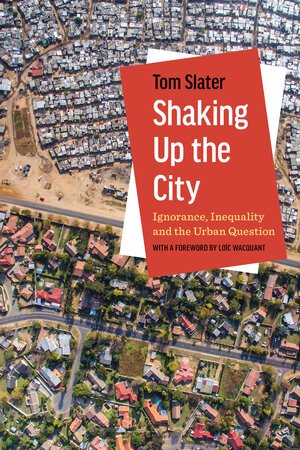
Shaking Up the Citycritically examines many of the concepts and categories within mainstream urban studies that serve dubious policy agendas. Through a combination of abstract theory and concrete empirical evidence, Tom Slater strives to ‘shake up’ mainstream urban studies in a concise and pointed fashion, turning on its head much of the prevailing wisdom in the field. In doing so, he explores the themes of data-driven innovation, urban resilience, gentrification, displacement and rent control, neighborhood effects, territorial stigmatization, and ethnoracial segregation.

Slater analyzes how the mechanisms behind urban inequalities, material deprivation, marginality, and social suffering in cities across the world are perpetuated and made invisible. With important contributions to ongoing debates in sociology, geography, planning, and public policy, and engaging closely with struggles for land rights…

View original post 27 more words

Posted in earth | Leave a comment

Less is Best — Orlando Espinosa

Don’t take advice from people who say one thing and live another. Less advice is sometimes the best advice you can receive from others. The post Less is Best appeared first on Orlando Espinosa.

Less is Best — Orlando Espinosa
Posted in earth | Leave a comment

Halfway to zero: in search of virtual emission decreases

And Now for Something Completely Different. Via Watts Up With That I learned about a Lawrence Berkeley National Laboratory study titled “Halfway to …

Halfway to zero: in search of virtual emission decreases
Posted in earth | Leave a comment

Can Future Smart Cities will Favour the Rich ?

Around the world, governments are making cities “smarter” by using data and digital technology to build more efficient and livable urban environments. This makes sense: With urban populations growing and infrastructure under strain, smart cities will be better positioned to manage rapid change.

But as digital systems become more pervasive, there is a danger that inequality will deepen unless local governments recognize that tech-driven solutions are as important to the poor as they are to the affluent.

City planners can deploy technology in ways that make cities more inclusive for the poor, the disabled, the elderly, and other vulnerable people. Examples are already abundant.

In Kolkata, India, a Dublin-based startup called Addressing the Unaddressed has used GPS to provide postal addresses for more than 120,000 slum dwellers in 14 informal communities. The goal is to give residents a legal means of obtaining biometric identification cards, essential documentation needed to access government services and register to vote.

But while these innovations are certainly significant, they are only a fraction of what is possible.

Public health is one area where small investments in technology can bring big benefits to marginalized groups. In the developing world, preventable illnesses comprise a disproportionate share of the disease burden.

City planners have sometimes been accused of promoting digital conveniences that favor the rich and exclude the poor. But as cities around the world are already demonstrating, it is possible to deploy technologies that serve everyone—even those on the margins of connectivity. As the urban world becomes “smarter,” cities will have an opportunity to become more inclusive. The alternative—the persistence and deepening of digital divides between communities—will not be easily undone.

Source(s)

Brookings

Posted in earth | Leave a comment